
In today’s emissions-regulated world, AdBlue® has become a critical fluid for diesel engines equipped with Selective Catalytic Reduction (SCR) systems. As demand continues to rise across Europe, the Middle East, and emerging markets, manufacturers are increasingly investing in AdBlue® production plants. However, building an efficient, compliant, and scalable facility requires more than just mixing urea and water.
It involves strict adherence to ISO standards, precise engineering, and a deep understanding of process optimization. This guide provides a comprehensive overview of how to design a high-performance AdBlue® production plant, covering raw material requirements, blending processes, production line configurations, and common engineering pitfalls.
Raw Materials & Water Purity Requirements
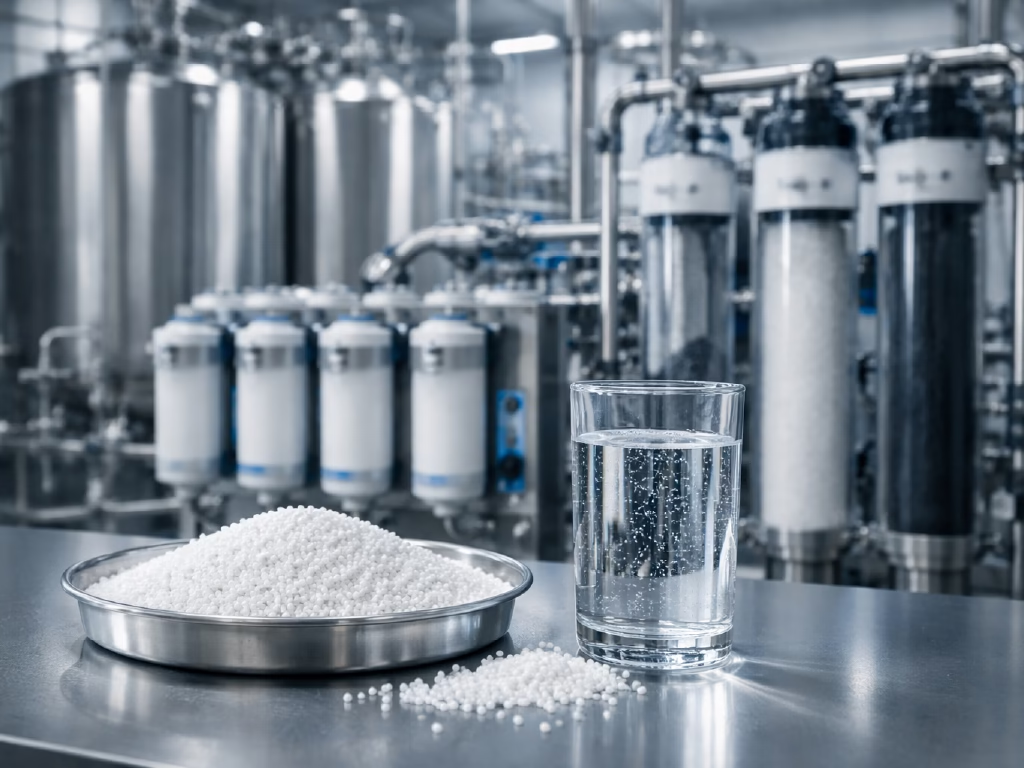
The foundation of high-quality AdBlue® lies in its raw materials. AdBlue® is a solution composed of 32.5% high-purity urea and 67.5% deionized water. While this composition seems straightforward, the purity standards are extremely strict.
Urea Quality Standards
The urea used in AdBlue® production must comply with ISO 22241 specifications. Agricultural-grade urea is not suitable due to potential contaminants such as biuret, aldehydes, and insoluble particles. Instead, automotive-grade urea with ultra-low impurity levels must be used. Impurities in urea can damage SCR catalysts, leading to costly repairs and reduced vehicle performance. Therefore, sourcing certified urea from reliable suppliers is non-negotiable in any AdBlue® production setup.
Water Purity Requirements
Water used in AdBlue® must be deionized and free from minerals, metals, and organic compounds. Even trace amounts of calcium, sodium, or iron can compromise the final product. A typical water treatment system for AdBlue® production includes: Reverse Osmosis (RO), Deionization (DI), UV sterilization, Ultrafiltration. Conductivity levels must be kept below 0.5 µS/cm to meet ISO standards. Continuous monitoring systems are recommended to ensure consistency in AdBlue® quality.
Storage Considerations
Both urea and water must be stored in dedicated, contamination-free tanks. Stainless steel (AISI 304 or 316) or HDPE tanks are commonly used in AdBlue® facilities. Cross-contamination from other chemicals must be strictly avoided.
Blending Process Flow (Step-by-Step)
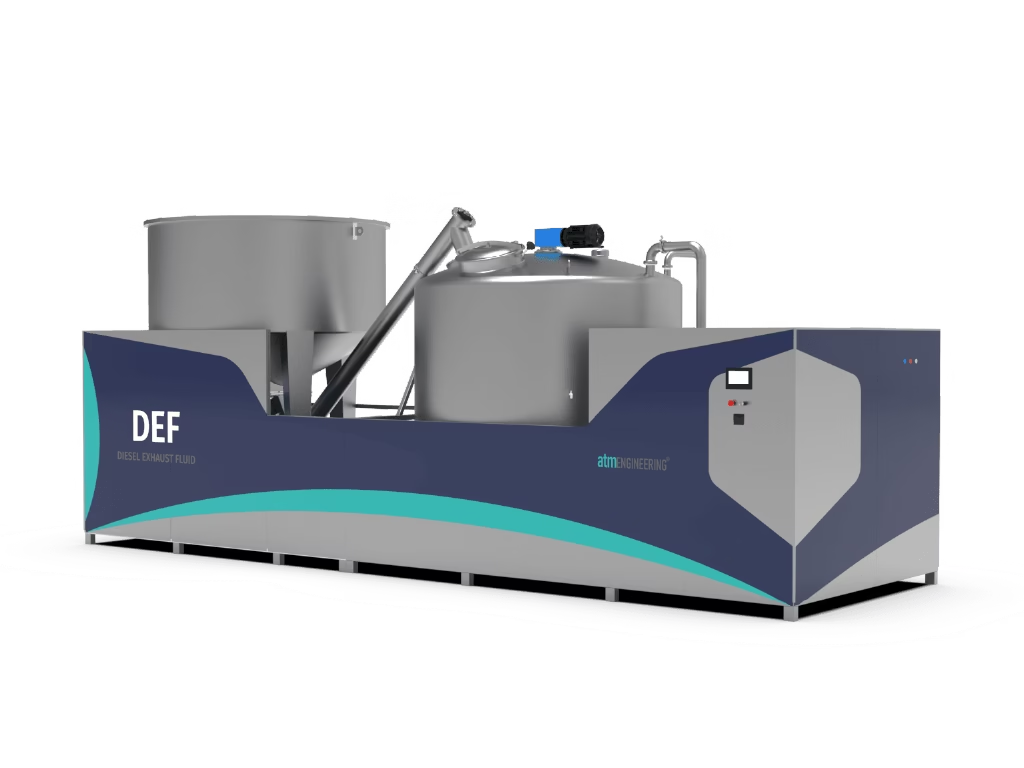
The blending process is the core of any AdBlue® production plant. Precision and cleanliness are critical at every stage.
Step 1: Water Preparation
Deionized water is first produced and stored in a buffer tank. Before entering the mixing system, it passes through final polishing filters to ensure absolute purity.
Step 2: Urea Dissolution
Solid urea is introduced into a dissolution tank where it is mixed with purified water. The process is controlled to maintain proper temperature (typically 20–30°C) to ensure complete dissolution without decomposition.
Step 3: Mixing & Concentration Control
The solution is transferred to a blending tank where the exact 32.5% concentration is achieved. Inline sensors measure density and refractive index to verify the composition of AdBlue® in real time.
Step 4: Filtration
The blended AdBlue® passes through multi-stage filtration systems (typically 5 µm to 0.2 µm filters) to remove any remaining particles.
Step 5: Quality Control
Samples are tested for: Urea concentration, Alkalinity, Biuret content, Insolubles. Only batches that meet ISO 22241 standards proceed further.
Step 6: Storage & Packaging
Final AdBlue® product is stored in dedicated tanks before being filled into containers such as: 10L / 20L canisters, 1000L IBC tanks, Bulk tanker trucks. Automation systems are often integrated to ensure consistency and traceability in AdBlue® production.
Production Line Configuration Examples
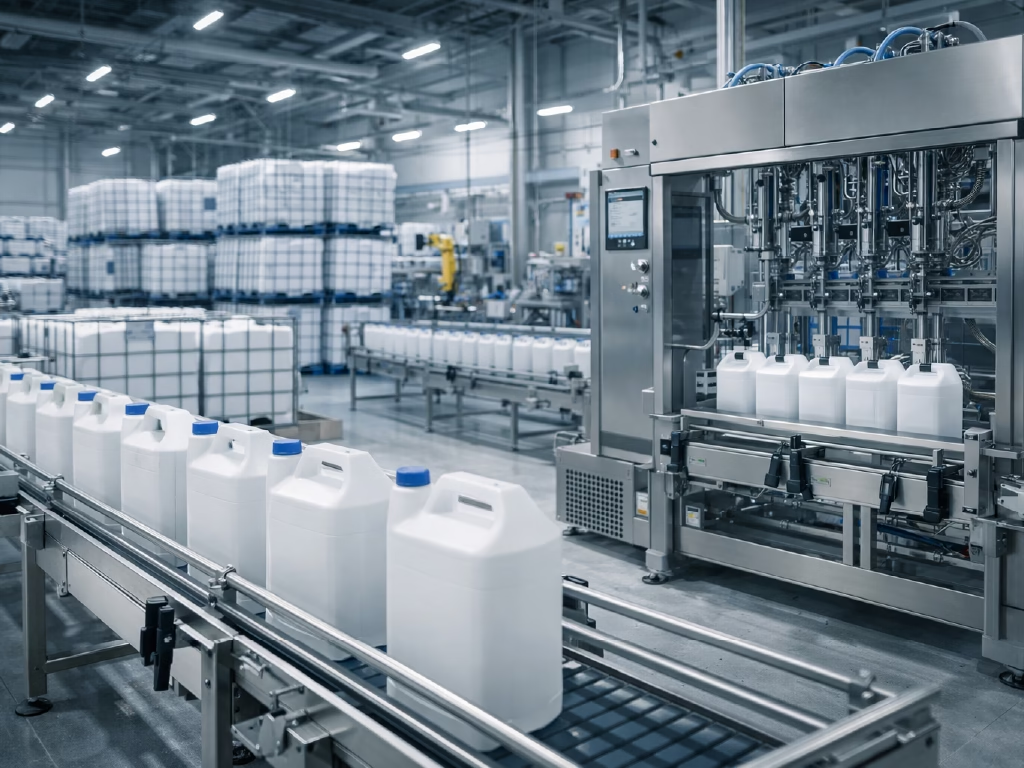
Designing the right production line depends on capacity, budget, and target market. Below are common configurations used in AdBlue® manufacturing.
Small-Scale Production (1–2 Tons/Hour)
Ideal for local distribution, small plants focus on semi-automatic systems. These setups typically include: Manual urea feeding, Basic RO + DI systems, Compact mixing tanks. While cost-effective, these systems require more operator involvement and have limited scalability for AdBlue® output.
Medium-Scale Production (5–10 Tons/Hour)
Mid-sized plants are the most common configuration. They include: Automated dosing systems, Inline concentration monitoring, Advanced filtration units. These plants balance cost and efficiency, making them suitable for regional AdBlue® distribution networks.
Large-Scale Production (20+ Tons/Hour)
Industrial-scale facilities are fully automated and designed for export markets. Key features include: PLC/SCADA control systems, Fully automated packaging lines, Redundant water treatment systems. Such plants ensure consistent AdBlue® quality at high volumes while minimizing human error.
Modular Systems
Modern AdBlue® plants increasingly use modular designs, allowing manufacturers to expand capacity as demand grows. This approach reduces initial investment while maintaining flexibility.
Common Engineering Mistakes to Avoid
Even experienced manufacturers can encounter issues when setting up an AdBlue® production plant. Below are some of the most critical mistakes and how to avoid them.
Using Incorrect Materials
One of the most common errors is using incompatible materials such as carbon steel or copper alloys. These materials can contaminate AdBlue® and cause product failure. Always use approved materials like stainless steel (316L) or specific plastics designed for AdBlue® handling.
Inadequate Water Treatment
Skipping or underestimating the water purification process leads to substandard AdBlue® quality. Poor water treatment is one of the leading causes of product rejection. Investing in a robust RO + DI system is essential for any serious AdBlue® manufacturer.
Poor Process Control
Manual processes increase the risk of incorrect concentration levels. Even small deviations can make AdBlue® unusable. Automated control systems with real-time monitoring significantly improve consistency and compliance.
Contamination Risks
Cross-contamination from other chemicals or improper cleaning procedures can ruin entire batches of AdBlue®. Dedicated pipelines and strict cleaning protocols are mandatory.
Lack of Quality Assurance
Failing to implement proper testing procedures can result in non-compliant AdBlue® entering the market. This not only damages brand reputation but can also lead to legal consequences. Establishing an in-house laboratory or working with certified testing facilities is highly recommended.
Conclusion
Designing an efficient DEF production plant requires a multidisciplinary approach combining chemical engineering, process automation, and strict quality control. From selecting high-purity raw materials to implementing advanced blending systems, every step plays a crucial role in ensuring consistent DEF quality. As global demand for DEF continues to grow, manufacturers who invest in robust, scalable, and compliant production systems will gain a significant competitive advantage. By avoiding common engineering mistakes and adhering to ISO standards, you can build a production facility that delivers both performance and profitability. If you are planning to enter the DEF market or upgrade your existing plant, focusing on efficiency, purity, and automation will be the key to long-term success.
Looking to establish a reliable and high-performance DEF production facility? At Atmosfer Makina, we specialize in designing and delivering turnkey DEF production plants tailored to your operational goals. With deep expertise in process engineering, automation, and ISO-compliant system design, we help you build a production line that ensures consistent quality, efficiency, and scalability. From advanced water purification systems to precision blending units and fully automated filling lines, every solution we offer is engineered for long-term performance and minimal operational risk.
Whether you are starting a new DEF production venture or upgrading your existing facility, our team provides end-to-end support—from planning and installation to commissioning and after-sales service. We understand the critical importance of purity, accuracy, and compliance in DEF manufacturing, and we deliver solutions that meet the highest industry standards. Partner with Atmosfer Makina to gain a competitive edge in the growing DEF market and ensure your production process is future-ready. Visit atmosfermakina.com today to explore our solutions and start building your optimized DEF production system.
