
In the ever-evolving agricultural industry, high-efficiency production of liquid fertilizers, specifically NPK (Nitrogen, Phosphorus, and Potassium) and UAN (Urea Ammonium Nitrate), is becoming increasingly important. These fertilizers play a critical role in enhancing crop yields and ensuring the efficient use of nutrients in soil. The advancement of Liquid Fertilizer Production Line technologies has led to improved efficiency, lower costs, and greater sustainability in agricultural practices. This blog explores the latest technological innovations in fertilizer production, focusing on the digital transformation, automation systems, and the use of secondary raw materials.
Digital Transformation in Agriculture with Smart Production Lines
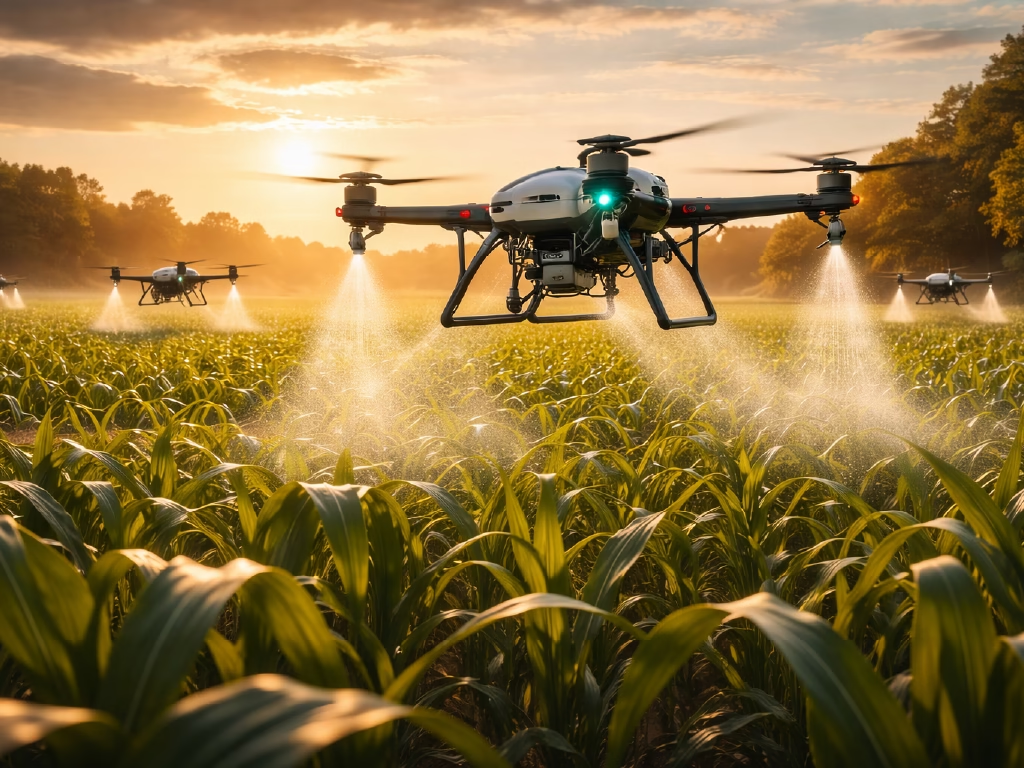
The agricultural sector is undergoing a significant transformation thanks to the integration of digital technologies. The introduction of smart production lines in the Liquid Fertilizer Production Line is revolutionizing the way fertilizers are manufactured. These smart systems utilize advanced sensors, Internet of Things (IoT) devices, and real-time data analysis to monitor and control various production processes. As a result, manufacturers can optimize the entire production cycle, ensuring that every step is executed with precision.
Smart production lines in the Liquid Fertilizer Production Line sector have become a game-changer in the manufacturing process. These advanced systems enable remote monitoring, predictive maintenance, and adaptive control, which significantly contribute to reducing downtime and enhancing the overall efficiency of production. Remote monitoring allows operators to keep a close watch on the entire production process from anywhere, offering the flexibility to address issues before they cause significant disruptions. This feature helps maintain uninterrupted production schedules, which is critical in ensuring a steady supply of fertilizers to meet agricultural demand.
Predictive maintenance is another breakthrough in smart production lines. By continuously collecting and analyzing data from various sensors and components, these systems can predict when a machine or component is likely to fail. This proactive approach enables manufacturers to carry out maintenance activities at optimal times, minimizing unexpected breakdowns and reducing repair costs. The ability to predict and prevent malfunctions also helps to extend the lifespan of production equipment, resulting in cost savings and improved profitability in the long term.
Adaptive control further enhances the capabilities of smart production lines. These systems can automatically adjust production parameters based on real-time feedback from sensors and data analytics. For example, if the system detects that certain raw materials or environmental conditions are fluctuating, it can automatically recalibrate to ensure that the final product is consistently of high quality. This level of automation ensures that the Liquid Fertilizer Production Line operates at peak efficiency, maintaining the balance between optimal fertilizer quality and minimal waste production.
One of the most significant benefits of these automated systems is their impact on resource management. By adjusting production parameters in real-time and minimizing waste, manufacturers can optimize the use of raw materials and energy. This not only lowers production costs but also aligns with sustainable manufacturing practices, reducing the environmental footprint of fertilizer production. The integration of smart technologies ensures that the Liquid Fertilizer Production Line operates with the highest level of precision, reducing the likelihood of excess chemical usage and minimizing the waste of valuable resources.
Ultimately, the combination of remote monitoring, predictive maintenance, and adaptive control not only improves the efficiency of the Liquid Fertilizer Production Line but also contributes to greater sustainability. By reducing downtime, enhancing resource management, and minimizing waste, smart production lines are helping to create a more sustainable future for fertilizer manufacturing. These advancements are essential in meeting the growing demand for high-quality fertilizers while ensuring responsible production practices that benefit both the agricultural industry and the environment.
The Impact of Automation Systems on Mixing Accuracy
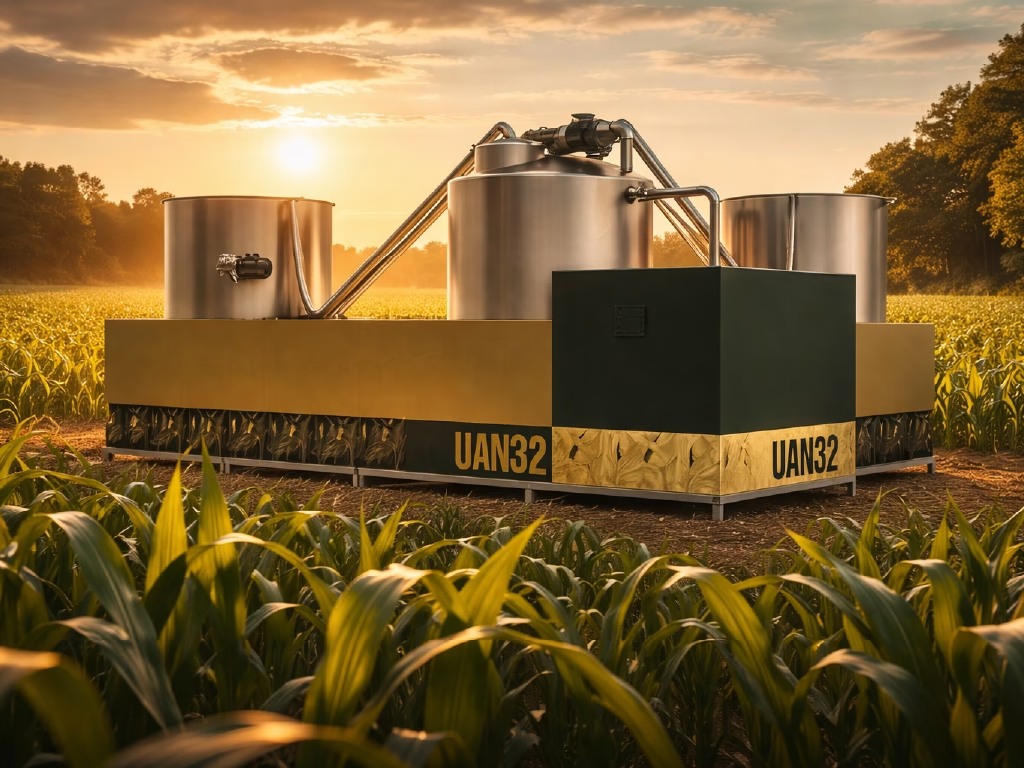
One of the key challenges in liquid fertilizer production is ensuring the accuracy of the mixing process. The correct balance of NPK and UAN components is crucial for producing fertilizers that meet specific nutrient requirements for different crops. Automation systems have significantly improved the accuracy of the mixing process by minimizing human error and ensuring consistent results.
With automated systems, the entire mixing process can be monitored and controlled with high precision. These systems use advanced algorithms to calculate the optimal mixing ratios based on the raw materials’ properties and the desired final product specifications. This automation not only guarantees a consistent product quality but also reduces the time spent on manual adjustments, ultimately increasing the productivity of the Liquid Fertilizer Production Line.
Furthermore, automation systems in the Liquid Fertilizer Production Line enable the seamless integration of advanced sensors that continuously monitor the entire mixing process. These sensors are equipped with high precision to measure and analyze various parameters such as temperature, viscosity, density, and chemical composition. By tracking these variables in real time, they can detect any inconsistencies or deviations from the desired mixture, ensuring that every batch of fertilizer meets the strict quality standards required for agricultural use. This constant monitoring allows for immediate adjustments to be made, ensuring that the fertilizer produced is uniform and within the required specifications.
As the mixing process unfolds, any discrepancies—whether in the consistency of the mixture, the concentration of nutrients, or other key factors—are swiftly detected by the sensors. When these inconsistencies are identified, the automation system automatically triggers corrective actions, whether that be adjusting the flow rates of raw materials, modifying mixing speeds, or recalibrating temperature controls. This level of responsiveness is crucial in maintaining product consistency and quality, allowing manufacturers to produce fertilizers that are both effective and safe for use in farming.
By ensuring that the mixture is consistently uniform, automation systems in the Liquid Fertilizer Production Line also help to prevent common issues such as over-fertilization or under-fertilization. These issues can have significant consequences for agricultural operations, leading to either waste of resources or insufficient nutrients for crops. With automated sensors integrated into the Liquid Fertilizer Production Line, manufacturers can ensure that every batch of fertilizer provides the precise nutrient mix that plants need to thrive. This not only improves the quality of the fertilizer but also optimizes the overall performance of the fertilizers in agricultural applications, contributing to better crop yields and healthier plants.
In addition to improving fertilizer quality, this automated approach plays a key role in enhancing resource efficiency in the Liquid Fertilizer Production Line. By ensuring that every component of the mixture is added in the correct proportion, the system minimizes the wastage of valuable raw materials. This has a dual benefit: it reduces production costs and supports sustainability by minimizing excess chemical usage. Over time, the consistent monitoring and adjustment process driven by the sensors in the Liquid Fertilizer Production Line help establish more efficient production workflows, which is vital for scaling production without compromising quality.
Moreover, the ability of automation systems to maintain a precise and consistent mixture is essential for building trust with end-users. Farmers and agricultural businesses rely on the quality of the fertilizers they use, and knowing that these products are consistently produced to meet specific standards is critical. Automation not only ensures high-quality products but also strengthens the reputation of manufacturers in the market, contributing to long-term customer satisfaction and business success.
In summary, the integration of sensor-based automation in the Liquid Fertilizer Production Line has transformed the mixing process into a highly accurate and efficient operation. Through real-time monitoring and automatic adjustments, manufacturers can achieve higher-quality fertilizers, reduce resource wastage, and enhance the overall effectiveness of their products in agricultural applications. This level of precision, driven by advanced automation, is paving the way for more sustainable and efficient fertilizer production practices in the industry.
Use of Secondary Raw Materials and Increased Efficiency
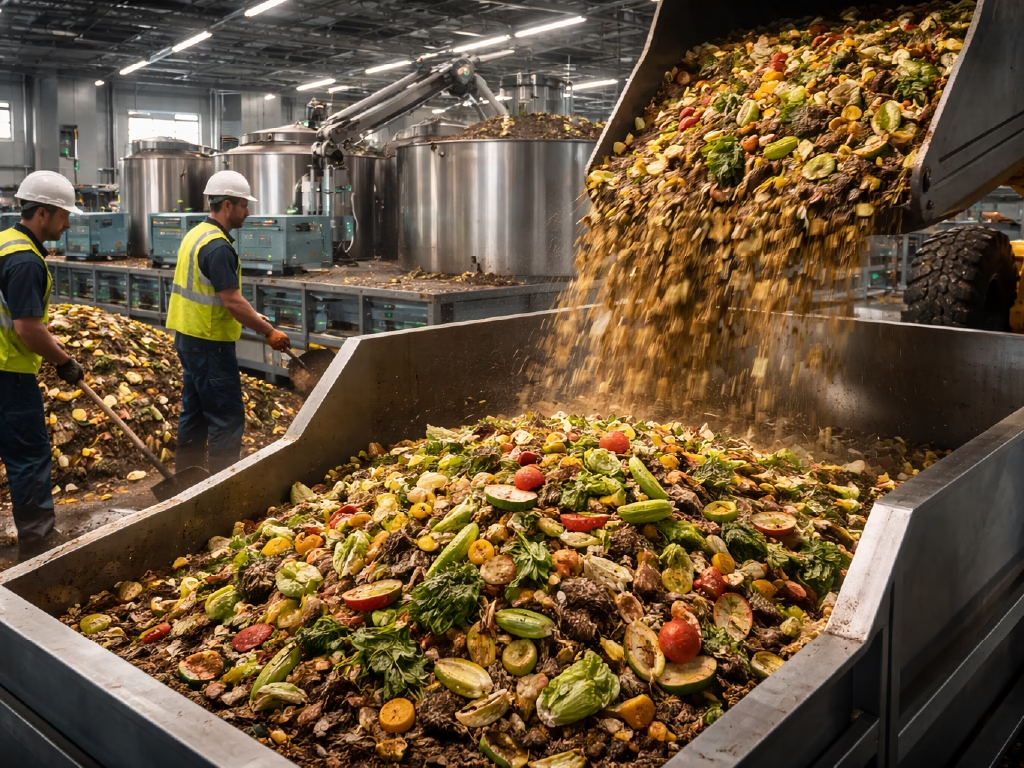
In recent years, the use of secondary raw materials in fertilizer production has gained significant attention. By incorporating by-products and waste materials from other industries, manufacturers can reduce their reliance on primary raw materials and lower production costs. This not only increases the efficiency of the Liquid Fertilizer Production Line but also contributes to environmental sustainability.
Secondary raw materials, such as industrial by-products, organic waste, and recycled materials, can be processed and integrated into the fertilizer production process. These materials often contain valuable nutrients that can be used to supplement the primary raw materials, creating a more sustainable and cost-effective production cycle. For example, using organic waste as a nitrogen source in UAN fertilizers helps reduce the need for synthetic nitrogen, which is a major contributor to environmental pollution.
Additionally, the use of secondary raw materials can help address global concerns related to resource scarcity. By optimizing the use of available resources, manufacturers can create fertilizers that are not only more affordable but also more eco-friendly. This approach aligns with the growing trend of circular economy practices, where waste is minimized, and resources are reused to create value.
Incorporating secondary raw materials into the Liquid Fertilizer Production Line not only reduces production costs but also supports the overall goal of sustainable farming practices. It provides farmers with fertilizers that are not only effective but also environmentally responsible, ultimately benefiting both the agricultural industry and the planet.
In conclusion, the integration of advanced technologies such as smart production lines, automation systems, and the use of secondary raw materials is reshaping the landscape of liquid fertilizer production. These innovations are making the Liquid Fertilizer Production Line more efficient, cost-effective, and sustainable. As the agricultural sector continues to grow, these technologies will play an increasingly important role in ensuring the efficient and responsible production of fertilizers, ultimately supporting the global effort to feed a growing population while protecting the environment.
Are you looking for high-quality Liquid Fertilizer Production Line systems? At Atmosfer Makina, we specialize in providing cutting-edge fertilizer production technologies that maximize efficiency and minimize environmental impact. Our smart production lines and automated systems ensure precision and quality in every batch of fertilizer, helping you meet the increasing demand for sustainable farming practices. Contact us today to learn more about how our solutions can enhance your production process and contribute to a greener future in agriculture.
