
Modern diesel vehicles rely on advanced emission control technologies to comply with strict environmental regulations. Among these technologies, Selective Catalytic Reduction (SCR) systems play a central role in reducing nitrogen oxide (NOx) emissions. However, the effectiveness of SCR systems depends heavily on the quality and purity of the fluid used within them: AdBlue®.
To maintain consistent quality worldwide, the automotive and chemical industries follow a strict international specification known as ISO 22241. These standards define everything from chemical composition to storage, transportation, and handling procedures. Without these guidelines, contamination or improper handling could damage SCR systems and compromise emission performance.
This article explains the ISO 22241 AdBlue® standards, how they work, and why they are critical for SCR system efficiency, manufacturing compliance, and supply chain reliability.
Overview of ISO 22241 Parts 1–5
The ISO 22241 AdBlue® standards consist of five structured sections that regulate the composition, quality, storage, and handling of AdBlue® (also known as Diesel Exhaust Fluid or DEF). These standards ensure that every batch of AdBlue® used in diesel vehicles meets strict purity and compatibility requirements.
Understanding these parts is essential for manufacturers, distributors, automotive engineers, and logistics professionals.

Part 1: Quality Requirements
ISO 22241-1 defines the chemical and physical requirements for AdBlue®. The solution must consist of:
– 32.5% high-purity urea
– 67.5% deionized water
The concentration must remain extremely precise because SCR systems are calibrated for this exact ratio. Even minor deviations can cause:
– SCR malfunction
– Sensor errors
– Increased emissions
– Catalyst damage
The ISO 22241 AdBlue® standards specify limits for impurities such as:
– Calcium
– Iron
– Copper
– Zinc
– Sodium
– Biuret
– Aldehydes
These contaminants must remain at extremely low levels because SCR catalysts are sensitive to metal contamination.
Part 2: Test Methods
ISO 22241-2 explains how laboratories should test AdBlue® to verify compliance with the ISO 22241 AdBlue® standards. Analytical procedures include:
– Refractive index testing
– Spectroscopic analysis
– Ion chromatography
– Conductivity measurement
These testing procedures ensure global consistency in AdBlue® production. A manufacturer in Europe, Asia, or North America can verify fluid quality using identical methods.
Standardized testing prevents disputes between producers, distributors, and automotive manufacturers.
Part 3: Handling, Transport, and Storage
ISO 22241-3 focuses on logistics and handling requirements. Even if AdBlue® is produced correctly, contamination during storage or transportation can compromise quality.
The ISO 22241 AdBlue® standards require strict control over:
– Storage tanks
– Transport containers
– Dispensing equipment
– Environmental exposure
For example, AdBlue® must never be stored in containers made of materials that may react with urea or introduce contaminants.
Temperature control is also critical. The fluid freezes at approximately −11°C (12°F). While freezing does not permanently damage AdBlue®, repeated freeze–thaw cycles can create crystallization risks if containers are contaminated.
Part 4: Refilling Interface
ISO 22241-4 regulates the design of filling systems used in vehicles and distribution equipment.
The goal is to prevent incorrect fluids from entering the SCR system. The ISO 22241 AdBlue® standards define standardized filling interfaces to reduce the risk of cross-contamination with fuel or other chemicals.
These designs typically include:
– Dedicated AdBlue® filler caps
– Unique nozzle sizes
– Anti-misfueling mechanisms
By standardizing these elements, the automotive industry minimizes operational mistakes during vehicle refilling.
Part 5: Quality Assurance in Supply Chains
The final section, ISO 22241-5, focuses on quality management throughout the AdBlue® supply chain.
This includes procedures for:
– Production audits
– Documentation
– Traceability
– Quality certification
The ISO 22241 AdBlue® standards ensure that every participant—from chemical manufacturers to fuel stations—follows consistent quality control protocols.
Real-World Impact on Production & Handling
The practical impact of the ISO 22241 AdBlue® standards extends far beyond laboratories and technical documentation. These standards shape how AdBlue® is produced, transported, and dispensed across global supply chains.
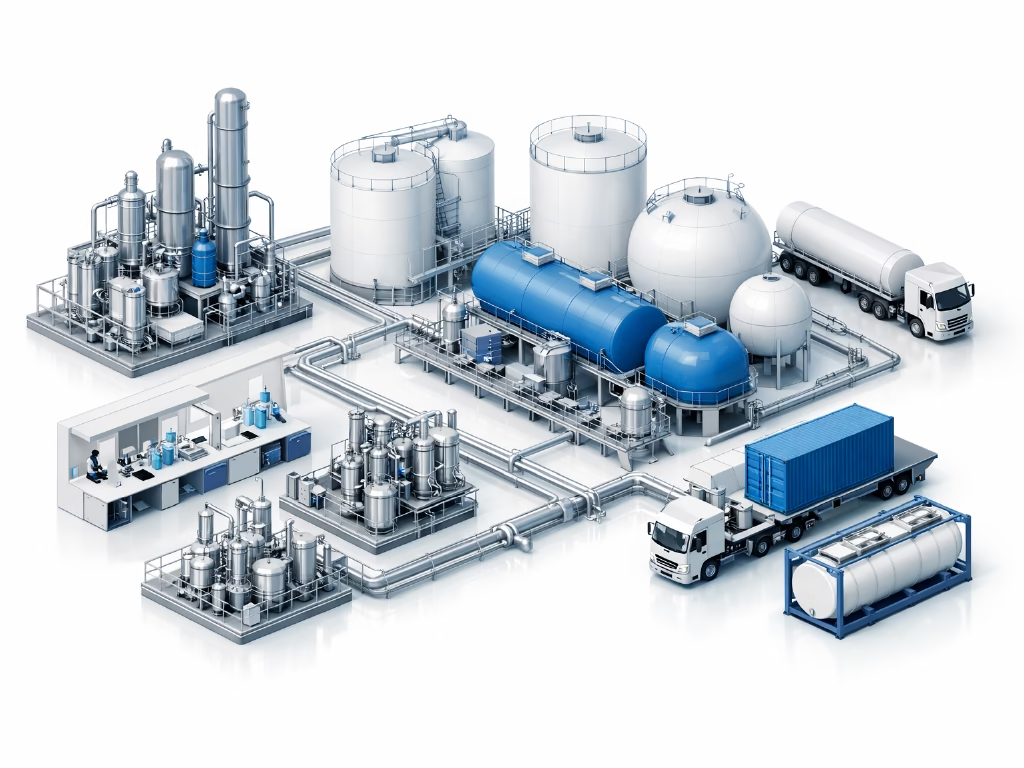
For manufacturers, compliance with the ISO 22241 AdBlue® standards requires investment in specialized production equipment, quality monitoring systems, and contamination-controlled environments.
Manufacturing Facilities
AdBlue® production plants must use:
– High-purity synthetic urea
– Deionized water systems
– Closed production environments
– Stainless steel pipelines
Manufacturers must also implement strict filtration and quality testing protocols before the product is released for distribution.
Logistics and Distribution
Transporting AdBlue® introduces additional risks. The ISO 22241 AdBlue® standards require that transport containers meet strict material compatibility requirements.
Commonly approved materials include:
– Stainless steel
– HDPE (High Density Polyethylene)
– Certain fluoropolymers
Materials that may introduce metal contamination are strictly prohibited.
Storage Facilities
Distribution centers and service stations must also follow handling procedures defined by the ISO 22241 AdBlue® standards.
Recommended storage conditions include:
– Temperature range between −5°C and 25°C
– Protection from direct sunlight
– Sealed containers to prevent dust contamination
AdBlue® should also be stored separately from fuel and lubricants to prevent accidental mixing.
Automotive Manufacturer Requirements
Vehicle manufacturers rely on the ISO 22241 AdBlue® standards to guarantee fluid compatibility with SCR catalysts.
If substandard fluid enters the system, the consequences may include:
– SCR injector clogging
– Catalyst degradation
– Increased NOx emissions
– Engine warning codes
– Vehicle performance restrictions
For this reason, many OEMs require certification proving compliance with the ISO 22241 AdBlue® standards before approving suppliers.
Material Requirements for Contact Surfaces
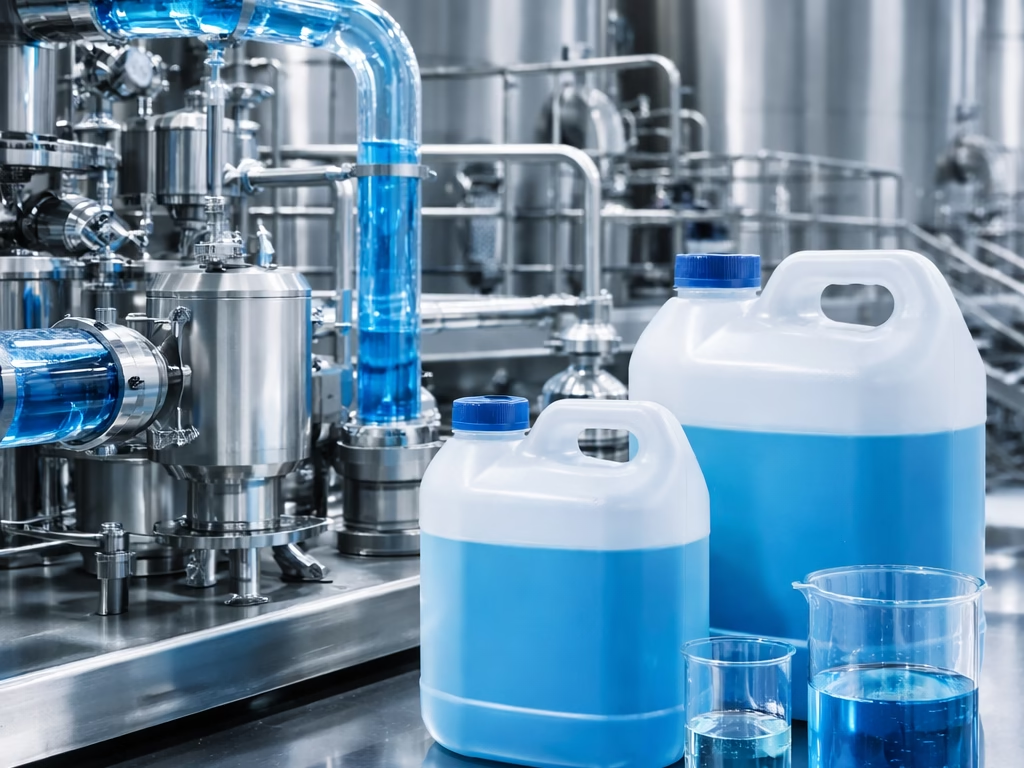
One of the most critical aspects of the ISO 22241 AdBlue® standards involves material compatibility. AdBlue® is chemically sensitive to certain metals and contaminants, meaning that every surface the fluid touches must meet strict requirements.
Approved Materials
Common materials compatible with AdBlue® include:
– Stainless steel (AISI 304 or AISI 316)
– High Density Polyethylene (HDPE)
– Polypropylene (PP)
– Fluorinated polymers
These materials resist corrosion and do not introduce metal ions into the solution.
Prohibited Materials
Certain materials can contaminate AdBlue® and therefore violate the ISO 22241 AdBlue® standards.
These include:
– Carbon steel
– Copper
– Zinc
– Brass
– Aluminum alloys
Even small traces of these metals can poison SCR catalysts.
Equipment Design Considerations
Manufacturers must design production and distribution equipment with contamination prevention in mind.
Key considerations include:
– Smooth interior tank surfaces
– Dedicated pipelines for AdBlue®
– Closed transfer systems
– Particle filtration systems
Because the ISO 22241 AdBlue® standards emphasize purity, any shared equipment must be thoroughly cleaned and verified before use.
Case Study: Compliance Success vs Failure
To understand the importance of the ISO 22241 AdBlue® standards, consider two hypothetical scenarios within the diesel emissions industry.
Scenario 1: Certified AdBlue® Supply Chain
A European chemical manufacturer produces AdBlue® in a facility fully compliant with the ISO 22241 AdBlue® standards.
The company:
– Uses pharmaceutical-grade urea
– Maintains ISO-certified laboratories
– Implements automated contamination monitoring
– Uses stainless steel storage systems
As a result, the product meets automotive manufacturer requirements and is distributed globally without issues.
Fleet operators using this AdBlue® report:
– Reliable SCR performance
– Reduced vehicle downtime
– Compliance with emission regulations
The brand builds long-term trust with distributors and OEM partners.
Scenario 2: Non-Compliant Production
In another case, a small manufacturer attempts to produce AdBlue® without strictly following the ISO 22241 AdBlue® standards.
The company uses:
– Industrial-grade urea
– Non-certified containers
– Inadequate filtration systems
Metal contamination enters the fluid supply.
Once used in diesel vehicles, the contaminated AdBlue® causes:
– SCR injector clogging
– Sensor failures
– Catalyst degradation
– Engine error codes
Fleet operators must replace expensive SCR components, leading to significant financial losses.
The manufacturer ultimately loses credibility and faces legal consequences for supplying non-compliant fluid.
Why ISO 22241 Matters for the Future of Diesel Technology
As environmental regulations continue to tighten worldwide, SCR technology remains one of the most effective solutions for reducing diesel emissions. However, SCR systems can only perform properly when supplied with high-purity AdBlue®.
This is why the ISO 22241 AdBlue® standards are essential.
They provide:
– Global quality consistency
– Protection for vehicle emission systems
– Reliable supply chain management
– Reduced risk of contamination
– Standardized testing and verification
For manufacturers, distributors, and fleet operators, understanding the ISO 22241 AdBlue® standards is not just a technical requirement—it is a critical part of maintaining operational reliability and regulatory compliance.
As the automotive industry evolves toward cleaner technologies, adherence to these standards ensures that diesel engines continue to operate efficiently while minimizing their environmental impact.
If your business operates in the AdBlue® production, storage, or distribution sector, compliance with the ISO 22241 AdBlue® standards is not just a recommendation—it is a critical operational requirement. From contamination-free storage systems to properly engineered transfer equipment, every step of the process must meet strict technical specifications to ensure SCR system safety and long-term vehicle performance.
At Atmosfer Makina, we help manufacturers and distributors build reliable infrastructure that supports high-purity fluid handling and industrial production processes. Our engineering expertise focuses on designing durable, efficient, and contamination-safe systems used in modern chemical and industrial applications.
Whether you are planning a new facility, upgrading existing production lines, or optimizing your storage and transfer equipment, working with the right engineering partner makes a significant difference in maintaining product integrity and operational efficiency.
With years of industrial experience and a strong commitment to engineering precision, Atmosfer Makina supports businesses that require reliable solutions for demanding production environments.
Visit atmosfermakina.com to explore our industrial solutions and learn how the right engineering approach can help your operation maintain quality, reliability, and compliance across every stage of production.
