
Scheduled for 21 October 2026 in Prague, Czech Republic, the Argus AdBlue® conference offers a focused setting for these conversations. This article explores its sponsorship and exhibition opportunities, explains what equipment buyers should discuss, and connects the event’s themes with the production solutions available from Atmosfer Makina.
Whether you are evaluating a new facility or improving an existing operation, an AdBlue® conference can help organise your priorities. Arrive with specific questions about raw materials, water quality, automation, storage and packaging. Then use the answers to build a clearer project brief and compare potential partners against measurable requirements.
What Is the Argus AdBlue® Conference Day?
The Argus AdBlue® conference is a dedicated forum for the European diesel exhaust fluid value chain. Its audience includes producers, distributors, urea suppliers, vehicle manufacturers, logistics companies and end users. The organiser describes a standalone event with its own programme and networking, allowing discussions to concentrate on this specialised market.
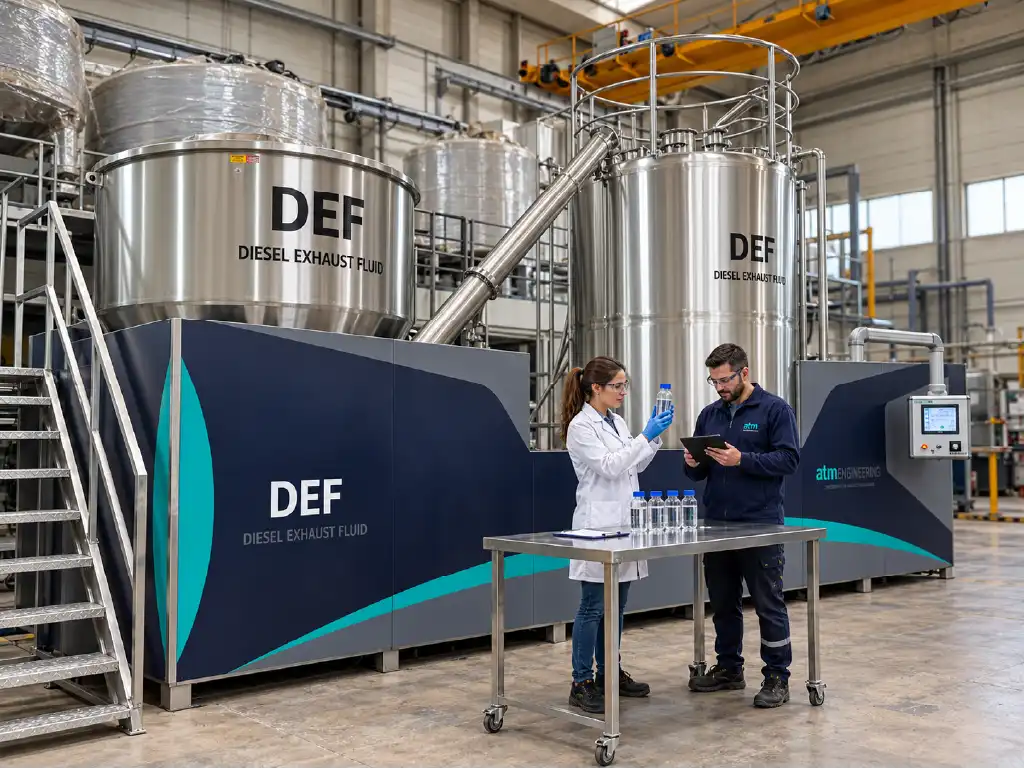
For a machinery buyer, that specialised AdBlue® conference audience matters. A distributor’s concerns about delivery reliability can inform tank sizing. A producer’s experience with variable feedstock can improve procurement questions. Conversations become more useful when commercial teams and engineers connect customer expectations with the practical limits of a production facility.
The published AdBlue® conference agenda addresses supply, quality, distribution, SCR applications and longer term demand. These are discussion topics rather than guaranteed predictions. Readers should consult the official Argus agenda for current details and use independent project data when making investment decisions.
Sponsorship and Exhibition Opportunities
The official AdBlue® conference sponsorship page describes options including headline visibility, networking and branding, equipment demonstration areas, exhibition space and private meeting rooms. These formats serve different objectives. A brand seeking wider recognition may prioritise visibility, while a technical supplier may prefer detailed conversations around a clearly defined equipment application.
A useful AdBlue® conference exhibition plan begins with a customer problem. For example, a producer may need to reduce manual dosing interventions or coordinate blending with packaging. Build the demonstration around that problem, explain the proposed process, and identify the documents needed to validate performance after the event.
Before purchasing an AdBlue® conference package, confirm what is included directly with Argus. Discuss demonstration permissions, equipment dimensions, utility availability, delivery arrangements and meeting access. These practical checks help avoid planning a display that the venue cannot accommodate. The sponsorship and exhibition page provides the organiser’s enquiry route.
Turning Market Discussions into Production Priorities
Market insight from an AdBlue® conference becomes valuable when it changes a concrete decision. If customers require more frequent deliveries, examine dispatch capacity and finished product storage. If packaging preferences vary across regions, review filling flexibility. Translate each commercial observation into a requirement that engineering and procurement teams can investigate.
Urea sourcing discussions at an AdBlue® conference should also lead to better supplier qualification. Compare documented material quality, delivery consistency, packaging integrity and traceability. Avoid treating a lower purchase price as the complete business case. An inexpensive shipment becomes costly if it creates production interruptions, additional testing or rejected finished batches.
Prepare several demand scenarios before the AdBlue® conference. Separate confirmed orders from prospective sales and identify seasonal changes in your customer base. This makes capacity discussions more realistic. The objective is a facility that supports credible demand while retaining appropriate expansion options, rather than equipment selected around an unsupported growth assumption.
Quality Starts with the Complete Process
Quality conversations at an AdBlue® conference should distinguish product requirements from machinery features. AUS 32 is an aqueous solution containing approximately 32.5% high purity urea by mass, used in selective catalytic reduction systems. The ISO 22241 series addresses relevant quality, testing and handling requirements; purchasing equipment alone does not establish conformity.
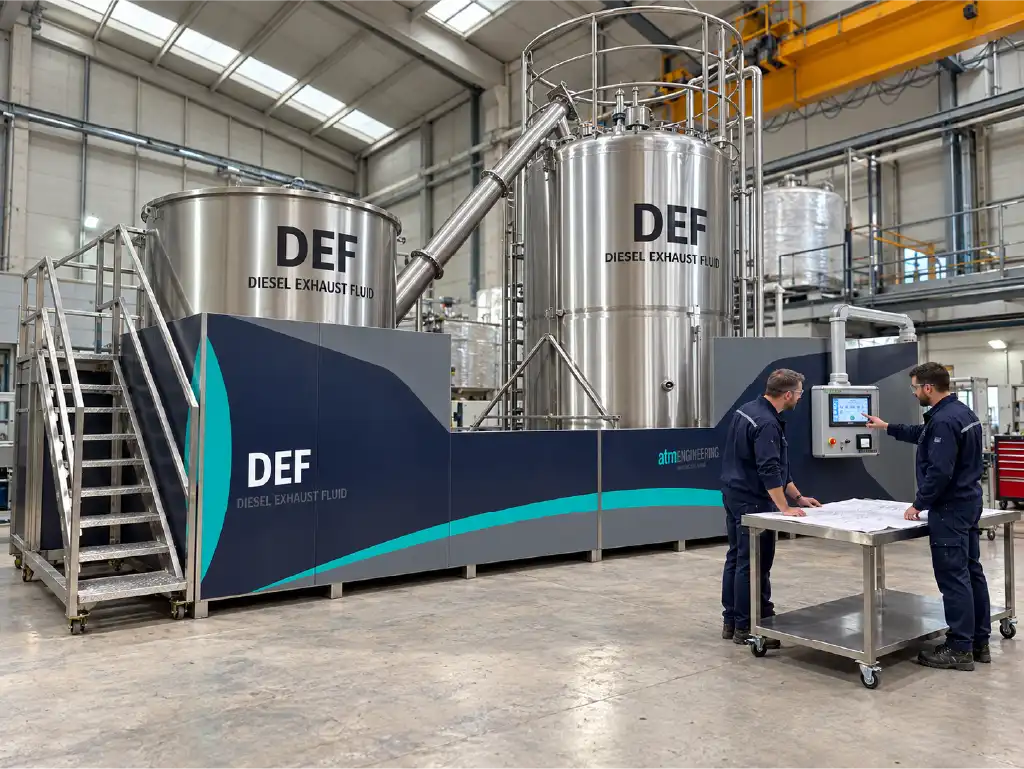
At the AdBlue® conference, ask how suppliers protect product quality throughout the process. Consider incoming materials, water treatment, dissolution, transfer, storage and filling. A contamination risk can arise after an otherwise controlled mixing stage, so the assessment should follow the entire product route rather than focus only on the main vessel.
Use the AdBlue® conference to clarify how final batches will be checked and released. Define sampling points, laboratory responsibilities, identification rules and actions for unexpected results. Review the VDA’s AdBlue® information and applicable standards when preparing your quality framework. AdBlue® is a registered trademark of the VDA.
Water Treatment and Contamination Control
A practical AdBlue® conference equipment conversation should begin with the available feedwater analysis. Water treatment cannot be specified accurately from production volume alone. Provide representative water data and discuss how changing source conditions affect the proposed treatment stages, monitoring requirements and maintenance schedule. Confirm the intended water acceptance criteria within the project specification.
Another useful AdBlue®conference question concerns contact materials and dedicated handling. Ask suppliers to document wetted components, transfer connections and cleaning procedures. Review how hoses, pumps and storage vessels will be identified and protected. Small handling details deserve attention because they can undermine quality even when the automated production equipment performs correctly.
Automation, Operator Access and Batch Records
The AdBlue® conference provides a useful context for comparing automation claims. Look beyond an attractive touchscreen and ask which production steps are controlled, which signals are measured, and which decisions still require an operator. A demonstration should show the sequence clearly, including normal operation, interruptions and the information available when something goes wrong.
An effective AdBlue® conference demonstration can follow one batch from material admission to transfer. Ask to see dosing information, alarms, operator permissions and available records. Discuss how production data can support troubleshooting and traceability. The relevant question is whether the proposed controls support your operating procedures, rather than how many dashboard features are displayed.
Operator ergonomics also deserve attention during an AdBlue® conference discussion. The supplied Atmosfer machine photographs show an accessible control panel whose screen is positioned around an adult operator’s chest level. Evaluate viewing comfort, access routes and maintenance clearances using the actual layout. Confirm final dimensions and access requirements before approving a facility design.
Evaluating Capacity and Operating Costs
Capacity comparisons at an AdBlue® conference need a shared basis. Ask whether quoted output describes a mixing stage, a complete batch cycle or finished product ready for dispatch. Include material loading, quality release, cleaning and packaging in the discussion. The most useful figure reflects the process boundary relevant to your customer commitments.
Use the AdBlue® conference to request operating assumptions alongside headline specifications. Discuss feedwater conditions, utility requirements, labour duties, maintenance access and consumables. Compare suppliers using the same input conditions wherever possible. This approach exposes differences that a simple comparison of purchase prices or nominal production rates would otherwise miss.
A defensible AdBlue® conference investment discussion considers the entire delivered product cost. Include raw materials, water treatment, electricity, quality checks, packaging, storage and transport. Test how the estimate changes when utilisation falls or input prices rise. A realistic model supports better decisions than a payback figure based only on maximum production.
Connecting Blending with Storage and Packaging
Distribution discussions at an AdBlue® conference can reveal bottlenecks outside the blending system. A plant may produce efficiently yet struggle to fill the formats customers request. Map anticipated sales across containers and bulk deliveries, then assess filling rates, changeover needs, staging areas and dispatch windows before finalising the production configuration.
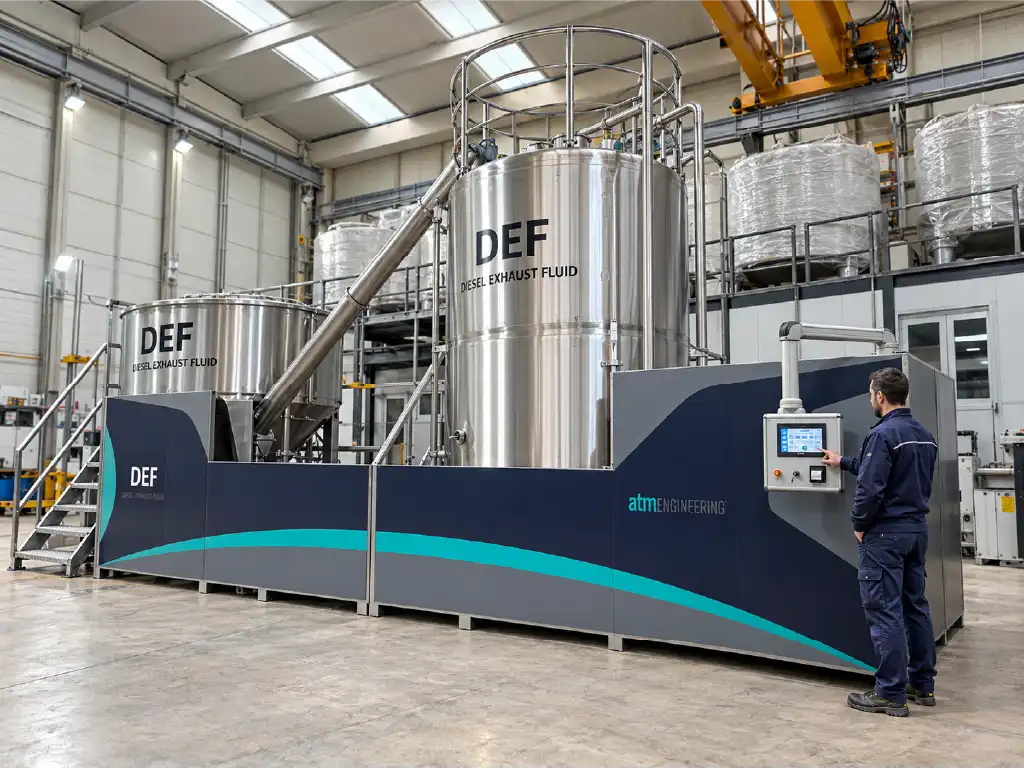
Storage planning belongs in the same AdBlue® conference conversation. Define how released batches will be identified, how stock will be rotated and how loading connections will be protected. Discuss the separation of incoming materials, production activity and finished goods movement. A coordinated layout helps teams maintain control as order volumes and delivery frequency increase.
How Atmosfer Makina Relates to These Priorities
For businesses researching machinery around the AdBlue® conference, Atmosfer Makina offers a relevant starting point. Its website presents turnkey DEF production equipment, automated material transfer, water purification and operator interfaces. Explore the DEF production facility page to identify which capabilities should be discussed against your intended process and site conditions.
Preparation for an AdBlue® conference machinery meeting should include a written brief. Share target production, feedwater data, utilities, available floor space, packaging needs and quality responsibilities. Review Atmosfer’s filling, capping and labeling solutions alongside blending requirements. Request a project specific proposal rather than assume every published feature applies to every configuration.
Commissioning and Acceptance: Agree on Evidence
An AdBlue® conference meeting is also an opportunity to discuss how a proposed system will be accepted. Define responsibilities for installation checks, operator training and performance verification before ordering. Ask which activities occur at the manufacturer’s facility and which require your own site, utilities and materials. Written acceptance criteria give both parties a common basis for evaluating the delivered equipment.
Build the verification plan around intended operating conditions. Confirm the agreed production sequence, required records, alarm responses and product sampling arrangements. Identify who supplies test materials and who evaluates laboratory results. Where a demonstration uses different conditions from your facility, document those differences explicitly so that the comparison remains useful rather than suggesting an unsupported performance guarantee.
Finally, discuss the support available after commissioning. Request maintenance instructions, recommended spare parts and a clear route for technical questions. Assign responsibility for keeping operating records and reviewing recurring interruptions. A documented handover helps the production team move from installation into routine operation with fewer unresolved questions about equipment use, maintenance duties or escalation procedures.
Preparing for Productive Technical Meetings
Before attending the AdBlue® conference, agree on the questions your team needs answered. Procurement may prioritise commercial scope, engineering may focus on utilities, and quality personnel may require documentation. Combining these perspectives prevents an appealing presentation from replacing the practical assessment needed to select equipment and define supplier responsibilities.
During the AdBlue® conference, record assumptions and outstanding evidence for each supplier. Request layout drawings, component information, commissioning scope and support arrangements where relevant. Keep meeting notes specific: what was proposed, what remains unconfirmed, and who will respond. This makes subsequent comparisons clearer and reduces misunderstandings during quotation review.
After the AdBlue ®conference, convert useful conversations into a defined next step. That might be a technical review, a revised layout or an agreed performance demonstration. Set a decision timetable and assign ownership for missing inputs. Conference contacts become commercially meaningful when both parties know which information moves the project forward.
Frequently Asked Questions
When and where is the event?
The Argus AdBlue® conference is scheduled for 21 October 2026 in Prague, Czech Republic. Check the organiser’s current event information before arranging travel or registration.
Who can benefit from attending?
The AdBlue® conference is relevant to producers, distributors, urea suppliers, logistics providers, equipment companies and end users seeking focused industry discussions and potential commercial contacts.
What exhibition formats are available?
The AdBlue® conference sponsorship page describes branding, networking, demonstration and exhibition options. Availability, package scope and practical arrangements should be confirmed directly with the organiser.
Does machinery guarantee compliant product?
No. An AdBlue® conference equipment demonstration cannot replace raw material qualification, appropriate procedures, testing and controlled handling. Product quality depends on the complete production and distribution process.
Can machinery discussions continue after the event?
Yes. An AdBlue® conference meeting can lead to a separate technical review with a supplier. Agree on the required documents, responsible contacts and next steps to keep the project moving.
What should I send when requesting a quotation?
Following an AdBlue® conference discussion, provide target output, water analysis, site layout, utilities and packaging requirements. These inputs help suppliers prepare a more useful technical proposal.
Discuss Your DEF Production Project
Use the AdBlue® conference as a prompt to examine your production plans and assess investment priorities. Contact Atmosfer Makina to discuss a facility built around your documented requirements, with clear operational goals and measurable milestones.
Images are illustrative and have been generated using artificial intelligence.
