
At our dedicated stand, visitors can discuss how commercial plans translate into machinery requirements, plant layouts and operating procedures. Our team will explore turnkey DEF production solutions, water purification, controlled blending and the filling arrangements needed to serve different customers.
Whether you are establishing a new AdBlue® business or expanding an existing facility, the most useful starting point is a clear project brief. This guide explains the questions to prepare before meeting our technical team and the process decisions that deserve attention before equipment is selected.
Meet Atmosphere Engineering at the AdBlue® Conference in Prague
Our participation gives visitors an opportunity to connect market discussions with practical engineering. A business may recognise demand for AdBlue® yet still need to determine suitable capacity, water treatment requirements, packaging formats and the space required for daily operation.
Bring those questions to our stand. The Atmosphere Engineering team will be available to discuss equipment configurations and project requirements. Conversations about AdBlue® production become more productive when procurement, engineering and quality personnel share the same assumptions about demand, utilities and customer expectations.
From AdBlue® Market Insight to a Production Brief
Begin with the customers you intend to serve. Define realistic dispatch volumes, delivery frequency and packaging preferences. Separate confirmed orders from potential business so that capacity decisions reflect evidence rather than an optimistic market forecast.
A regional distributor supplying packaged AdBlue® may require frequent container changes and coordinated labeling. A business serving large fleet customers may place greater emphasis on storage and bulk loading. The fluid specification may be similar, but the production and distribution requirements can differ considerably.
The U.S. EPA’s diesel exhaust fluid overview explains how DEF supports selective catalytic reduction systems in reducing nitrogen oxide emissions. For an AdBlue® producer, this downstream application makes dependable product quality and supply availability central to customer relationships.
Turnkey AdBlue® Production Equipment for Your Business
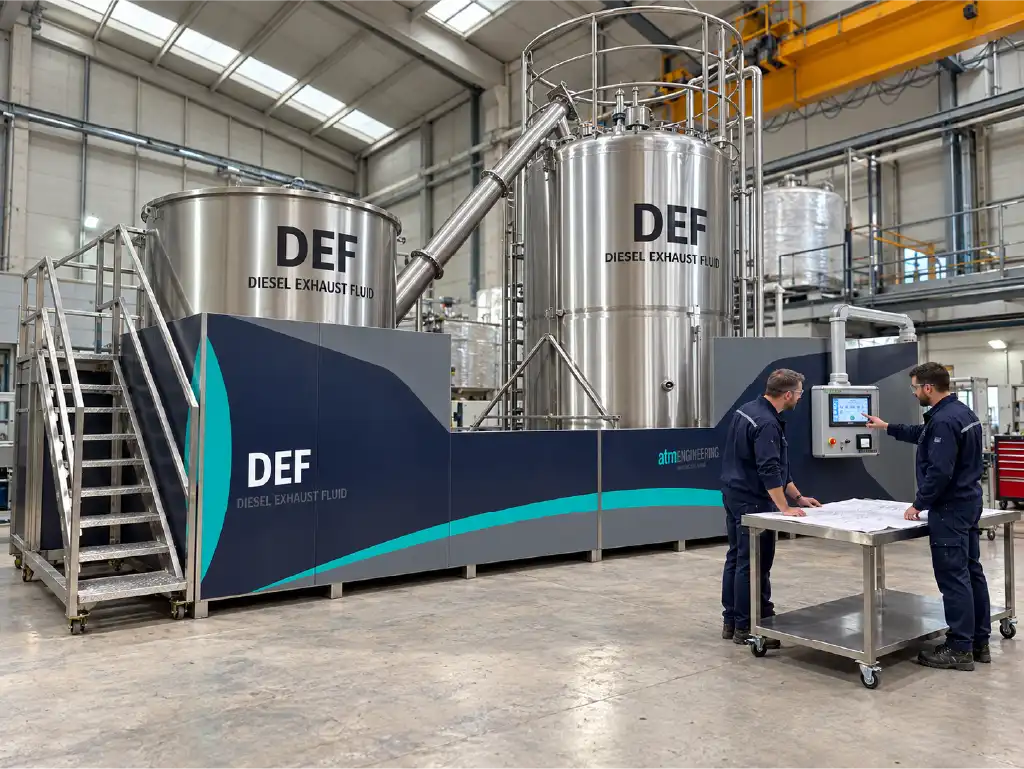
Atmosphere Engineering’s DEF production facility offering brings together automated urea transfer, water dosing, mixing and transfer to stock tanks. Buyers can discuss how these stages should work together within their proposed AdBlue® production process.
A turnkey enquiry should cover the complete scope. Identify the required treatment equipment, product storage, transfer connections, controls and packaging interfaces. Confirm which components are included in the proposal and which remain the purchaser’s responsibility. This makes quotations easier to compare and reduces misunderstandings during installation.
Water Purification for Reliable AdBlue® Manufacturing
Water treatment should begin with an analysis of the available source. Provide representative feedwater information before requesting equipment selection. Seasonal variations, supply availability and existing treatment stages should also be included in the technical discussion.
A suitable purification arrangement must support both the required water quality and production demand. For AdBlue® manufacturing, discuss monitoring points, maintenance duties and acceptance criteria alongside treatment capacity. Selecting a system from flow rate alone leaves important operating conditions undefined.
Our team can discuss water purification within the wider AdBlue® plant scope. Establish how treated water will be stored, transferred and protected before blending. Agree on the evidence needed to accept the proposed system and how the production team will respond when monitoring results move outside established limits.
Urea Sourcing and ISO 22241 Quality Control
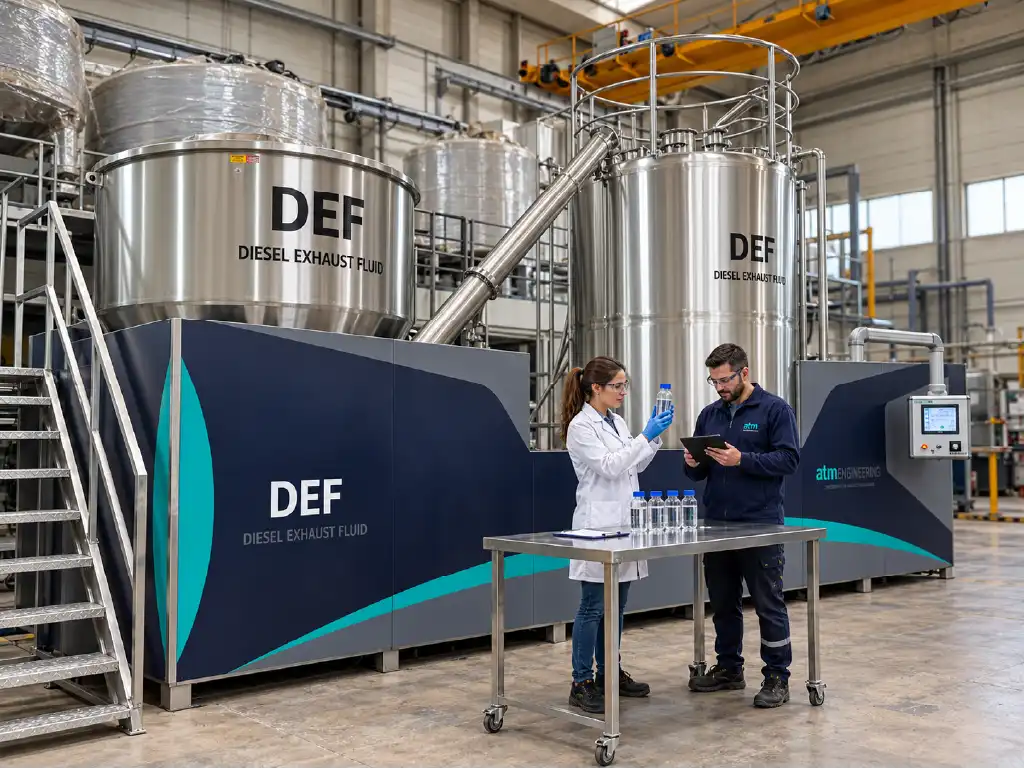
AUS 32 contains approximately 32.5% high-purity urea by mass in water. The EPA’s DEF quality monitoring guidance discusses this concentration and refers to ISO 22241-1. For AdBlue® producers, the practical priority is maintaining the required composition and controlling impurities throughout production.
Qualify urea suppliers using documented specifications, lot identification and delivery records. Inspect packaging integrity and define suitable receiving and storage procedures. An automated AdBlue® line cannot turn unsuitable raw material into an acceptable finished product merely by controlling the mixing sequence.
Define sampling locations, laboratory responsibilities and batch release authority before production begins. Equipment supports AdBlue® quality management, while compliance also depends on materials, handling and testing. Purchasing a machine does not automatically establish product conformity or grant permission to use the VDA’s registered trademark.
Protecting AdBlue® Purity During Storage and Transfer
Contamination control continues after blending. Map the route from the production vessel to the customer container and identify every product contact surface. Tanks, pumps, valves, hoses and connections should be included in the materials review, with responsibilities assigned for inspection and maintenance.
Keep dedicated transfer equipment clearly identified and protected when it is disconnected. Define how connections are checked before use and how unexpected contamination is investigated. A documented procedure helps prevent assumptions about equipment cleanliness from replacing an actual inspection.
Storage planning should also establish batch identification and stock rotation. Separate product awaiting release from approved stock, and record transfers between vessels. These arrangements help the production team maintain traceability when several batches are stored or dispatched during the same operating period.
Automation and Batch Traceability in AdBlue® Production
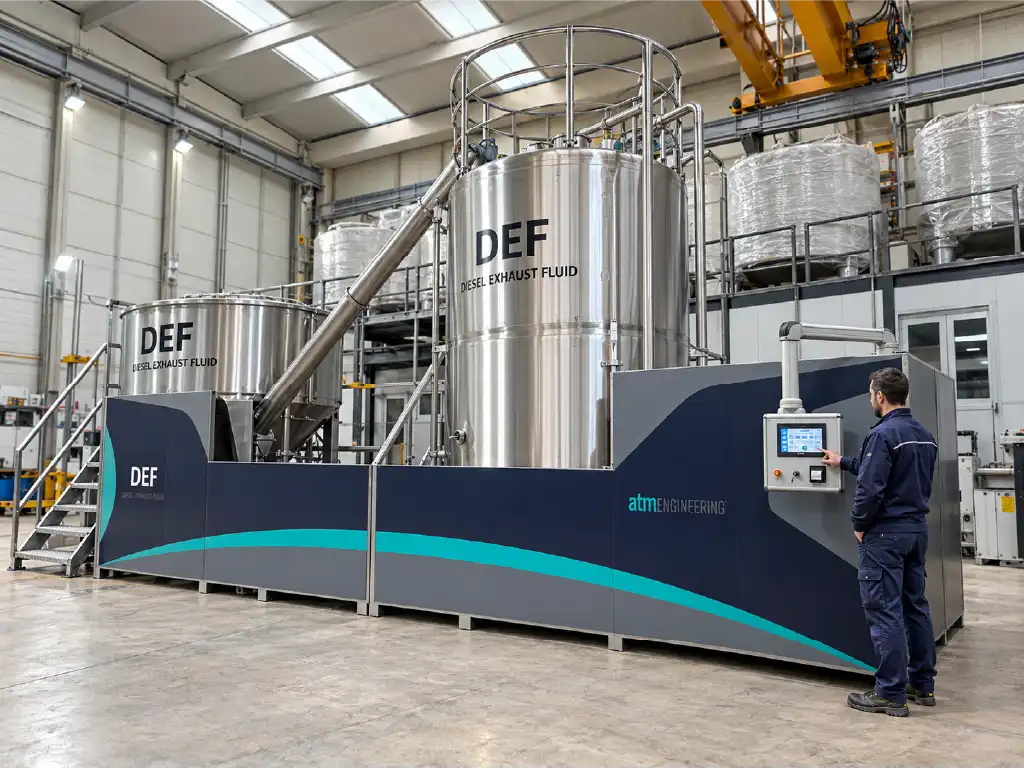
Automation should support a clearly defined operating sequence. Ask which parameters are measured, which actions are controlled and which decisions require operator approval. An AdBlue® production enquiry should include normal operation, interrupted batches and the information available when an alarm occurs.
Discuss batch identification, dosing information, user permissions and the records needed for troubleshooting. Confirm which data functions are included in the offered AdBlue® configuration. Available features should be demonstrated against your procedures, rather than assumed from a general description of automation.
Operator access matters alongside software. Review screen position, visibility, maintenance clearances and movement around the equipment. An AdBlue® facility should allow personnel to inspect, sample and service the system without making routine tasks unnecessarily difficult. Final dimensions should be checked against the approved layout.
Choosing the Right AdBlue® Plant Capacity
Atmosphere Engineering publishes the following model capacities on its production facility page. These figures provide an initial basis for an AdBlue® equipment discussion, subject to confirmation of current specifications and project conditions.
| Model | Published capacity |
|---|---|
| ATM 4800 | 6 m³/h |
| ATM 7200 | 9 m³/h |
| ATM 9600 | 12 m³/h |
| ATM 9600+ | 20 m³/h |
Daily saleable output also depends on material loading, water availability, quality release, filling and dispatch. Compare AdBlue® plant proposals using the same operating schedule and process boundary. Establish whether quoted capacity refers to blending output or finished product ready for shipment.
Planning Site Access and Future Expansion
The site layout should show how raw materials, operators and finished goods move through the facility. Include delivery access, container staging, laboratory sampling routes and the space needed to remove serviceable components. Discuss these requirements while equipment selection remains flexible.
For an expanding AdBlue® business, reserve appropriate space for the next justified stage of growth. That may involve another storage vessel, a separate filling station or additional water treatment capacity. Expansion allowances should follow a credible demand scenario rather than an unspecified expectation of larger sales.
Review installation access as well as normal operation. Confirm how major components will enter the building and whether the available routes accommodate their dimensions. Resolving access questions before manufacture can prevent layout revisions when equipment arrives at the site.
Filling, Storage and Packaging for AdBlue® Distribution
Define the proportion of orders expected in jerrycans, drums, IBCs and bulk deliveries. Discuss each format separately, including container handling, changeover time and loading connections. AdBlue® packaging requirements should influence the plant layout before machinery positions are finalised.
Atmosphere Engineering’s filling, capping and labeling solutions provide a starting point for packaged-product enquiries. Establish the suitable measurement method, filling rate and container compatibility for your application. Protect AdBlue® quality through dedicated equipment, documented contact materials and appropriate transfer procedures.
Agree on a filling verification plan using the intended production containers and a calibrated reference method. Test representative package sizes, normal operating speed, restart conditions and format changes. Record individual results instead of relying only on an average. Also identify who checks calibration, how discrepancies are investigated and when production must pause for adjustment. These records give operators a practical basis for maintaining consistent package quantities as customer orders and container specifications change.
Where commercial measurement requirements apply, the NIST Handbook 44 resource offers information on weighing and measuring devices. Confirm the requirements relevant to your destination market. Instrument specifications alone do not establish the accuracy of every completed package.
Evaluating Energy Use and Operating Costs
Assess operating costs across the whole facility. Include urea, water, electricity, labour, testing, consumables, maintenance, packaging and transport. An AdBlue® investment model should state the utilisation assumption so that alternative quotations can be compared on a consistent basis.
Distinguish installed power from energy consumed during a defined production run. Equipment ratings do not independently establish consumption per cubic metre. Ask how any estimate was prepared and whether supporting treatment, transfer and filling equipment were included in the calculation.
Test the model against lower demand, higher input costs and interruptions. Reliable AdBlue® supply depends on the ability to maintain production when conditions change. A transparent cost model identifies the assumptions that deserve further technical or commercial evidence before an equipment order is placed.
Commissioning and Support for Long Term Operation
Agree on commissioning responsibilities before ordering. Define installation checks, operator training, performance verification and the documentation required for handover. Where factory and site acceptance testing are included, specify test materials, utilities, sampling arrangements and acceptance criteria.
Verification should follow the intended AdBlue® production sequence, including start-up, interruptions and transfer permissions. Request maintenance instructions, recommended spare parts and proposed support arrangements. A defined handover helps the team manage routine operation and gives technical questions a clear route for resolution.
Before accepting an AdBlue® system, record the operating conditions used during each trial. Keep the agreed production target, material specification and packaging format together with the test results. Assign an owner to each unresolved item and agree on the evidence required to close it. This creates a shared basis for evaluating performance after installation.
What to Bring to Your Technical Meeting
Prepare a short AdBlue® project brief before visiting our stand. Include confirmed inputs and identify assumptions that still require review:
- Project location, daily dispatch target and expected operating shifts.
- Feedwater analysis, water source and available supply.
- Urea specification, supply format and planned storage.
- Floor plan, access routes and available utilities.
- Container formats, packaging volumes and bulk loading needs.
- Quality responsibilities, commissioning timetable and expansion expectations.
These details help our team establish a practical scope. If information is incomplete, identify who will provide it and when. This keeps the quotation process focused and makes subsequent revisions easier to assess.
Frequently Asked Questions
When and where is the AdBlue® conference?
The event is scheduled for 21 October 2026 in Prague, Czech Republic. Atmosphere Engineering will participate as a Bronze Sponsor and Exhibitor, with our team available to discuss production projects.
Which AdBlue® solutions can we discuss at the stand?
Visitors can discuss turnkey DEF plants, water purification, automated blending and filling requirements. Share your AdBlue® capacity target and packaging plan so that the conversation addresses the equipment scope relevant to your business.
Does purchasing machinery guarantee compliant product?
No. AdBlue® quality depends on the complete process, including raw material qualification, water treatment, compatible handling equipment, operating procedures and testing. Confirm how the proposed system supports the quality framework your business needs.
Can we discuss an expansion of an existing facility?
Yes. Bring the existing layout, equipment information and target output. Our team can review potential bottlenecks and discuss whether additional treatment, blending, storage or filling capacity should be assessed.
Plan Your AdBlue® Project with Atmosphere Engineering
Meet our team at the Argus AdBlue® Conference in Prague on 21 October 2026. Bring your production objectives, water analysis and packaging requirements to discuss the next stage of your facility project.
Contact Atmosphere Engineering to schedule a technical meeting. For registration and current event arrangements, visit the official Argus conference page.
Images are illustrative and have been generated using artificial intelligence.
