
Coastal data centers have access to abundant seawater, but converting it into dependable process water requires a treatment train designed around the cooling system, local marine conditions and environmental permits. Installing a reverse osmosis (RO) skid is only one part of that process.
Data center seawater desalination systems must combine suitable pretreatment, membrane separation, storage and any downstream polishing required for the intended application. Each stage must protect equipment while supporting the facility’s water and energy objectives.
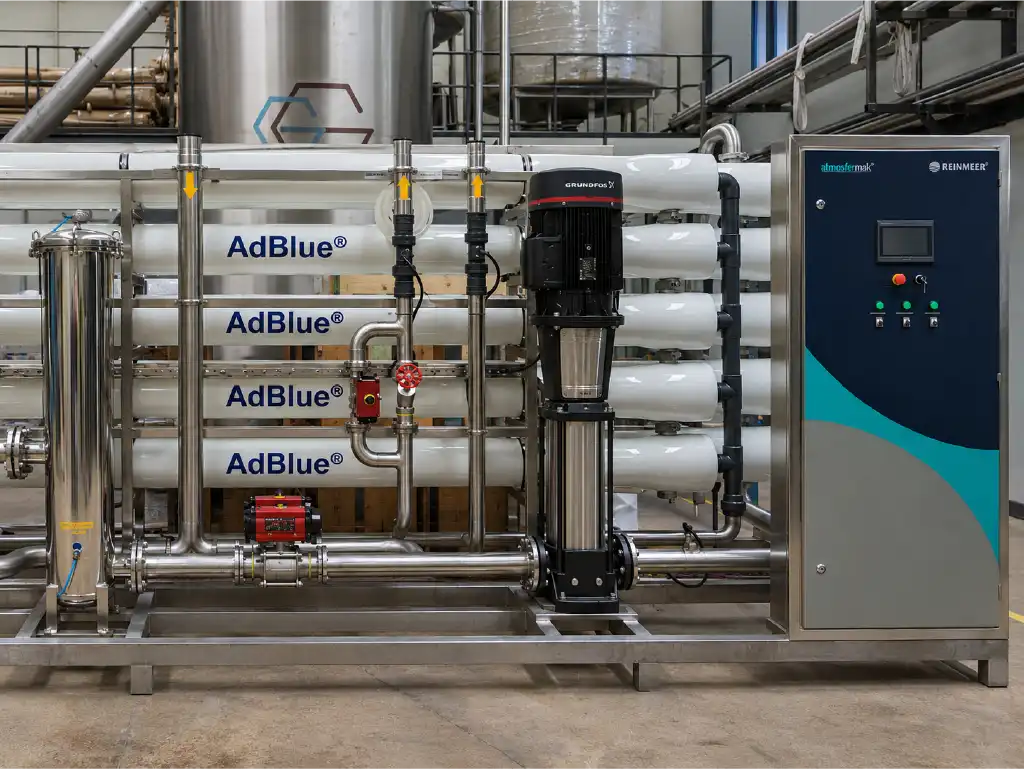
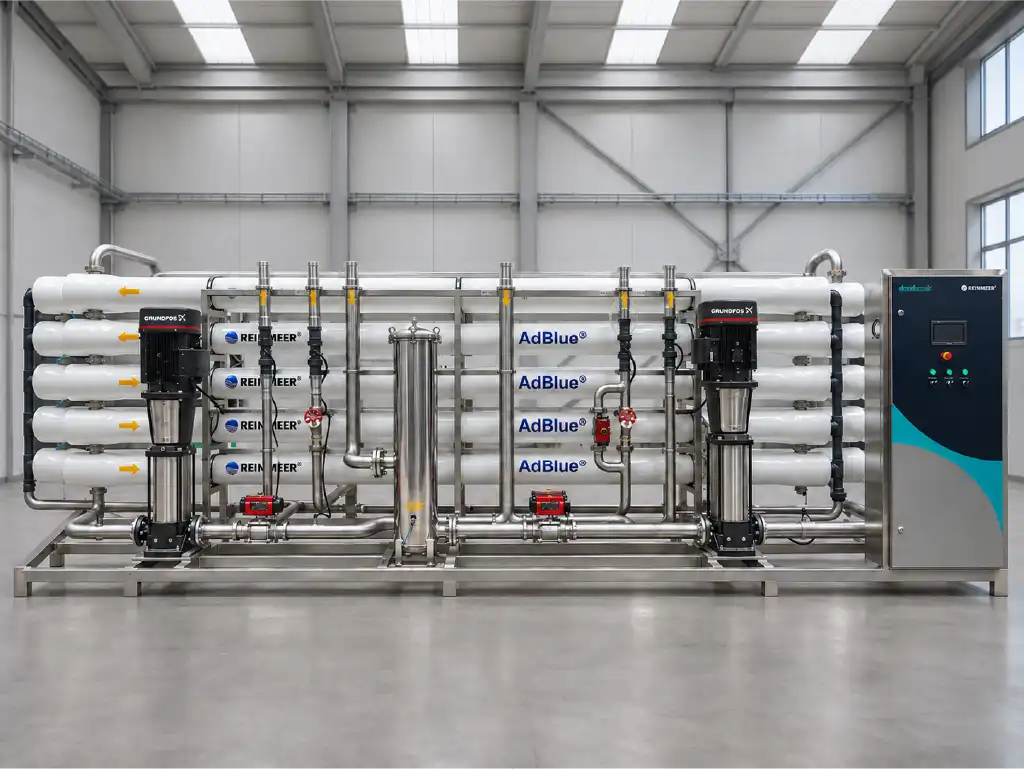
Atmosfer Makina’s Ocean Series seawater desalination systems provide a starting point for marine feedwater treatment, with skid-mounted and containerized configurations listed on the product page. Actual suitability, net production capacity and final water quality must be confirmed against project-specific seawater analyses and cooling-equipment requirements.
1. Aligning with European Standards and Regulatory Requirements
European data center projects must distinguish between sustainability reporting, equipment specifications and environmental permits. Each addresses a different part of the project, and selecting an RO system does not establish compliance for the complete facility.
Energy and Water Reporting
The European Commission’s data center sustainability and reporting framework explains the reporting obligations and development of a common rating scheme. Treatment-system design should provide the measurements needed for the facility’s applicable reporting requirements.
Water Usage Effectiveness
Water Usage Effectiveness (WUE) requires clearly defined measurement boundaries. Operators should track seawater withdrawal, usable product water, RO concentrate, filter backwash and other treatment losses.
Reducing potable-water demand does not necessarily reduce total water withdrawal. Both outcomes should be evaluated separately when comparing treatment options.
Environmental Protection
Marine intake and discharge approvals depend on the project location and competent authority. The EU Water Framework Directive covers coastal waters alongside other water bodies.
Project assessments should address concentrate salinity, chemical residuals, any temperature differences and potential ecological effects. Discharge limits and monitoring requirements must be established for the actual site.
2. Separating Cooling Circuits and Specifying Water Quality
“Data center cooling water” describes several fluid streams with different chemical and material requirements:
- Cooling tower water: Water used in evaporative heat rejection, where concentration, airborne contamination and biological growth require control.
- Facility cooling water: Water circulating through equipment such as chillers and heat exchangers, with chemistry selected for the installed materials.
- Technology cooling loops: Fluids serving IT equipment, often separated from the facility circuit by a coolant distribution unit (CDU).
Raw seawater and RO permeate must each be assessed for their intended application. Chlorides, suspended solids, biological activity and compatibility with wetted materials determine the treatment needed.
Define acceptance limits separately for conductivity, chlorides, hardness, silica, pH, particulates and microbiological quality. Cooling-equipment and fluid suppliers must approve the final chemistry.
A satisfactory conductivity reading at the treatment skid does not establish that the water remains suitable after storage, distribution or the addition of treatment chemicals.
3. Marine Infrastructure: Intake and Discharge Design
Marine engineering can determine whether a coastal desalination project is feasible.
Intake Assessment
Evaluate local bathymetry, seasonal biological activity, wave conditions and sensitive habitats. Open and subsurface intakes create different pretreatment demands and ecological risks.
The assessment should account for seasonal changes in seawater quality, including periods of high turbidity or algal activity.
Concentrate Management
RO separates dissolved salts into a concentrated stream. Assess the discharge location, dilution and dispersion under the expected operating and marine conditions.
The intake and outfall should be evaluated together so that discharged concentrate does not compromise incoming feedwater quality.
Waste-Stream Segregation
Keep RO concentrate, filter backwash and clean-in-place (CIP) wastes separately identifiable. Their composition may require different treatment, permitting or disposal arrangements.
This separation also makes it easier to measure losses and investigate changes in plant performance.
4. Protecting Membranes with Dynamic Pretreatment
Seawater quality can change with storms, seasonal temperatures and algal blooms. Pretreatment must accommodate these changes while keeping the RO feed within membrane-supplier limits.
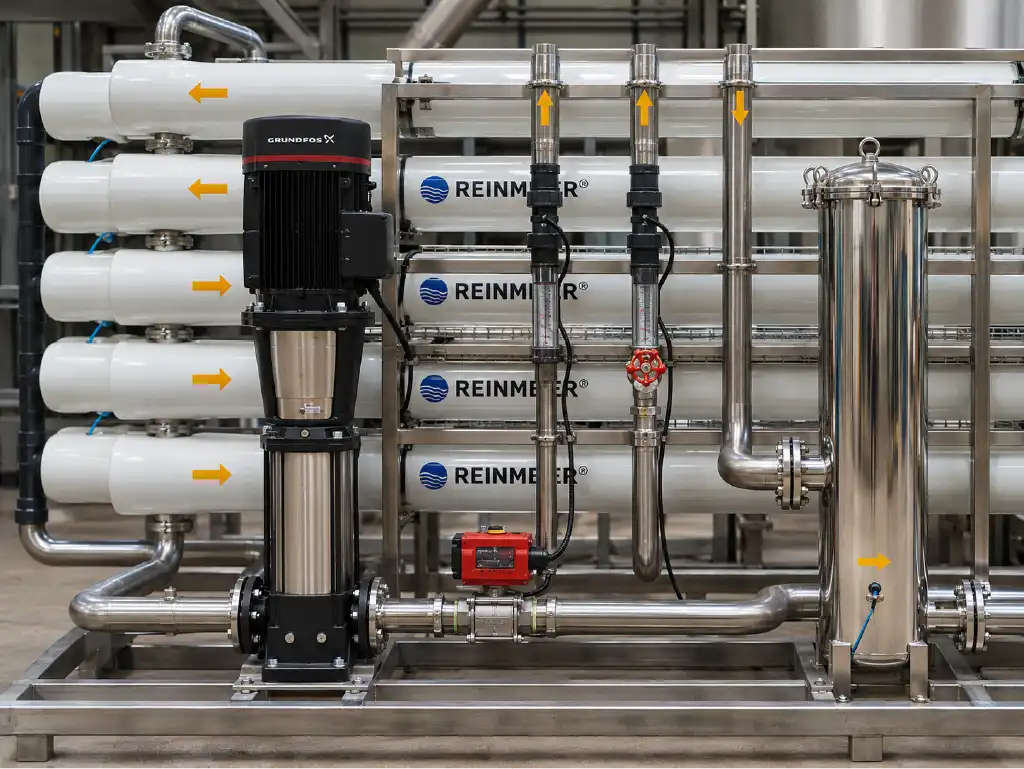
Depending on the source-water analysis, the treatment train may include:
- Intake screening.
- Media filtration or ultrafiltration.
- Cartridge filtration.
- Chemical dosing and, where required, dechlorination.
- Feedwater monitoring and protective interlocks.
Select the sequence according to the actual fouling risks. A pretreatment arrangement suitable for one coastal location may be inadequate at another.
Coordinate upstream disinfection with membrane oxidant tolerance. Where dechlorination is required, verify its effectiveness before water reaches sensitive membranes.
Operators should have defined responses to deteriorating feedwater quality, including dosing adjustments, maintenance actions and protective shutdown conditions.
5. Industrial RO Selection and Cooling Tower Optimization
Selecting Industrial Reverse Osmosis Equipment
Specify net usable output and guaranteed water quality at the agreed feed salinity, temperature and operating conditions. Include flushing, pretreatment consumption, maintenance and seasonal performance in the production balance.
Atmosfer Makina’s industrial reverse osmosis water treatment range includes options for pretreatment, post-treatment and integrated controls. Confirm which components and functions are included in the proposed configuration.
Assess high-pressure pump efficiency and the suitability of energy recovery devices for the selected duty. Report specific energy consumption for the complete treatment train in kilowatt-hours per cubic meter of usable water.
When evaluating Power Usage Effectiveness (PUE), account for treatment-system electricity within the facility’s defined energy-reporting boundary.
Optimizing Cooling Tower Makeup Water
Lower-mineral makeup water may allow higher cycles of concentration, provided corrosion, scaling and biological risks remain controlled. The EPA’s cooling tower water-efficiency guidance explains why achievable cycles depend on makeup-water quality and site conditions.
Maintain a water management program covering sediment, biofilm, disinfectant control and cleaning. The CDC’s guidance for controlling Legionella in cooling towers provides a technical reference alongside applicable local requirements.
Compare tower makeup and blowdown savings with the desalination system’s feed demand, concentrate and backwash volumes before claiming an overall reduction in water use.
6. Demineralized Water and Direct Liquid Cooling
Direct-to-chip cooling requires a fluid approved for the installed hardware. Depending on supplier specifications, the treatment train may need second-pass RO, electrodeionization or ion exchange to prepare suitable makeup water.
Ultra-pure water is not a universal operating-fluid requirement. Final chemistry depends on the cooling architecture, wetted materials and approved fluid formulation.
For related background, see Atmosfer Makina’s article on water treatment for AI data centers. Project acceptance limits should come from the IT, CDU and fluid suppliers.
The Open Compute Project’s guidelines for water-based heat-transfer fluids address fluid chemistry, material compatibility and monitoring.
Pure demineralized water alone should not be treated as a finished coolant. Verify the approved inhibitor package, any required microbiological treatment and the resulting fluid properties.
Measure quality after storage and distribution, at the specified point of use. Establish acceptance criteria at the CDU and technology-loop boundaries, together with commissioning, sampling and ongoing monitoring requirements.
7. Delivering Resilience and Accountability with Atmosfer Makina
Reliable operation depends on how the desalination plant is integrated into the facility.
Redundancy and Storage
Size usable-water storage and standby treatment capacity for peak demand, planned maintenance and power transitions. Include the time required to restart treatment and verify product quality.
Clear Performance Guarantees
For a proposed Ocean Series skid-mounted or containerized system, request:
- Net usable production under stated design conditions.
- Total seawater feed demand.
- Concentrate and backwash volumes.
- Auxiliary energy consumption.
- Guaranteed water-quality limits.
- Maintenance requirements and expected service interruptions.
Defined Acceptance Testing
Agree commissioning tests, sampling locations, alarm limits, service access and responsibility for each treatment stage before procurement.
To begin the evaluation, contact Atmosfer Makina with the site’s seawater analysis, seasonal temperature and salinity range, cooling schematic, required daily output and final water-quality specifications. These inputs allow the proposed treatment train to be assessed against the cooling duty, operating conditions and applicable European requirements.
