
DEF production traceability is the ability to identify, verify and document every critical detail of a Diesel Exhaust Fluid batch from raw material receipt to final delivery. In AdBlue® manufacturing, traceability is not only a paperwork task. It connects urea lot numbers, deionized water quality, production parameters, laboratory results, storage conditions, labels and retained samples into one reliable quality record.
For producers, distributors and fleet supply partners, traceability answers the questions that matter most: Which raw materials were used? When was the batch produced? Were the urea concentration, pH and conductivity within specification? Which container or tanker received the product? If an audit or complaint occurs, can the batch be investigated quickly?
Atmosfer Makina designs turnkey AdBlue® and DEF production systems with process control, automation and quality-focused engineering. When a production line is planned with DEF production traceability in mind, quality records become easier to maintain, sampling becomes more reliable, and labeling becomes a stronger part of customer trust.
Why Traceability Matters in AdBlue® Manufacturing
AdBlue® is an aqueous urea solution used in Selective Catalytic Reduction systems to help reduce nitrogen oxide emissions in diesel engines. Because the product is consumed by sensitive aftertreatment systems, small deviations in concentration, contamination risk or storage handling can create operational problems for end users. This is why DEF production traceability is an essential part of professional manufacturing, especially for businesses supplying fleets, distributors, fuel stations, workshops and industrial customers.
Traceability creates a documented connection between production activity and final product quality. It allows a manufacturer to demonstrate that each batch was produced under controlled conditions and tested before release. It also supports faster decision-making when a nonconforming result, damaged package, questionable storage condition or complaint must be reviewed. In markets where AdBlue® quality is evaluated according to ISO 22241 principles and customer expectations, a structured traceability system is one of the clearest signs of a disciplined production culture.
Government guidance also shows how important DEF quality is for modern diesel systems. The U.S. Environmental Protection Agency information on Diesel Exhaust Fluid explains the role of DEF in vehicles and equipment using SCR technology. For manufacturers, this reinforces a practical point: products that support emissions performance should be produced, stored and distributed with controlled quality records.
Batch consistency and customer trust
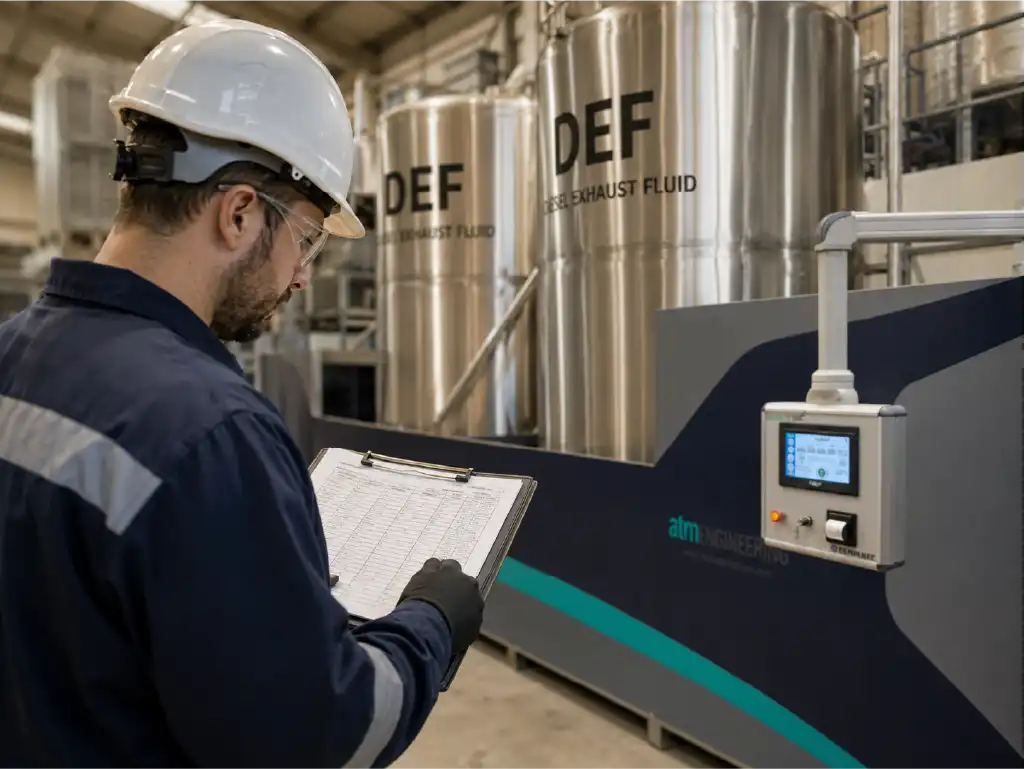
Batch consistency means that every production run meets the same controlled quality target. In DEF manufacturing, consistency depends on high-purity urea, suitable deionized water, accurate dosing, clean process equipment, proper mixing and verified laboratory results. Without records, it becomes difficult to prove how that quality was achieved.
Strong DEF production traceability gives customers confidence that each delivery is linked to a clear AdBlue® batch record. For a distributor, this record can be the difference between a generic supply relationship and a professional supply chain. When a fleet operator asks for confirmation of batch number, production date or test results, the producer should be able to respond without confusion.
Consistency also supports internal improvement. When records are organized, managers can compare batches over time. A gradual change in conductivity, repeated pH movement or frequent corrective actions may point to raw material variation, water treatment performance, operator training needs or maintenance requirements.
Quality records for audits and complaints
Audits are easier when information is complete, structured and retrievable. A professional DEF quality control system should not depend on scattered spreadsheets, handwritten notes with missing fields or labels that cannot be matched with production data. Each batch should have a defined record set that shows what happened, who approved it, which tests were performed and where the finished product was sent.
Complaint handling is another reason to invest in DEF production traceability. If a customer reports crystallization, contamination suspicion, wrong label information or suspected off-spec material, the batch number should lead to production time, raw material lots, process parameters, filling details, test reports, retained sample location and shipment information.
DEF production traceability does not mean every complaint is caused by production. DEF quality can also be affected by storage temperature, container cleanliness, exposure to unsuitable materials or contamination during transfer. A complete traceability file helps separate production-related causes from transport, storage or end-user handling issues.
What Should Be Recorded in Each DEF Batch for DEF Production Traceability?
For DEF production traceability, a reliable AdBlue® batch record should be practical enough for daily use and detailed enough for quality investigation. Overcomplicated forms slow production, while incomplete forms reduce the value of the record. A useful structure records every factor that can influence product quality, customer identification, regulatory expectations or future complaint analysis.
| Record Area | Information to Capture | Why It Matters |
|---|---|---|
| Raw materials | Urea supplier, urea lot number, water treatment status, incoming checks | Connects final quality to the materials used |
| Production details | Batch number, date, start and finish time, operator, equipment line | Creates a clear manufacturing identity |
| Process parameters | Dosing ratio, mixing time, temperature, tank identification, transfer route | Supports consistency and root-cause analysis |
| Laboratory results | Urea concentration, pH, conductivity, appearance and release decision | Confirms that the batch meets quality criteria |
| Packaging and distribution | Container type, filling date, label version, shipment destination | Links delivered product to the batch produced |
| Retained sample | Sample ID, sample date, storage location, verification status | Allows later laboratory comparison |
Raw material lot numbers and production time
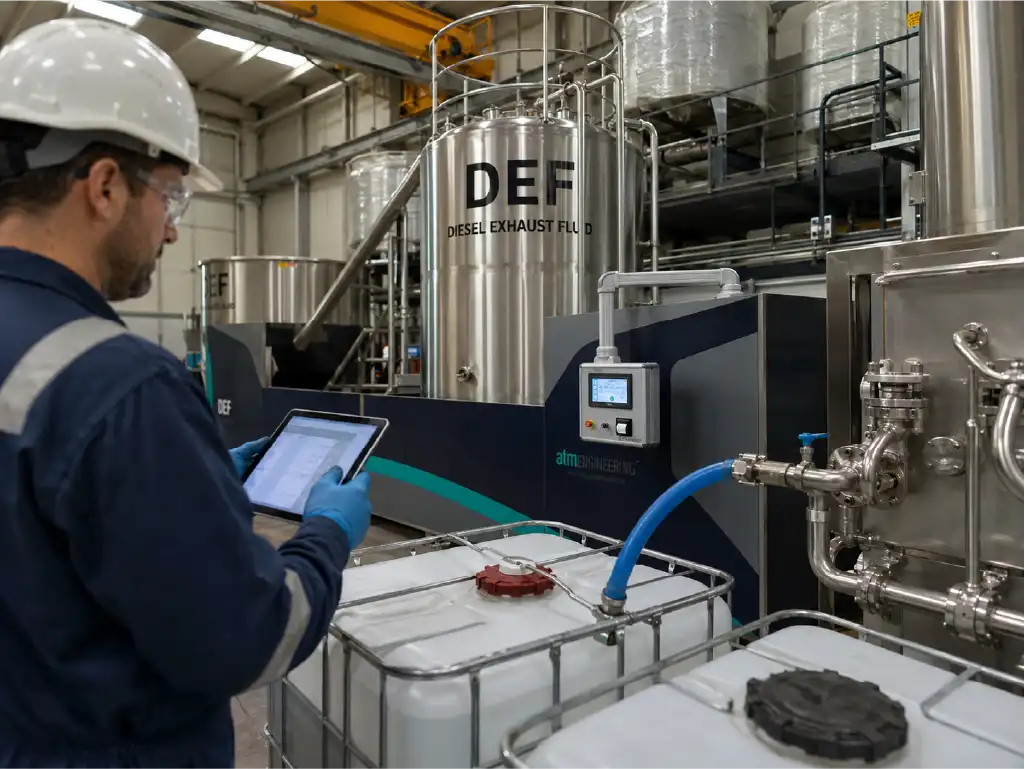
Raw material traceability starts before the batch begins. Urea should be received with supplier information, lot number, delivery date and acceptance status. Deionized water should also be controlled, because water quality is one of the foundations of DEF quality. If the water treatment system is unstable, the final product can be affected even when the urea is suitable.
Recording raw material lot numbers allows the producer to identify which batches were made from the same material source. If a supplier later reports a quality issue or internal testing identifies a trend, the manufacturer can quickly determine which finished batches may require review. This is a core part of DEF production traceability because it connects upstream supply risk to downstream product control.
Production time is equally important. Start time, finish time, mixing duration, operator name and production equipment should be recorded for every batch. These details help identify whether a specific shift, tank, line, pump, filter or operating condition may be connected to a quality deviation. Atmosfer Makina’s AdBlue® Production Facility solutions are developed for manufacturers that need controlled, scalable and efficient production.
Urea concentration, pH, conductivity and test results
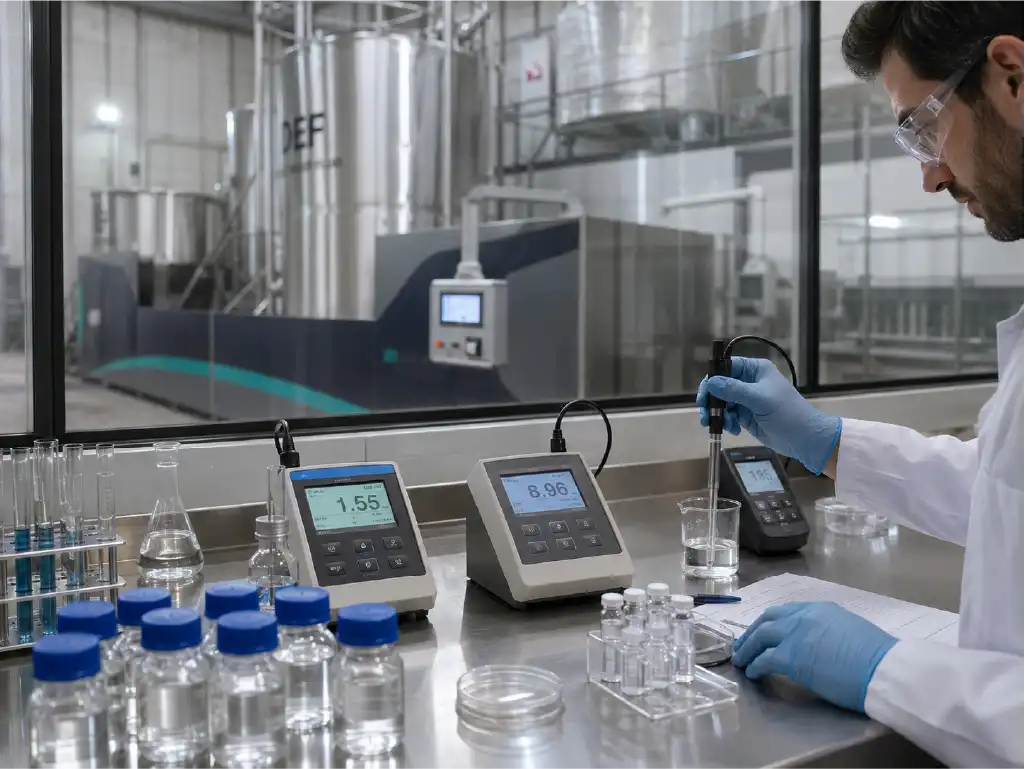
Testing is the verification stage of the batch record. A batch should not be treated as ready for release only because mixing has finished. It should be released after relevant test results confirm defined quality criteria. Typical parameters include urea concentration, pH, conductivity, appearance and contamination-related checks according to the producer’s quality plan.
Urea concentration is one of the most recognized quality parameters for AUS32. A reliable measurement helps confirm that the solution has been prepared correctly and is suitable for its intended SCR application. pH gives additional insight into chemical condition, while conductivity can indicate water purity or contamination risk. Appearance checks may reveal visible particles, discoloration or crystallization concerns before the product reaches customers.
DEF quality control should also include instrument calibration records. A test result is meaningful only if the measurement device is suitable, calibrated and used correctly. Each test entry should identify the person who performed the test, the equipment used and the approval status.
Labeling and Sampling Best Practices
Labeling and sampling are the two points where traceability becomes visible outside the production room. A label tells the customer which product they received and how it should be handled. A retained sample gives the manufacturer evidence to verify batch quality later. Together, they form a practical bridge between the factory record and the real-world supply chain.
Effective DEF production traceability requires labels that are accurate, durable and matched to the correct batch. It also requires an AdBlue® sampling procedure that prevents contamination during sample collection. Sampling should never be treated as a casual task. A poorly collected sample can create misleading laboratory results, unnecessary rework or confusion during complaint analysis.
Batch number, expiry date and storage information
In DEF production traceability, the batch number is the central identification point for the product. It should be printed clearly on labels, documents and, where applicable, delivery notes or certificates of analysis. A strong numbering system may include production date, line code, tank number or sequential batch identity. The exact format can be designed according to the facility’s workflow, but it must be unique, readable and easy to search.
Expiry date or recommended use-by date should be based on product specification, storage validation, packaging type and expected distribution conditions. DEF can be sensitive to heat, freezing, sunlight exposure and contamination from unsuitable materials. For this reason, labels should communicate storage information clearly, such as keeping containers sealed, avoiding contamination, protecting the product from extreme temperature and using clean transfer equipment.
AUS32 labeling requirements may vary according to market, customer contract, packaging type and local rules. Producers should evaluate label content with relevant standards, legal expectations and distributor requirements. A professional label commonly includes product name, concentration reference, batch number, production or filling date, use-by information, storage guidance, manufacturer details and safety or handling information where required.
Retained samples and laboratory verification
Retained samples are a practical insurance policy for DEF production traceability. They allow the quality team to compare the original batch condition with a customer sample if a complaint occurs. The retained sample should be collected in a clean, compatible container, sealed properly, labeled with the batch number and stored under controlled conditions. The sample log should show who collected it, when it was collected and where it is stored.
The storage period for retained samples should be defined in the manufacturer’s quality procedure. Many producers align retention with the product’s shelf life plus a complaint review window. For high-volume distributors, retaining samples through the expected market shelf life is a practical starting point, but the final decision should be based on project-specific risk and legal evaluation.
Laboratory verification should not end at the first release test. If a complaint arises, the retained sample can be tested again and compared with the original laboratory record. If the retained sample remains within specification while the customer sample is not, the investigation may focus on transport, storage, transfer equipment or container contamination. If both samples show a similar problem, the manufacturer can review the production process, raw materials and quality release decision.
Expert note: Traceability works best when it is designed before production starts, not added after a problem occurs. Batch numbering, sample storage, label approval, laboratory testing and operator responsibilities should be defined as part of the production system. This makes DEF production traceability a daily habit rather than an emergency reaction.
FAQ
What is batch traceability in DEF production?
Batch traceability in DEF production is the documented ability to track one finished batch back to its raw materials, production date, process parameters, laboratory results, labels, retained samples and shipment records. This DEF production traceability practice supports audits, complaints and product verification.
Which quality parameters should be recorded for AdBlue®?
Typical records include urea concentration, pH, conductivity, appearance, production time, raw material lot numbers, water quality status, test equipment identification and final release approval. Additional DEF quality control parameters may be added according to customer contracts and internal procedures.
How long should AdBlue® batch samples be stored?
The retention period should be defined in the manufacturer’s quality procedure. A practical approach is to store retained samples at least through the expected shelf life, with extra time for complaint investigation where required.
Why is batch labeling important for DEF distributors?
Good DEF production traceability also depends on accurate labels. Batch labeling allows distributors to identify which product was delivered, when it was produced and how it should be stored. If a quality question occurs, the label connects the container to the AdBlue® batch record, retained sample and laboratory results.
What should an AdBlue® sampling procedure include?
An AdBlue® sampling procedure should define the sampling point, clean container type, sample volume, labeling method, operator responsibility, storage condition and laboratory verification steps.
Can automation improve DEF production traceability?
Yes. Automation can capture batch data, stabilize dosing and mixing, connect test results to batch numbers and reduce manual documentation errors.
Build a Traceable DEF Production System with Atmosfer Makina
Professional DEF manufacturing requires more than a mixing tank. It requires controlled dosing, reliable water treatment, clean transfer design, verified testing, correct labeling and records that can stand behind every batch. Atmosfer Makina helps businesses plan turnkey AdBlue® and DEF production systems with the engineering discipline needed for quality-focused operation. Whether you are building a new facility, increasing capacity or improving an existing line, our team can evaluate your production goals, packaging format, utility conditions and documentation needs on a project-specific basis. With the right system design, DEF production traceability becomes a practical part of daily operation rather than a complicated afterthought. To explore suitable production solutions, technical options and consultation for your facility, visit Atmosfer Makina and contact the expert team for a tailored evaluation.
