
This guide explains how engine oil and SCR technology interact, why Low-SAPS lubricants are important, what can cause abnormal DEF consumption, and which maintenance practices can improve AdBlue efficiency without relying on misleading shortcuts.
What Is AdBlue Efficiency?
AdBlue efficiency describes how effectively a diesel engine’s SCR system uses the correct amount of AdBlue, also known as Diesel Exhaust Fluid or DEF, to reduce nitrogen oxide emissions. AdBlue is a high-purity aqueous urea solution that is injected into the hot exhaust stream. Under suitable operating conditions, it forms ammonia, which reacts with NOx over the SCR catalyst and converts it mainly into nitrogen and water.
The U.S. Environmental Protection Agency explains Diesel Exhaust Fluid requirements, while the U.S. Department of Energy outlines diesel vehicle operation. Both resources clarify the principles behind AdBlue efficiency.
Healthy AdBlue efficiency does not mean using the smallest possible amount. It means using the calibrated quantity required for the current load, exhaust temperature, NOx output, and operating conditions. Unusually high or low consumption may indicate DEF-quality, dosing, sensor, combustion, exhaust-leak, or catalyst problems.
How Engine Oil Can Influence the SCR System
Engine oil reduces friction, controls wear, carries heat, cleans internal surfaces, and helps seal the piston-ring area. A small quantity can enter the combustion chamber during normal operation. When it burns, additive components may form ash or phosphorus- and sulfur-containing compounds, making oil selection relevant to AdBlue efficiency.
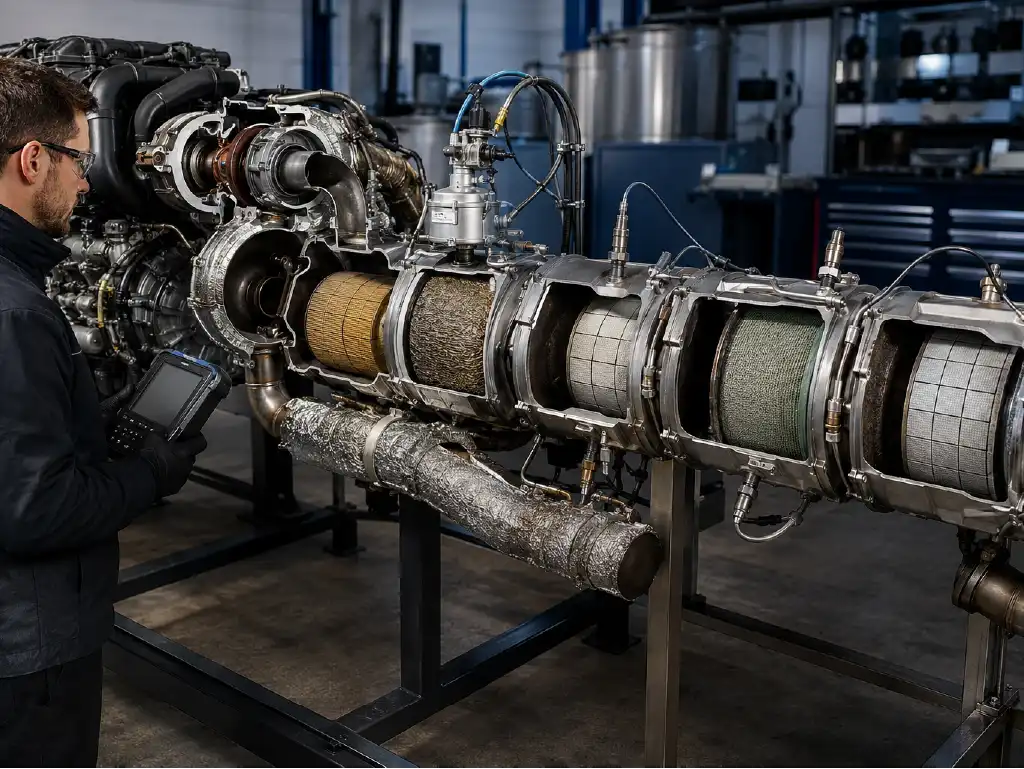
These residues do not directly contaminate the AdBlue tank. Instead, they travel through the exhaust path and may affect the diesel oxidation catalyst, diesel particulate filter, SCR catalyst, or ammonia slip catalyst. Over a long service period, excessive oil consumption or the wrong lubricant specification can increase deposit loading and reduce aftertreatment durability. Protecting these components supports stable AdBlue efficiency.
Why Low-SAPS Engine Oils Matter
SAPS stands for Sulfated Ash, Phosphorus, and Sulfur. Low-SAPS and Mid-SAPS oils limit these materials while still delivering wear protection, detergency, oxidation stability, and viscosity control. They are commonly specified for engines with DPF and SCR systems because their formulation can help preserve AdBlue efficiency.
Using the manufacturer-approved Low-SAPS lubricant can help control ash accumulation, reduce the risk of catalyst poisoning, and preserve exhaust-system performance. This can indirectly support AdBlue efficiency by helping the SCR system operate within its intended conversion window. However, “Low-SAPS” alone is not enough. The oil must also meet the precise ACEA, API, OEM, and viscosity requirements stated in the vehicle or engine documentation.
An oil with very low ash but the wrong viscosity or insufficient approval can increase wear, oil consumption, turbocharger stress, or deposit formation. Those problems can harm combustion quality and eventually reduce AdBlue efficiency. The correct approach is therefore to use an officially approved lubricant, not simply the lowest-SAPS product available.
Does the Wrong Engine Oil Increase AdBlue Consumption?
It can contribute, but the relationship is indirect. Modern engines use NOx and temperature sensors, dosing controls, diagnostic logic, and catalyst models to determine DEF injection. If catalyst activity declines, the system may adjust dosing, store a fault, illuminate a warning, restrict operation, or require repair. Together, these controls determine AdBlue efficiency in real time.

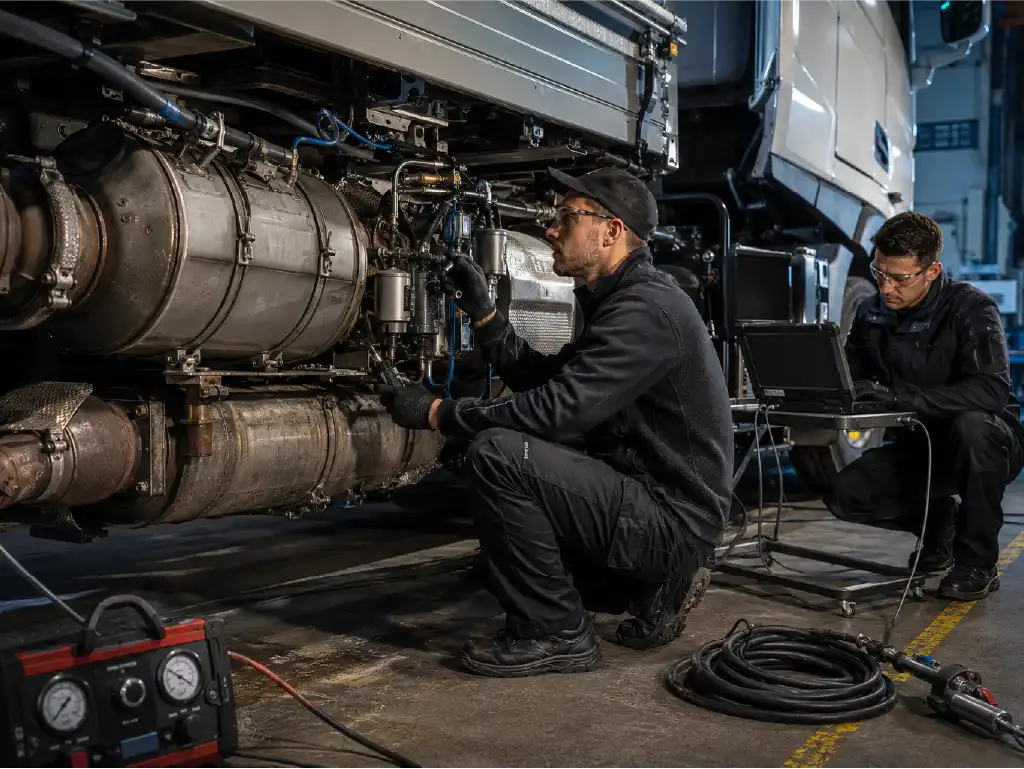
Therefore, poor AdBlue efficiency should never be diagnosed from oil choice alone. A workshop should review fault codes, DEF concentration, dosing pressure, injector spray quality, exhaust temperature, NOx sensor data, engine oil consumption, DPF restriction, exhaust leaks, EGR performance, and catalyst condition.
When the wrong oil is used over many service intervals, or when the engine burns excessive oil, ash and chemical contamination may shorten aftertreatment life. This can make the emissions system less effective and may be associated with abnormal DEF usage. Nevertheless, changing the oil will not repair a physically damaged catalyst. Accurate diagnosis remains essential for restoring AdBlue efficiency.
Other Factors That Affect AdBlue Efficiency
1. DEF Quality and Purity
AdBlue must meet the applicable ISO 22241 quality requirements. Contaminated, diluted, overheated, or incorrectly stored fluid can damage the dosing system and reduce SCR performance. For a deeper explanation, see Atmosfer Makina’s guide to ISO 22241 compliance in AdBlue production. Consistent fluid purity is one of the most important foundations of AdBlue efficiency.
2. Exhaust Temperature
SCR chemistry requires a suitable temperature range. Repeated short journeys, long idling periods, very light loads, and cold operation may prevent the system from reaching ideal conversion conditions. Under these circumstances, AdBlue efficiency can appear inconsistent even when the oil and DEF are correct.
3. Engine-Out NOx
The SCR system treats NOx produced by the engine. If poor combustion, an EGR fault, injector wear, boost leakage, or incorrect calibration increases engine-out NOx, the control system may require more DEF. Restoring combustion performance often improves AdBlue efficiency more effectively than replacing parts without diagnosis.
4. NOx and Temperature Sensors
Incorrect sensor readings can cause poor dosing decisions or diagnostic warnings. A failing upstream or downstream NOx sensor may report values that do not reflect actual emissions. Sensor evaluation should therefore be included whenever AdBlue efficiency changes suddenly.
5. Dosing Injector Condition
Crystallization, blockage, leakage, poor atomization, or pressure problems can prevent the correct distribution of DEF in the exhaust. A clean and correctly functioning injector supports complete mixing, controlled ammonia formation, and reliable AdBlue efficiency.
6. Exhaust Leaks
Leaks before or around the SCR assembly can alter flow, temperature, and sensor readings. Even a small leak may produce confusing diagnostic symptoms. A pressure or smoke test can help identify leakage that affects AdBlue efficiency.
How to Choose the Correct Engine Oil for an SCR-Equipped Diesel Engine
Start with the owner’s manual, engine service documentation, or official OEM lubricant list. Confirm the required viscosity, such as 5W-30, 10W-30, or 10W-40, but do not stop there. Oils with the same viscosity can have very different additive systems and approvals.
Check the required ACEA or API category and any manufacturer-specific approval. Heavy-duty trucks, passenger vehicles, agricultural machinery, construction equipment, generators, and marine engines may require different formulations. The correct oil supports engine durability, DPF service life, catalyst protection, and stable AdBlue efficiency.
Consider the duty cycle. High idling, dust, cold starts, heavy towing, extreme temperatures, and extended drains may require a different maintenance plan confirmed by the OEM or a qualified lubricant specialist.
Never mix products casually. Although compatible oils may be used for emergency top-up in some cases, repeated mixing can dilute the intended performance characteristics. Record the product name, approval, batch, quantity, and service date so changes in oil consumption or AdBlue efficiency can be investigated with reliable maintenance history.
Practical Maintenance Steps to Improve AdBlue Efficiency
- Use only approved engine oil: Match viscosity and performance approvals exactly. This protects the engine and helps preserve AdBlue efficiency.
- Monitor oil consumption: A rising top-up requirement can indicate turbocharger leakage, worn rings, valve-seal problems, or crankcase ventilation faults. Excessive oil burning can burden the aftertreatment system.
- Follow service intervals: Degraded oil can increase deposits, wear, and volatility. Avoid extending drain intervals without oil analysis and OEM authorization.
- Use ISO 22241-compliant DEF: Protect AdBlue from dust, fuel, tap water, and incompatible metals. Learn more in Atmosfer Makina’s overview of efficient DEF usage.
- Inspect the dosing system: Check the tank, pump, lines, heater, injector, and crystallization-prone connections.
- Read diagnostic data: Compare upstream and downstream NOx readings, exhaust temperatures, commanded dosing, actual pressure, and stored fault codes.
- Check the air and fuel systems: Restricted filters, injector faults, boost leaks, and EGR problems can raise engine-out emissions and reduce AdBlue efficiency.
- Maintain the DPF correctly: Excessive backpressure can alter engine operation and exhaust temperature. Follow approved regeneration and cleaning procedures.
- Train operators: Drivers should report warning messages, sudden fluid-consumption changes, repeated regeneration, loss of power, visible smoke, and unusual oil top-up frequency.
- Track consumption correctly: Compare DEF with fuel use, operating hours, load, and idle time. Trend data provides a clearer measure of AdBlue efficiency.
Common Warning Signs of Poor AdBlue Efficiency
A sudden increase in DEF consumption is the most obvious sign, but it is not the only one. Warning lamps, stored SCR efficiency codes, repeated low-quality DEF messages, crystallization around the injector, reduced engine power, unusual exhaust odor, increased oil consumption, frequent DPF regeneration, and inconsistent NOx sensor values can all indicate a problem.
Do not assume every warning is caused by low-quality AdBlue. The cause may be electrical, mechanical, chemical, or operational. Structured diagnosis protects AdBlue efficiency and prevents unnecessary parts replacement.
Can Better Engine Oil Reduce Operating Costs?
The correct approved oil can control wear, resist oxidation, reduce volatility, protect emissions hardware, and support predictable AdBlue efficiency. Here, “better” means suitable and officially approved, not simply more expensive.
Savings may come from avoiding premature DPF cleaning, catalyst replacement, turbocharger damage, and repeated diagnostics. Combine oil analysis with DEF and fuel consumption, idle time, regeneration frequency, and fault history.
The Role of High-Quality AdBlue Production
Engine maintenance is only one side of the equation. The DEF entering the vehicle must also be produced with high-purity water, automotive-grade urea, compatible materials, controlled mixing, contamination prevention, and accurate quality verification. Atmosfer Makina develops automated AdBlue production facilities designed to support controlled and repeatable manufacturing.
Reliable production protects urea concentration and limits contamination that could affect dosing equipment or SCR conversion. For manufacturers and distributors, process control is essential to customer confidence and real-world AdBlue efficiency. Storage tanks, transfer equipment, filling lines, hoses, and packaging materials must also remain compatible with DEF.
Businesses can review Atmosfer Makina’s AUS32 and DEF production line solutions or contact its experienced engineering team.
Frequently Asked Questions
Can engine oil mix with AdBlue?
No. They operate in separate systems. Engine oil lubricates internal engine components, while AdBlue is stored in a separate tank and injected into the exhaust. Their relationship is indirect: lubricant-derived ash and chemicals can influence aftertreatment durability and, over time, AdBlue efficiency.
Is Low-SAPS oil mandatory for every diesel engine?
Not every diesel engine uses the same oil specification. Many engines fitted with DPF and SCR systems require Low-SAPS or Mid-SAPS lubricants, but the manufacturer’s approval is the deciding factor. Always follow the engine documentation to protect AdBlue efficiency and mechanical durability.
Will changing to Low-SAPS oil immediately reduce DEF consumption?
Not necessarily. If abnormal consumption is caused by a sensor, injector, exhaust leak, catalyst, EGR, or combustion fault, an oil change alone will not solve it. Correct oil helps protect future AdBlue efficiency, while existing faults require diagnosis and repair.
How can a fleet measure AdBlue efficiency?
Track DEF volume against fuel consumed, operating hours, mileage, payload, route, idle percentage, and ambient conditions. Review trends by vehicle rather than relying on a single refill. Stable data makes it easier to identify genuine changes in AdBlue efficiency.
Conclusion
Engine oil can affect the long-term performance of diesel aftertreatment systems, even though it never mixes directly with AdBlue. Using the correct OEM-approved Low-SAPS or Mid-SAPS lubricant helps control ash, protect catalysts, reduce avoidable deposits, and support consistent AdBlue efficiency. The benefit is strongest when oil selection is combined with controlled oil consumption, correct service intervals, quality DEF, accurate diagnostics, and a healthy combustion system.
When DEF consumption changes, evaluate the complete engine and exhaust system instead of blaming one fluid. This balanced approach improves reliability, protects emissions compliance, and gives fleet managers a more accurate path to lasting AdBlue efficiency.
