
Modern liquid production depends on speed, accuracy, hygiene, and consistent shelf presentation. A Liquid Filling and Packaging Line connects filling, capping, labeling, coding, conveying, and inspection into one controlled workflow, so every bottle can leave the line with the same volume, clean surface, secure closure, and readable label. For food, beverage, cosmetics, personal care, cleaning chemicals, lubricants, and industrial liquids, this structure reduces manual handling and creates predictable output. A well engineered Liquid Filling and Packaging Line also lowers waste, supports safer operation, and helps manufacturers respond to higher order volumes without losing product quality.
The performance of a Liquid Filling and Packaging Line depends on how well each station works with the others. A filling machine may be accurate, but the final package will still fail if the capper is unstable, the labeler is misaligned, or the conveyor moves bottles unevenly. The liquid type, bottle shape, cap design, label material, and target capacity must be reviewed together. A professional Liquid Filling and Packaging Line is designed as a balanced system where filling volume, cap torque, label position, and batch coding remain synchronized during real production.
Automation makes this balance easier to maintain. In a modern Liquid Filling and Packaging Line, operators can manage filling speed, volume settings, recipe data, conveyor rhythm, and label parameters through a control panel. Stored recipes reduce human error when the same product is produced repeatedly or when a new bottle format is introduced. Sensors help detect missing bottles, low product levels, cap issues, and label faults before they affect a full batch. A scalable Liquid Filling and Packaging Line gives the manufacturer more control, better traceability, and fewer interruptions during daily operation.
How to Choose a Filling Machine Based on Viscosity?
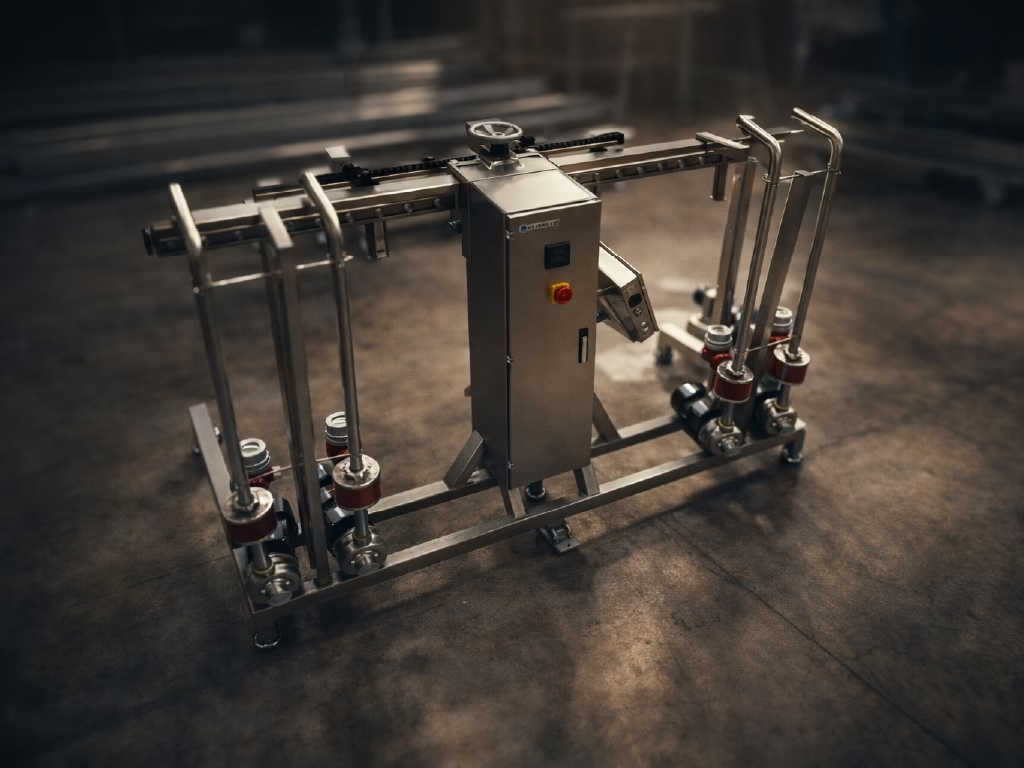
Viscosity is one of the first technical factors to analyze before selecting a filling machine. Water, alcohol based liquids, thin detergents, oils, syrups, gels, creams, pastes, and sauces behave differently inside tanks, hoses, valves, and nozzles. A Liquid Filling and Packaging Line for a thin product may use timed filling, gravity filling, or flow meter filling, while thicker formulas often need piston filling or pump based dosing. The correct Liquid Filling and Packaging Line must handle product flow without creating excessive foam, pressure loss, clogging, or volume variation.
Low viscosity liquids usually require speed control and splash prevention. Disinfectants, fragrances, vinegar, light oils, and water based cleaners can move quickly through the system, so valves must open and close precisely. In this type of Liquid Filling and Packaging Line, bottle centering, nozzle height, and conveyor stability are critical. If liquid reaches the outer bottle surface, the label may not adhere correctly and the product may look unclean. A suitable Liquid Filling and Packaging Line uses controlled flow, diving nozzles, or staged filling to protect the package.
Medium and high viscosity products require controlled force. Shampoo, liquid soap, lotion, honey, dense detergents, creams, and sauces need smooth product transfer and accurate cut off at the end of each cycle. A Liquid Filling and Packaging Line for these formulas often benefits from piston filling because each stroke dispenses a defined volume. Product paths, seals, tank design, and temperature behavior must be checked before final selection. A properly specified Liquid Filling and Packaging Line keeps thick products moving without overloading the pump or slowing the whole system.
Products with particles need additional care. Sauces with herbs, fruit preparations, suspensions, and specialty mixtures can clog narrow passages or lose texture if handled roughly. A Liquid Filling and Packaging Line for particulate liquids should include wide passage valves, gentle feeding, and nozzles that preserve product structure. Testing with the actual product is important because clean water cannot reveal particle behavior. The best Liquid Filling and Packaging Line is chosen after reviewing viscosity, particle size, filling volume, container opening, cleaning method, and expected daily capacity.
| Liquid Type | Filling Method | Main Design Priority |
|---|---|---|
| Thin liquids | Timed, gravity, or flow meter filling | Splash control and high speed stability |
| Medium viscosity liquids | Pump based or piston filling | Stable flow and clean shutoff |
| High viscosity products | Piston filling | Pressure control and easy cleaning |
| Particulate liquids | Wide passage valve filling | Clog prevention and gentle handling |
Nozzle Technologies and Anti Drip Systems
Nozzle design directly affects filling quality because the nozzle is the last contact point before the product enters the container. In a Liquid Filling and Packaging Line, nozzle geometry, opening speed, shutoff response, and vertical movement must match the liquid. Thin products need fast response and controlled flow, while viscous products need larger passages and clean product separation. Foaming liquids may require bottom up filling, where the nozzle enters the bottle and rises as the level increases. A carefully selected Liquid Filling and Packaging Line can reduce trapped air, splashing, and uneven fill levels.
Anti drip systems stop product from falling after the filling cycle ends. This function is essential for oils, syrups, detergents, gels, sauces, and scented liquids that can leave visible marks on bottles or conveyors. In a Liquid Filling and Packaging Line, poor shutoff can cause sticky surfaces, weak label adhesion, slippery movement, and longer cleaning work. Anti drip technology may use mechanical shutoff, vacuum suck back, special valve tips, or product specific nozzle design. A reliable Liquid Filling and Packaging Line treats drip prevention as a quality control requirement, not as an optional detail.
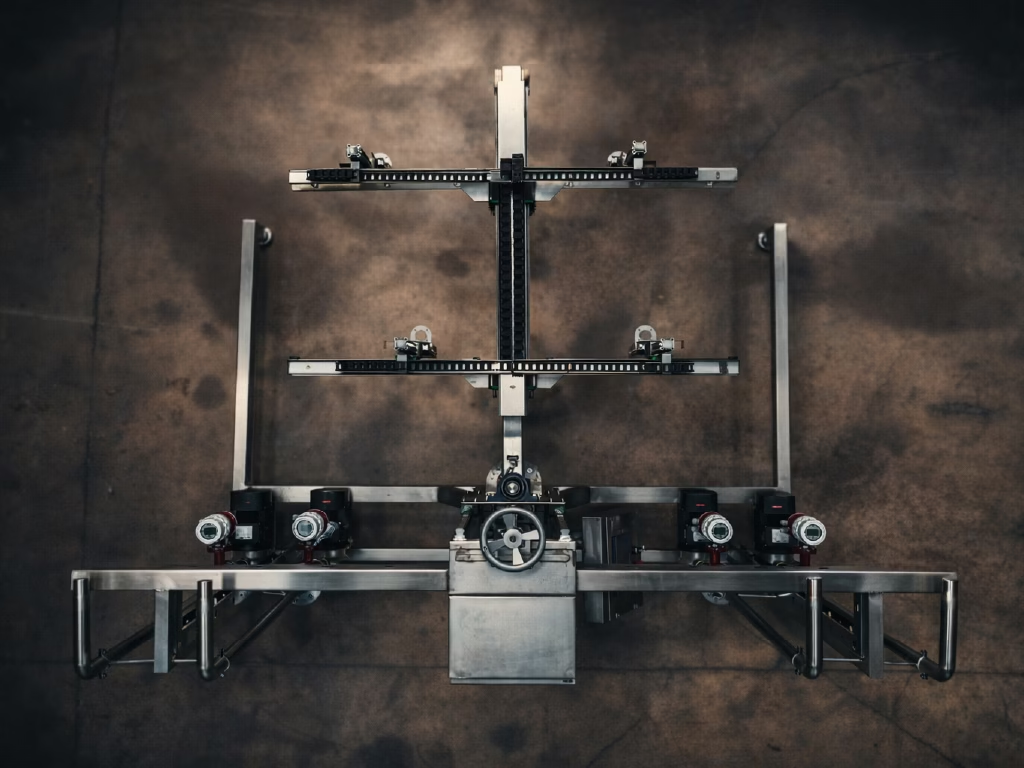
Cleaning access is also part of nozzle selection. Food, cosmetic, personal care, and sensitive chemical products require suitable stainless steel contact parts and seals compatible with the formula. A Liquid Filling and Packaging Line should allow operators to clean nozzles, hoses, valves, and product paths without difficult disassembly. Shorter cleaning time increases available production time and reduces cross contamination risk. A hygienic Liquid Filling and Packaging Line may include drain points, quick access connections, recipe based height settings, and smooth internal surfaces that limit residue.
Clean filling protects brand perception. Customers often judge a liquid product before using it, based on the bottle, cap, label, and fill level. Sticky marks, tilted labels, cap residue, or uneven volume can damage trust. A Liquid Filling and Packaging Line with proper nozzles and anti drip control keeps bottles dry and ready for labeling. In high volume production, small leaks become large losses over time, so the Liquid Filling and Packaging Line should be evaluated by continuous cleanliness as well as maximum speed.
Flexible Production Capacity with Quick Format Change
Packaging formats change frequently, and production lines must adapt without long downtime. A manufacturer may fill 250 milliliter bottles, 500 milliliter bottles, and 1 liter containers on the same line. A Liquid Filling and Packaging Line with quick format change makes this possible by simplifying guide adjustment, filling height, cap feeding, capping head position, label sensor setup, and conveyor speed. A practical Liquid Filling and Packaging Line uses saved recipes, clear mechanical references, and accessible adjustment points so operators can change formats with less trial and error.
This flexibility is valuable for contract manufacturers and brands with many product families. When the same plant handles different bottles, caps, labels, and filling volumes, frequent changeover becomes part of daily production. A modular Liquid Filling and Packaging Line may include adjustable side belts, interchangeable guides, programmable filling volumes, and labelers that work with round, flat, or shaped containers. Instead of dedicating one machine to one product, a flexible Liquid Filling and Packaging Line helps the business use floor space efficiently and accept a wider range of orders.
Capacity should be measured under real operating conditions, not only by the highest bottle count per minute. A line that runs quickly for a short test but stops often for cleaning or adjustment may deliver weak daily output. A balanced Liquid Filling and Packaging Line keeps filling, capping, labeling, and conveying at compatible speeds. If one station is too slow, bottles accumulate. If one station is too aggressive, containers may tip or labels may wrinkle. The best Liquid Filling and Packaging Line stays stable across different products, formats, and batch sizes.
Labeling is the final visible stage of many automatic lines. Round bottles may need wraparound labeling, flat containers may need front and back labels, and shaped bottles may need sensor controlled positioning. In a Liquid Filling and Packaging Line, the labeler should match container geometry, label material, coding needs, and output speed. Date codes, lot numbers, barcodes, and traceability data can be added within the same process. A dependable Liquid Filling and Packaging Line ensures that every package leaves with a clean label, readable code, correct orientation, and professional appearance.
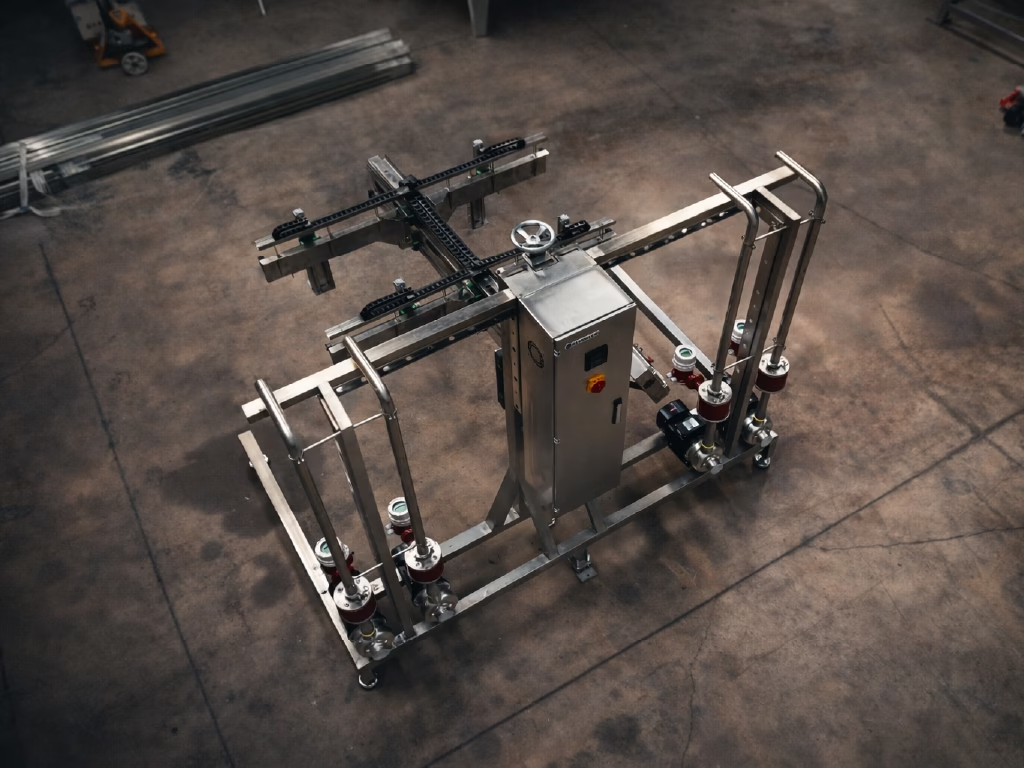
The final investment decision should consider total ownership cost. A low purchase price can become expensive if the system requires long cleaning, frequent manual corrections, difficult spare parts, or limited service support. A professional Liquid Filling and Packaging Line should be evaluated through engineering quality, operator training, spare part access, layout planning, and future expansion potential. The supplier should test product samples and define realistic capacity before installation. When selected carefully, a Liquid Filling and Packaging Line reduces waste, improves consistency, shortens changeover, and supports long term growth.
Fully automatic filling and labeling solutions help manufacturers build a cleaner, faster, and more predictable production process. The right Liquid Filling and Packaging Line starts with viscosity analysis and continues with suitable nozzle technology, anti drip performance, quick format change, stable labeling, and integrated automation. When these elements work together, quality becomes repeatable and production planning becomes easier. A carefully designed Liquid Filling and Packaging Line improves shelf presentation, limits downtime, and allows the business to scale with confidence as product variety and demand increase.
Choosing the right Liquid Filling and Packaging Line is a practical step toward higher productivity, cleaner packaging, and more consistent output. Atmosfer Makina develops filling, capping, labeling, and packaging systems for manufacturers that need accuracy, flexible capacity, and reliable operation in one integrated structure. Whether your product is a thin liquid, a foaming formula, a dense cream, a sauce, or a chemical product with special handling requirements, the production line should be designed around real samples and actual working conditions. This approach helps reduce product loss, shorten changeovers, improve label appearance, and create a safer workflow for operators.
It also supports better planning when your brand adds new bottle sizes, cap types, or product families. If your current process depends heavily on manual labor or struggles with inconsistent filling and presentation, visit atmosfermakina.com to review solutions that fit your capacity targets. A well planned Liquid Filling and Packaging Line can turn daily production into a more controlled, scalable, and professional operation. With expert support, you can compare machine options, avoid unnecessary complexity, and select a system that matches current output while leaving room for future automation, larger batches, and more demanding market expectations with less operational risk overall.
