
Investing in a Mini AdBlue® Plant is a strategic decision for companies that want to produce diesel exhaust fluid with greater control, consistent quality and long term operational flexibility.
As demand for cleaner diesel operation continues across logistics, agriculture, construction, fuel distribution and industrial fleets, many businesses are looking for compact production solutions instead of depending only on external supply. A Mini AdBlue® Plant can help reduce dependency, improve supply planning and support stable production when it is selected with the right technical criteria.
However, buying a Mini AdBlue® Plant is not simply about choosing a machine with an attractive price. The real value comes from equipment quality, process accuracy, energy performance, automation level, installation support and after sales service. Before making an investment, buyers should understand what the system includes, how it operates and which details directly affect product quality.
A well designed Mini AdBlue® Plant can become a reliable production asset, while a poorly selected system may lead to inconsistent concentration, maintenance problems, downtime and unnecessary operating costs. This guide explains what you need to know before purchasing a Mini AdBlue® Plant and how to evaluate the most important technical and commercial factors.
What Is a Mini AdBlue® Plant?
A Mini AdBlue® Plant is a compact production system designed to manufacture AdBlue® or diesel exhaust fluid by blending high purity water with automotive grade urea under controlled process conditions. Unlike large scale industrial production facilities, a Mini AdBlue® Plant is usually designed for businesses that need efficient production in a smaller footprint. It may include water treatment units, mixing tanks, dosing systems, transfer pumps, filtration equipment, control panels, storage connections and filling options depending on the project scope.
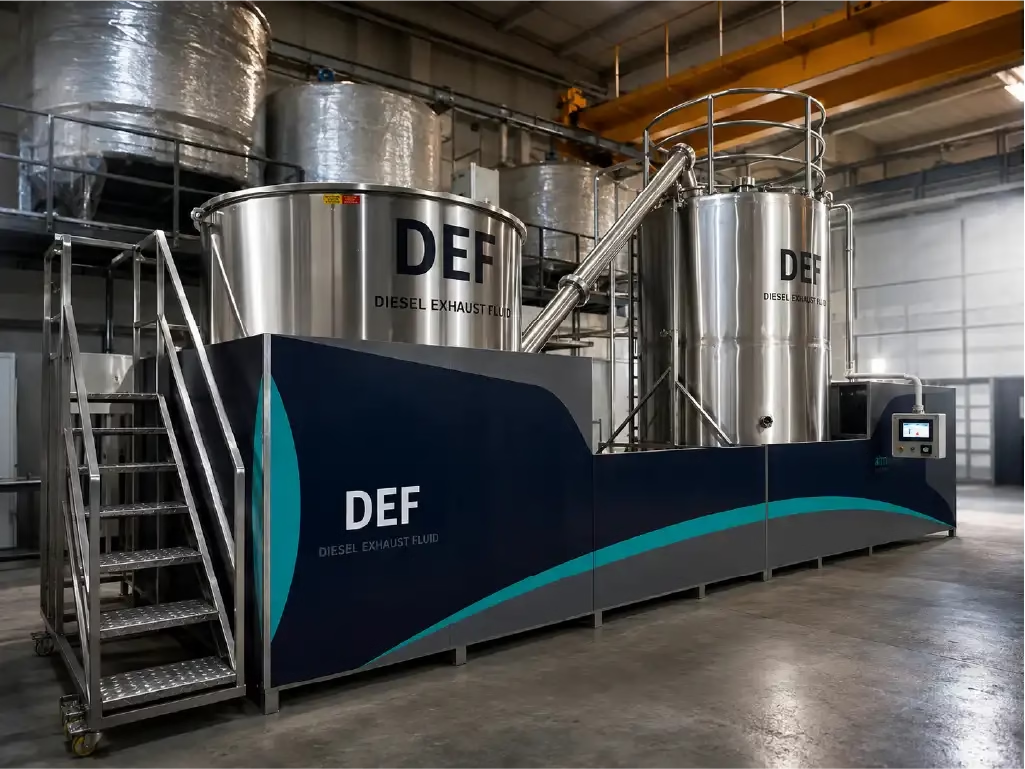
The main purpose of a Mini AdBlue® Plant is to create a stable and repeatable production environment where the urea concentration, water purity and final product cleanliness can be managed with precision. For companies that serve regional markets or operate their own vehicle fleets, this compact solution provides a practical way to produce DEF on demand.
A quality Mini AdBlue® Plant should be engineered not only for production volume but also for product consistency, operator safety and easy maintenance. Since AdBlue® quality depends on accurate formulation and clean process conditions, the system design must support controlled blending from the first batch to continuous daily operation.
Small Scale DEF Production Capacity
The production capacity of a Mini AdBlue® Plant depends on tank volume, pump performance, mixing technology, automation design and the filling configuration used after production. Some systems are suitable for smaller batch based production, while others can support faster output for distributors, fuel stations or companies with growing demand. When evaluating capacity, it is important to look beyond the hourly number written in a product offer.
A reliable Mini AdBlue® Plant should maintain consistent quality at its stated capacity without causing overheating, excessive energy consumption, unstable mixing or frequent maintenance interruptions. Buyers should also consider future demand. A company may start with moderate production needs but later require higher output, additional storage tanks or filling lines for cans, drums and IBC containers.
Choosing a scalable Mini AdBlue® Plant can prevent costly equipment replacement in the future. Capacity planning should also include raw material supply, purified water availability, storage logistics and packaging requirements. In other words, the best Mini AdBlue® Plant is not necessarily the largest one, but the one that matches your business model, daily production target and quality expectations with a balanced engineering approach.
Ideal Use Cases for Mini Production Plants
A Mini AdBlue® Plant is ideal for businesses that need compact, controlled and cost efficient DEF production without building a large industrial facility. Fuel distributors can use a Mini AdBlue® Plant to serve local customers with stable product availability. Fleet operators may prefer on site production to reduce supply risk and manage consumption more predictably.
Agricultural suppliers, logistics companies, construction equipment operators and regional chemical distributors can also benefit from a compact AdBlue® production setup. In many cases, the motivation is not only lower purchasing dependency but also better control over quality and delivery planning.
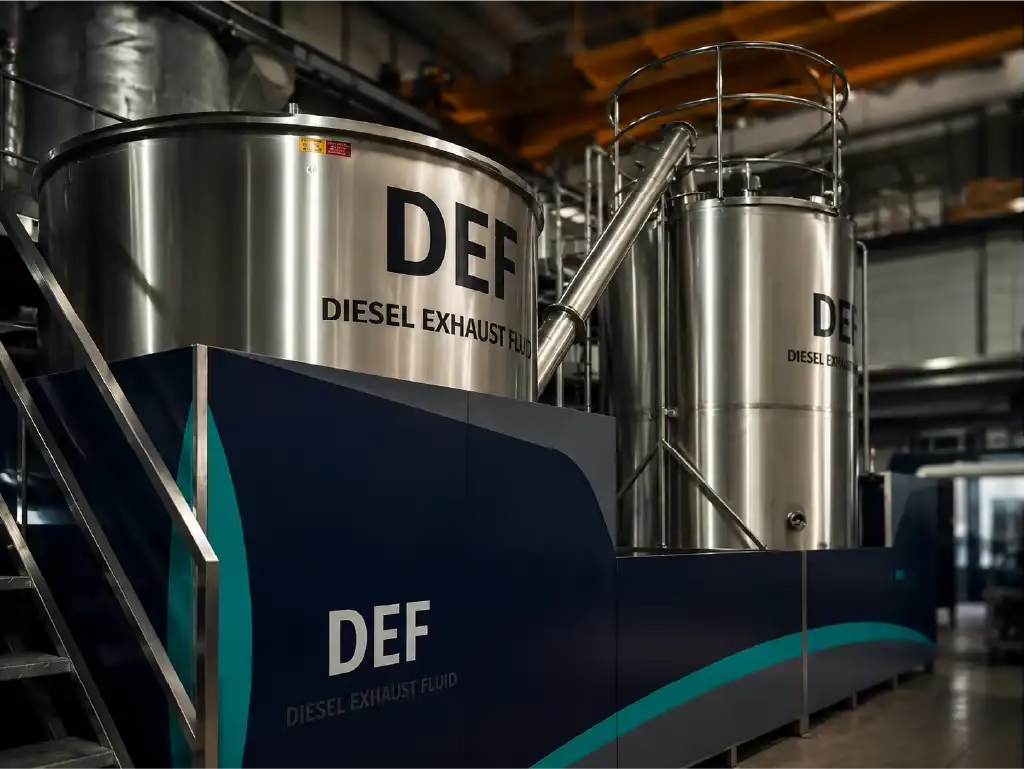
A Mini AdBlue® Plant can be especially valuable in regions where supply chains are inconsistent or transportation costs increase the final product price. It also allows businesses to respond faster to seasonal demand changes. For example, fleet activity may increase during certain periods, creating higher DEF consumption.
With a properly designed Mini AdBlue® Plant, production can be planned according to demand instead of relying fully on external stock. This makes the system useful for both commercial production and internal operational use.
Key Factors to Consider Before Buying
Before purchasing a Mini AdBlue® Plant, buyers should evaluate the system as a complete production solution rather than a single machine. Price is important, but it should never be the only decision factor. A low cost Mini AdBlue® Plant may appear attractive at first, yet it can create long term expenses if it lacks proper automation, durable components, accurate dosing, reliable filtration or technical support.
The most critical question is whether the system can produce consistent DEF quality under real operating conditions. Buyers should ask about material quality, stainless steel standards, pump selection, sensor accuracy, mixing design, control panel functionality and maintenance access. It is also important to understand whether the supplier provides installation, commissioning, operator training and documentation.
A professional Mini AdBlue® Plant supplier should be able to explain the process clearly and adapt the system to your production target. The investment should support stable operation, easy usability and long term serviceability. When these factors are evaluated together, the buyer can make a more confident decision and avoid technical surprises after installation.
| Evaluation Criteria | Why It Matters | What to Check Before Buying |
|---|---|---|
| Machine Quality | Ensures durability, clean production and reliable daily operation | Stainless steel construction, component brands, welding quality and maintenance access |
| Energy Efficiency | Reduces operating cost and improves profitability | Power consumption, pump efficiency, automation logic and batch cycle control |
| Production Speed | Supports demand planning and faster order preparation | Batch time, mixing performance, filling compatibility and storage integration |
| Technical Support | Protects the investment after installation | Training, spare parts, remote support, service availability and documentation |
Machine Quality and Durability
The quality of a Mini AdBlue® Plant directly affects product reliability, maintenance frequency and operating life. Since AdBlue® production requires clean process conditions, the materials used in contact with the product must be suitable for the application. Stainless steel tanks, proper seals, compatible pumps, clean piping and high quality valves are essential for long term performance. A durable Mini AdBlue® Plant should be built with attention to both visible and hidden details.
Smooth internal surfaces, organized piping, strong frame construction and accessible service points make a major difference during daily operation. Poor quality components may lead to leaks, contamination risks, inaccurate dosing or unexpected downtime. Buyers should also consider the control panel and automation hardware, because process consistency depends on accurate measurement and repeatable operation.
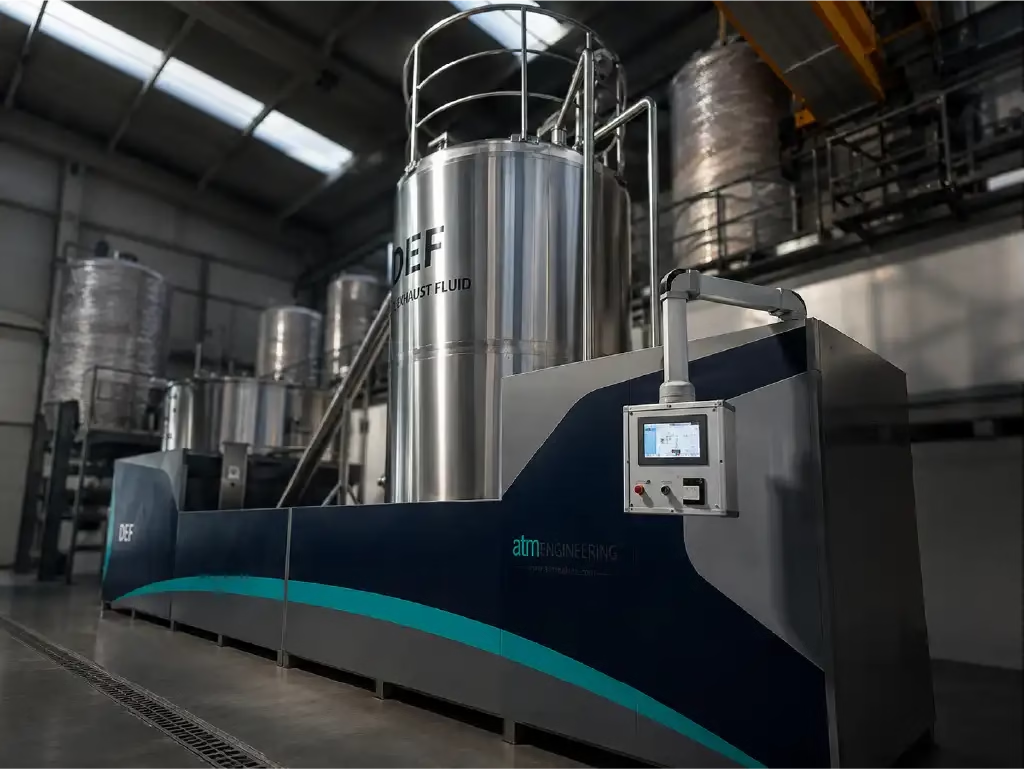
A professional Mini AdBlue® Plant should be easy to clean, easy to inspect and strong enough for regular production cycles. Durability is not only about thick metal or large tanks. It is about engineering discipline, component compatibility and a production design that protects product quality over time.
Energy Efficiency
Energy efficiency is one of the most important factors when calculating the real operating cost of a Mini AdBlue® Plant. A system that consumes less energy while maintaining stable production can improve profitability over the long term. Energy efficient design depends on pump selection, mixing technology, automation control, process timing and overall system layout.
A well engineered Mini AdBlue® Plant avoids unnecessary running time and uses power only when required by the process. Buyers should ask suppliers about total installed power, average operating consumption and how the system controls mixing, transfer and filling stages. Energy performance becomes especially important for companies planning frequent daily production. Even small differences in consumption can create meaningful savings over months and years. However, energy efficiency should never compromise product quality.
The ideal Mini AdBlue® Plant balances low power use with accurate blending, reliable dissolution and stable final concentration. This is why technical design should be evaluated carefully instead of comparing only motor power or catalog values. A smart system uses energy efficiently because the whole process is designed intelligently.
Production Speed
Production speed is another key factor when selecting a Mini AdBlue® Plant, especially for companies that need to respond quickly to customer orders or internal fleet demand. Fast production can improve stock rotation, reduce waiting time and help the business operate more flexibly. However, speed must be supported by proper mixing quality and process control.
A Mini AdBlue® Plant should not simply produce quickly; it should produce correctly. If the system shortens production time without ensuring complete dissolution, accurate concentration and proper filtration, the final product may not meet expectations. Buyers should ask how long each batch takes, how the system manages mixing and whether production speed changes according to batch size. It is also useful to evaluate the filling stage, because production capacity can be limited if packaging equipment is too slow.
A complete Mini AdBlue® Plant should be designed with the entire workflow in mind, from water preparation and urea feeding to mixing, filtration, storage and filling. The result should be a smooth process that saves time while protecting final product quality.
After Sales Technical Support
After sales technical support can determine whether a Mini AdBlue® Plant remains a reliable asset after installation. Even a well manufactured system requires proper use, preventive maintenance and access to spare parts. Buyers should choose a supplier that provides clear documentation, operator training, troubleshooting guidance and responsive technical assistance.
A Mini AdBlue® Plant may involve mechanical, electrical and process related components, so support should not be limited to basic machine operation. The supplier should understand the entire production process and help the buyer maintain consistent output. Remote support, spare part planning and periodic maintenance recommendations can reduce downtime and protect the investment. For companies entering DEF production for the first time, technical assistance is even more valuable.
Operators may need guidance on batch preparation, cleaning routines, quality control habits and safe daily operation. A dependable Mini AdBlue® Plant supplier acts as a long term engineering partner rather than only an equipment seller. This partnership helps the business operate with confidence and respond more effectively if production needs change.
Why Turnkey Mini AdBlue Plants Are a Better Choice
A turnkey Mini AdBlue® Plant offers a more complete and practical investment path because it includes more than machine delivery. Instead of buying separate components and trying to connect them independently, buyers receive an integrated system designed for installation, commissioning and operation. This approach reduces technical risk and shortens the time between purchase and production.
A turnkey Mini AdBlue® Plant can include process design, equipment supply, installation supervision, automation setup, testing, operator training and after sales support depending on the project. This is especially useful for companies that want to enter the DEF market without building a large internal engineering team.
Turnkey solutions also improve compatibility between system components. Pumps, tanks, filters, sensors and control panels are selected to work together, which supports smoother operation. When a Mini AdBlue® Plant is designed as a complete production package, the buyer benefits from clearer responsibility, easier communication and better technical coordination. Instead of solving problems between different suppliers, the business can work with one experienced partner.
From Installation to Commissioning
The installation and commissioning phase is critical for the success of a Mini AdBlue® Plant. Correct placement, proper connections, electrical integration, water line preparation, storage tank positioning and control panel setup all affect performance. A turnkey supplier can guide these steps and make sure the system is prepared for real production. Commissioning is not only about turning the machine on. It involves checking mechanical connections, testing pumps, confirming sensor readings, reviewing automation sequences and verifying that the production workflow operates correctly.
A Mini AdBlue® Plant that is commissioned professionally can start production with fewer risks and fewer operator mistakes. During this stage, the supplier can also help identify practical issues in the facility layout, such as raw material handling, product transfer route, filling area position and cleaning access. These details may seem small, but they have a strong impact on daily efficiency. A properly installed Mini AdBlue® Plant gives the buyer a more stable beginning and helps avoid common problems that occur when compact production systems are installed without expert guidance.
Operator Training and Technical Assistance
Operator training is one of the strongest advantages of choosing a turnkey Mini AdBlue® Plant. Even if the system is automated, people still need to understand how to prepare batches, monitor parameters, follow cleaning routines, react to alarms and maintain safe operation. Training helps operators use the system correctly from the first day and reduces the risk of avoidable mistakes.
A professional Mini AdBlue® Plant supplier should explain the process in a practical way, not only through manuals but also through hands on guidance. Operators should know how to check raw materials, observe mixing stages, manage transfer operations and recognize abnormal conditions. Technical assistance after training is equally important because questions may appear during real production.
A supplier that remains accessible can help the buyer improve operational confidence over time. For growing businesses, this support can also include advice on capacity expansion, additional storage, filling upgrades or preventive maintenance planning. A turnkey Mini AdBlue® Plant therefore provides not only equipment but also knowledge, continuity and a stronger foundation for sustainable production.
When comparing different offers, it is helpful to calculate the total value of a Mini AdBlue® Plant instead of focusing only on the purchase price. Total value includes production reliability, energy cost, maintenance needs, spare part accessibility, operator workload, product consistency and technical support quality. A cheaper system may become more expensive if it causes downtime, wastes raw materials or requires frequent service. On the other hand, a well designed Mini AdBlue® Plant can support long term profitability by producing stable quality with controlled operating costs.
Buyers should request technical specifications, process details and a clear explanation of what is included in the package. It is also wise to ask whether the system can be adapted to different filling needs or future capacity growth. A Mini AdBlue® Plant should fit the current business model while leaving room for development. This balanced approach helps investors make a decision based on performance, not only initial price. In the DEF market, reliability and consistency are often more valuable than saving a small amount at the beginning.
Quality control should also be part of the investment decision for any Mini AdBlue® Plant. Since DEF is used in selective catalytic reduction systems, incorrect concentration or contamination can create performance issues for end users.
A production system should support clean handling, accurate blending and proper filtration. Buyers should establish basic quality control procedures for raw materials, water purity and final product checks. A Mini AdBlue® Plant with reliable automation makes these procedures easier by reducing manual errors and creating a more repeatable process.
Still, equipment alone is not enough. Operators need clear routines, and the facility should be organized to prevent contamination. Storage tanks, transfer hoses and filling equipment should be compatible with DEF production. The supplier should be able to advise on these points during project planning. A strong Mini AdBlue® Plant investment is therefore both a machine decision and a process decision. When equipment, workflow and quality habits are aligned, the business can produce with greater confidence and protect its reputation in the market.
Another important point is the facility requirement for a Mini AdBlue® Plant. Even compact systems need a clean and organized production area. The space should allow safe movement for operators, easy raw material loading, access for maintenance and proper product transfer. Water treatment equipment, mixing units, storage tanks and filling stations should be positioned logically to reduce unnecessary handling.
A well planned layout helps the Mini AdBlue® Plant operate more efficiently and makes daily work easier. Electrical supply, drainage, ventilation and floor condition should also be reviewed before installation. In some projects, buyers focus mostly on the machine and forget that the surrounding environment affects production quality.
A clean production area reduces contamination risk and supports professional operation. The best results come when the supplier and buyer evaluate the site together before finalizing the system configuration. This makes it easier to select the right Mini AdBlue® Plant, prepare the installation area and create a workflow that supports both productivity and quality.
For companies planning to sell DEF commercially, branding and packaging strategy should be considered together with the Mini AdBlue® Plant investment. Production is only one part of the business.
The final product also needs proper storage, packaging, labeling, stock management and delivery planning. A Mini AdBlue® Plant can be connected to different filling solutions depending on whether the company wants to fill cans, drums, IBC containers or bulk tanks.
The right filling configuration can improve efficiency and reduce manual labor. If the business plans to serve multiple customer types, flexible filling options may be useful. For example, fleet customers may prefer bulk supply, while retailers may need smaller packages. Choosing a Mini AdBlue® Plant with future packaging needs in mind can create a smoother path for business growth.
Investors should also consider how much finished product storage is needed and how quickly stock will move. Good production planning helps prevent overproduction, storage pressure and delivery delays.
A Mini AdBlue® Plant can be a smart investment when it is selected with a clear understanding of technical needs, business goals and long term support expectations. The right system allows companies to produce DEF in a controlled, compact and efficient way. It can improve supply flexibility, reduce dependency and support better planning for fleet operations or commercial sales. However, the decision should be made carefully.
Buyers should compare machine quality, energy efficiency, production speed, automation capability, installation support and after sales service. They should also think about facility layout, future capacity, filling options and quality control routines. A professional turnkey solution can make the entire process easier by combining equipment, engineering, commissioning and training under one project structure.
In the end, the most suitable Mini AdBlue® Plant is the one that delivers reliable production, protects product quality and supports the buyer’s growth strategy. With the right partner, a compact DEF production system can become a powerful foundation for sustainable and profitable operation.
If you are planning to invest in a Mini AdBlue® Plant, Atmosfer Makina can help you evaluate the right production capacity, system configuration and turnkey solution for your business needs. From compact DEF production systems to installation, commissioning, operator training and technical support, Atmosfer Makina focuses on engineering driven solutions that support reliable and efficient production.
Every project requires a different balance of capacity, automation, filling options and facility planning, so choosing an experienced partner can make your investment safer and more practical.
Instead of purchasing only a machine, you can build a complete production process designed for long term performance. Whether you want to produce for your own fleet, serve regional customers or expand your industrial product portfolio, a carefully selected Mini AdBlue® Plant can create a strong advantage. To discover suitable solutions and speak with a technical team that understands DEF production requirements, visit www.atmosfermakina.com and take the next step toward a smarter, more controlled and more sustainable AdBlue® production investment.
