
As demand for cleaner diesel operation continues to grow, businesses are looking for smarter, more flexible ways to produce high quality diesel exhaust fluid close to their market. A small AdBlue® production plant offers a practical answer for companies that need reliable DEF manufacturing without investing in a large industrial facility. Instead of depending only on external supply chains, distributors, logistics operators and regional suppliers can produce AdBlue® on site with controlled quality, faster response times and improved cost efficiency.
This type of compact system is designed for companies that want professional production standards in a smaller footprint. When engineered correctly, a small AdBlue® production plant can support consistent formulation, accurate dosing, efficient mixing and easy operation, making it suitable for growing markets where flexibility matters as much as capacity.
What Is a Small AdBlue® Production Plant?
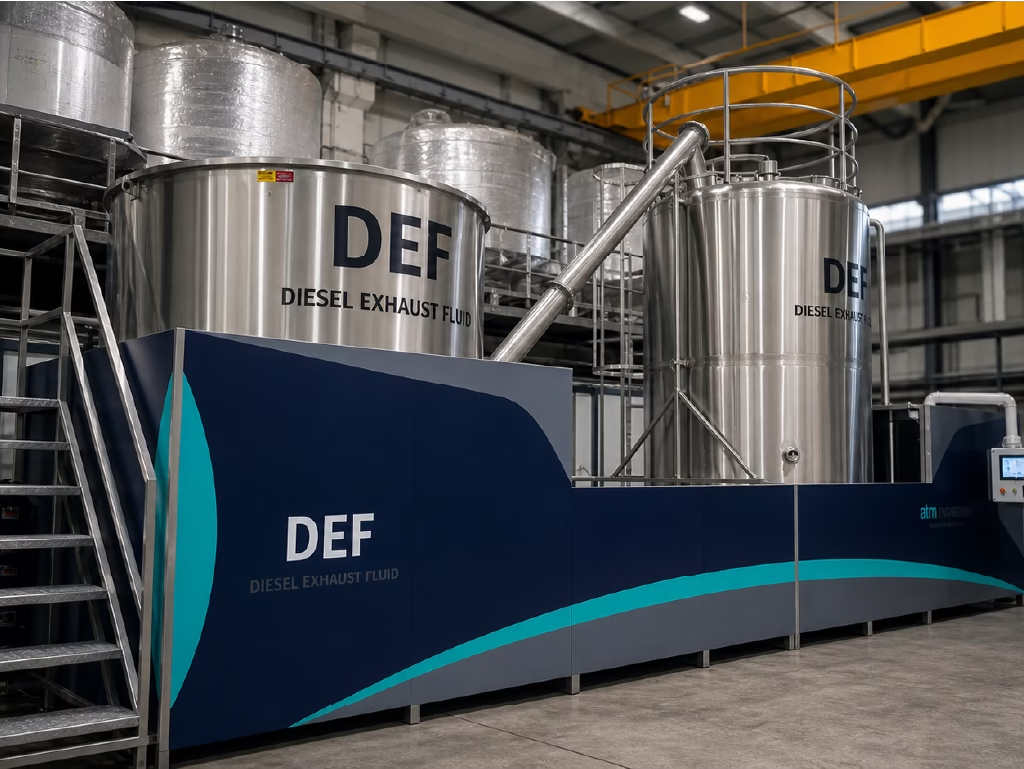
A small AdBlue® production plant is a compact DEF manufacturing system designed to produce diesel exhaust fluid by mixing high purity urea with demineralized water under controlled process conditions. The main purpose of the system is to create a stable and compliant AdBlue® solution that can be used in vehicles equipped with selective catalytic reduction technology. Unlike large scale plants that require extensive infrastructure, a compact setup focuses on efficient production in limited spaces while maintaining process accuracy.
These systems may include water treatment units, urea feeding equipment, mixing tanks, automation panels, filtration components and filling options depending on the required capacity. For many businesses, the biggest advantage is that small scale production makes AdBlue® manufacturing accessible without the need for a huge factory area or complex labor structure.
How small scale AdBlue® production works
Small scale AdBlue® production starts with water quality. Since DEF requires a very clean formulation, raw water must be purified before it enters the mixing process. Depending on the system design, reverse osmosis, deionization or other polishing technologies may be used to produce water with the required purity level. After that, technical grade urea is added in controlled quantities and mixed with treated water until the correct concentration is achieved.
Automation plays an important role because even a compact AdBlue® plant needs precise dosing, stable mixing and continuous monitoring. Sensors, control panels and process software help operators follow production values and reduce the risk of human error. When the batch is ready, the finished AdBlue® can be transferred to storage tanks, IBC containers, drums or direct filling lines according to the company’s sales model.
Key differences from conventional DEF plants
The main difference between a small AdBlue® production plant and a conventional DEF plant is the balance between capacity, investment and operational simplicity. Traditional plants are often designed for high volume manufacturing and may require larger tanks, more operators, bigger utility areas and more complex process lines. A compact AdBlue® production setup is created for businesses that need professional results with lower space requirements and easier daily management. This does not mean lower quality.
A well engineered compact system can still produce AdBlue® with consistent formulation when the right materials, automation and water treatment technologies are used. The compact model is especially valuable for companies that want to enter the DEF market, expand regional supply or support their own fleet without waiting for full scale industrial expansion.
| Feature | Small AdBlue® Production Plant | Conventional DEF Plant |
|---|---|---|
| Facility size | Compact and suitable for limited production areas | Requires larger industrial space |
| Operation | Can be managed with minimum manpower | Usually requires more operational staff |
| Investment level | More accessible for regional businesses | Higher initial investment |
| Flexibility | Ideal for local and medium scale demand | Better suited for mass production |
| Market response | Fast supply for nearby customers and fleets | Focused on wider distribution networks |
Who Needs a Small AdBlue® Production Plant?
A small AdBlue® production plant is suitable for companies that want to control their DEF supply, reduce dependency on external producers and serve customers more efficiently. The system is especially useful in regions where transportation costs, supply delays or fluctuating demand affect profitability. Instead of purchasing finished AdBlue® from distant sources, a business can manufacture locally and offer faster delivery. This creates a stronger position in the market because customers often value availability, consistency and service reliability.
Compact production also supports companies that want to test the DEF market before scaling up. With the right planning, a small plant can become the foundation of a growing AdBlue® business and later be expanded with additional tanks, filling lines or automation features.
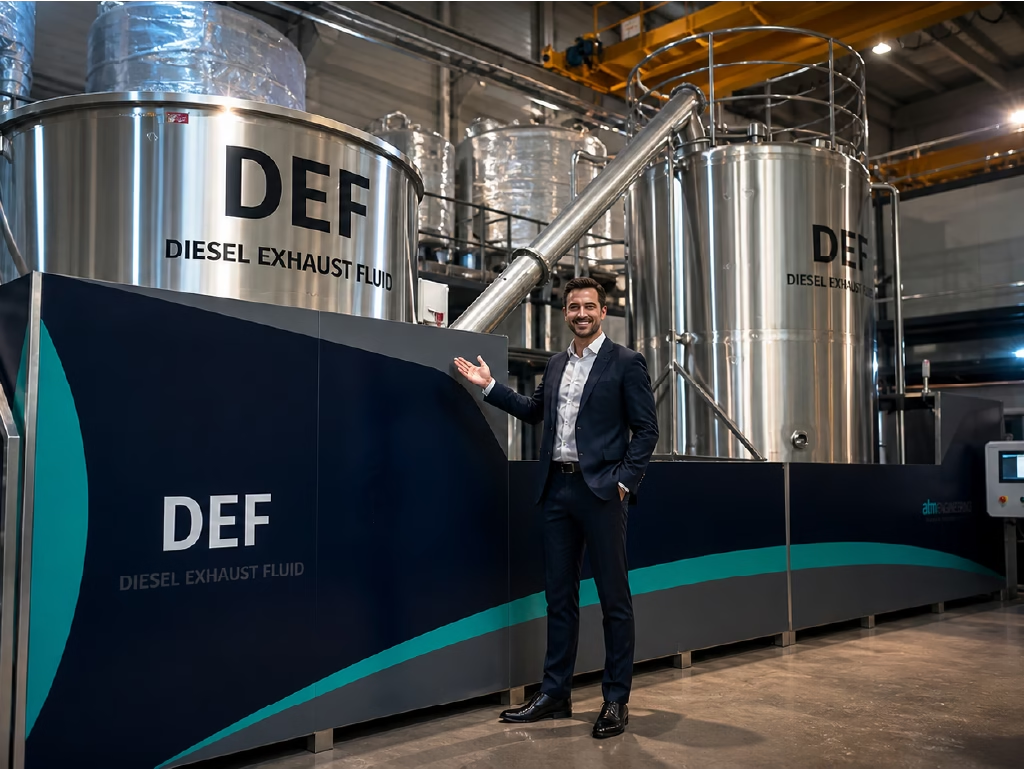
Fuel distributors
Fuel distributors are among the most suitable users of compact AdBlue® production systems because they already serve diesel vehicle owners, transport companies, agricultural users and industrial customers. Adding AdBlue® to their product portfolio can increase customer loyalty and create an additional revenue stream. A small plant allows distributors to produce DEF according to local demand and package it in different formats such as bulk supply, IBC containers or smaller units.
This flexibility helps them respond to seasonal changes, fleet requirements and regional sales opportunities. Since many customers prefer to buy fuel and AdBlue® from the same reliable supplier, local production gives distributors a practical competitive advantage. It also improves stock control because finished product can be produced according to real market movement rather than long distance delivery schedules.
Logistics companies
Logistics companies with large diesel fleets can benefit from producing AdBlue® for their own operations. Heavy duty trucks, buses and commercial vehicles using SCR technology require regular DEF supply, and inconsistent availability can disrupt daily planning. With an on site or nearby compact AdBlue® production plant, fleet managers can reduce purchasing uncertainty and maintain better control over consumption. This approach is especially useful for companies operating from central depots, cross border transport hubs or regional distribution centers.
Producing AdBlue® internally may also support better cost tracking because usage can be connected directly to fleet activity. When combined with storage and filling infrastructure, a compact production setup helps logistics businesses simplify supply management, protect operational continuity and reduce dependence on external delivery timing.
Local DEF suppliers
Local DEF suppliers can use a small AdBlue® production plant to build a strong regional business with manageable investment. Many markets need reliable suppliers that can serve workshops, fuel stations, agricultural businesses, construction fleets and transport companies without long waiting times. A compact system gives local suppliers the ability to produce AdBlue® close to the customer and adapt to changing demand more easily.
This is particularly important in developing regions where large production facilities may be far away. By focusing on quality, fast delivery and professional packaging, a local supplier can create trust and repeat sales. A small plant also makes it easier to start with moderate capacity and expand as the customer base grows, which supports sustainable business development.
Benefits of Choosing a Compact Production Setup
Choosing a compact AdBlue® production setup is not only about saving space. It is also about building a production model that is efficient, controllable and easier to manage. Many businesses hesitate to enter DEF manufacturing because they imagine large buildings, complicated teams and high energy use. Compact systems change this perception by offering a more practical pathway. They help companies produce AdBlue® with professional process control while keeping operation simple. A well designed small plant can reduce unnecessary equipment load, improve workflow and help operators monitor production from a central panel. For businesses focused on profitability, the combination of lower resource use, smaller footprint and flexible capacity can make compact production a smart long term choice.
Lower energy consumption
Energy efficiency is one of the most important advantages of a modern small AdBlue® production plant. In conventional production environments, unnecessary heating, oversized equipment or inefficient mixing can increase operating costs. Compact systems are designed to use process energy more intelligently. By matching equipment size to real production needs, the plant can avoid excessive consumption while maintaining stable output.
Lower energy demand directly supports profitability because every batch of AdBlue® requires predictable production costs. For companies operating in competitive markets, this can make a major difference. Efficient production also supports a more sustainable business image, which is increasingly important for companies serving transport, fuel and industrial sectors. When a compact plant combines smart automation with optimized mixing technology, it helps businesses produce AdBlue® more economically without sacrificing consistency.
Space saving design
Space saving design is a major reason why companies choose compact AdBlue® production. Not every business has access to a large industrial facility, and many companies want to use existing warehouses, depots or service areas more effectively. A small plant can be engineered with a logical layout that places water treatment, mixing, storage and filling functions in an organized workflow. This makes installation easier and helps operators move safely around the system.
A compact footprint can also reduce facility preparation costs because the company may not need a completely new building. For distributors and local suppliers, this is a strong advantage because AdBlue® production can be added to an existing operation with less disruption. The result is a more flexible manufacturing model that fits real business conditions.
Easy operation with minimum manpower
Easy operation is essential for businesses that want to produce AdBlue® without building a large technical team. Modern compact plants can be designed with user friendly automation that guides the operator through production stages, monitors process values and helps maintain consistent quality. Instead of relying only on manual control, the system can manage dosing, mixing and transfer steps with clear process visibility.
This reduces training pressure and supports safer daily operation. Minimum manpower does not mean minimum control. On the contrary, smart automation allows one trained operator to supervise the process more effectively. For growing companies, this is a major benefit because labor costs and operational complexity remain manageable. When the system is easy to use, businesses can focus more on sales, distribution and customer service while maintaining dependable AdBlue® output.
Why Quality Control Matters in Compact DEF Manufacturing
Quality control is critical in every AdBlue® production model because DEF must support sensitive vehicle emission systems. Poor water quality, incorrect concentration, contamination or unstable mixing can create serious product problems and damage customer trust. For this reason, a small plant must never be treated as a simple mixing tank. It should be designed as a controlled production system with suitable materials, clean process lines, accurate measurement and proper filtration.
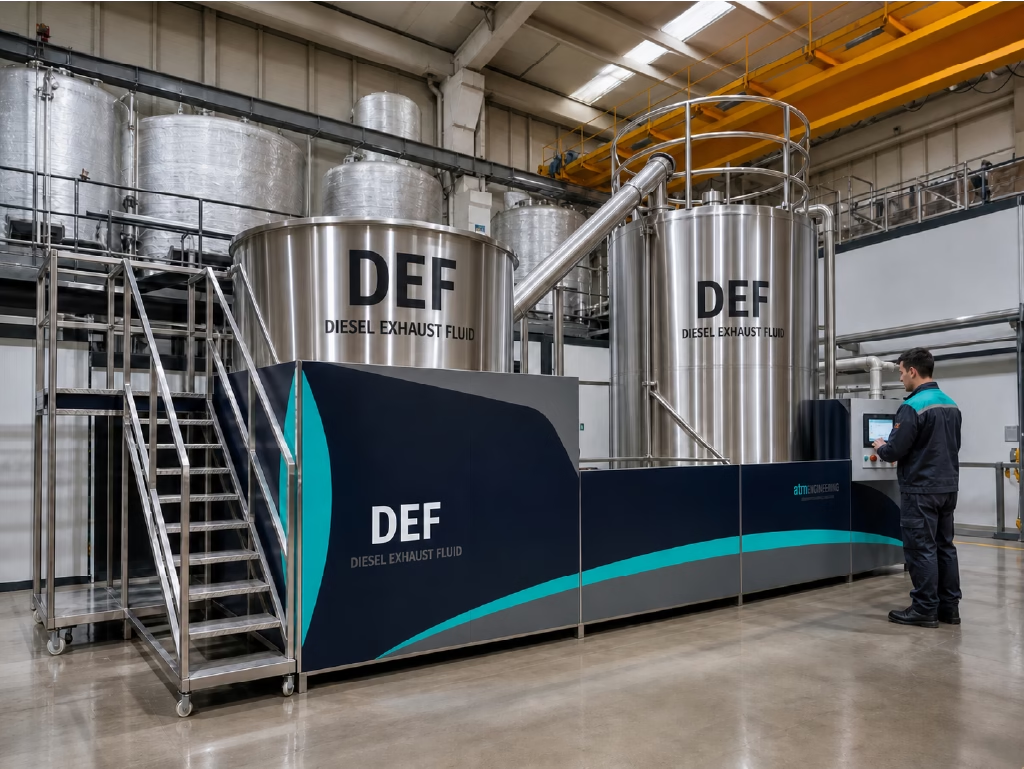
Stainless steel contact surfaces, sealed transfer points and monitored water treatment stages can all contribute to product stability. Testing and documentation also help suppliers prove consistency to customers. In a competitive market, quality becomes one of the strongest selling points. Businesses that produce reliable AdBlue® can build long term relationships with fleets, distributors and industrial users.
How a Small AdBlue® Plant Supports Business Growth
A compact AdBlue® plant can support business growth by allowing companies to start with a realistic production scale and expand step by step. This is important because many businesses do not want to take the risk of oversizing their first investment. With the right system design, production capacity, storage volume and filling options can be planned according to current demand while keeping future expansion in mind. As sales increase, the company can add more storage, improve packaging capacity or integrate additional automation.
This staged growth model helps protect cash flow and supports smarter market entry. For entrepreneurs and established companies alike, compact AdBlue® production creates a bridge between opportunity and practical execution. It gives businesses the ability to serve local demand today while preparing for larger volumes tomorrow.
Choosing the Right Small AdBlue® Production Plant
Choosing the right small AdBlue® production plant requires more than comparing tank size or price. Businesses should evaluate process design, automation quality, water treatment capacity, material selection, technical support and future upgrade options. The ideal system should match the company’s production goals, available space, packaging model and target customers. A distributor supplying bulk DEF will have different needs than a logistics company producing mainly for its own fleet.
A local supplier may need flexible filling solutions to serve multiple customer types. For this reason, project planning should begin with a clear analysis of daily capacity, raw material supply, storage strategy and market demand. A professional compact AdBlue® system should make production easier, not create hidden operational challenges.
If your business is planning to enter the DEF market, improve local supply capability or produce AdBlue® with a compact and efficient system, working with an experienced engineering partner is one of the most important decisions you can make. Atmosfer Makina develops practical production solutions for companies that need reliable performance, controlled manufacturing and scalable investment.
A small AdBlue® production plant can help you reduce dependency on external suppliers, manage production more closely and respond faster to your customers. Instead of choosing a standard setup that may not fit your operation, you can explore a solution designed around your capacity needs, available space and long term business goals. With the right system, compact DEF manufacturing becomes more accessible, more efficient and easier to manage. To learn more about production technologies, system options and engineering support, visit atmosfermakina.com and discover how Atmosfer Makina can help your business build a smarter AdBlue® production strategy with confidence.
