
In modern diesel emission control systems, AdBlue is not only a consumable fluid, but also a technically sensitive solution that directly affects vehicle performance, selective catalytic reduction efficiency, environmental compliance, and long term operational reliability. For this reason, producing AdBlue requires much more than mixing urea with water. Every stage, from raw material selection to storage, filtration, laboratory testing, documentation, packaging, and shipment, must be managed under strict quality principles.
This is where ISO 22241 Standards become essential. These standards define the quality, handling, testing, and distribution requirements for diesel exhaust fluid, helping producers ensure that the final product is safe, consistent, and suitable for SCR systems. When a production facility follows ISO 22241 Standards, it protects not only its own brand reputation, but also the vehicles, fleets, distributors, and end users that rely on clean and accurate AdBlue quality. In a competitive market, compliance is no longer a technical detail. It is a trust factor, a production discipline, and a strong indicator of professional responsibility.
AdBlue is typically composed of high purity urea and demineralized water in a defined concentration, but the apparent simplicity of this formulation can be misleading. Small deviations in concentration, contamination, conductivity, alkalinity, insoluble matter, or metal content can create serious risks for SCR catalysts and vehicle emission systems. ISO 22241 Standards provide a structured framework to prevent these risks by setting clear specifications for product quality and process control.
Without these standards, a producer may create a fluid that looks visually acceptable but fails chemically or functionally in real use. This can result in clogged injectors, catalyst damage, increased NOx emissions, warning lights, vehicle downtime, warranty disputes, and customer dissatisfaction. Therefore, ISO 22241 Standards are important because they transform AdBlue production from a basic blending activity into a controlled industrial process supported by measurable quality parameters.
One of the main reasons ISO 22241 Standards matter is consistency. Commercial vehicles, passenger cars, agricultural machines, buses, construction equipment, and logistics fleets use AdBlue under different climate conditions, storage environments, and operating loads. A product that performs well in one batch but fails in another creates unacceptable uncertainty for the market. Compliance with ISO 22241 Standards helps manufacturers maintain batch to batch stability by defining quality expectations that must be checked regularly. This includes proper urea concentration, controlled impurity levels, appropriate water purity, suitable packaging materials, and contamination prevention. In this way, producers can offer a reliable product that meets the same quality expectations each time it reaches the customer.
Another critical benefit of ISO 22241 Standards is market credibility. Many distributors, fleet operators, automotive service providers, and international buyers prefer or require AdBlue produced according to recognized standards. In export oriented business models, documented compliance can become a commercial advantage because it shows that the manufacturer understands global expectations.
For companies producing AdBlue plants, DEF systems, or turnkey production lines, the ability to design facilities that support ISO 22241 Standards also becomes a key selling point. A facility that is planned with suitable tanks, stainless steel piping, filtration systems, automation, monitoring, and laboratory infrastructure helps the producer meet quality targets more effectively. In other words, compliance begins not only in the laboratory, but also in the engineering design of the production system.
From an environmental perspective, ISO 22241 Standards support the original purpose of AdBlue, which is reducing harmful nitrogen oxide emissions from diesel engines. If AdBlue quality is poor, the SCR system may not function as intended, and emission reduction performance may decrease. This creates a contradiction: a product designed to support cleaner transportation can become ineffective when it is not produced correctly. By following ISO 22241 Standards, manufacturers contribute to cleaner roads, lower environmental impact, and more reliable emission control. This is especially important for sectors such as logistics, public transportation, mining, agriculture, and heavy industry, where diesel equipment is used intensively and regulatory expectations are becoming increasingly strict.
The operational side of compliance is also highly important. A production plant that follows ISO 22241 Standards usually works with defined procedures, trained personnel, calibrated instruments, controlled raw material acceptance, traceable batch records, and documented cleaning processes. These practices reduce production errors and make quality problems easier to detect before the product leaves the facility. For example, if a batch does not meet the required specification, traceability allows the producer to identify the source of the issue, isolate the affected material, and prevent larger commercial or technical consequences. This kind of structured control protects the producer from costly recalls, customer complaints, and long term damage to brand trust.
| Compliance Area | Why It Matters in AdBlue Production | Role of ISO 22241 Standards |
|---|---|---|
| Urea Quality | Prevents unwanted impurities that may damage SCR systems | Defines quality expectations for suitable raw material use |
| Pure Water Control | Reduces conductivity, minerals, and contamination risks | Supports consistent chemical purity in the final solution |
| Batch Testing | Confirms that each production batch meets required values | Creates measurable and repeatable quality control criteria |
| Storage and Handling | Protects AdBlue from contamination during production and distribution | Guides safe material compatibility and clean handling practices |
| Documentation | Provides proof of quality, traceability, and audit readiness | Supports certification, customer confidence, and process transparency |
Laboratory Analyses in Quality Control Processes
Laboratory analysis is one of the strongest pillars of compliance with ISO 22241 Standards. Even if a production plant uses advanced automation and high quality raw materials, the final product must still be verified through proper testing. Quality control is not based on assumption; it is based on measurable results. In AdBlue production, laboratory analysis helps confirm whether the product meets the required urea concentration, purity level, and contamination limits. This process protects the producer from releasing nonconforming batches and gives customers confidence that the product has been evaluated according to a recognized quality framework. When laboratory procedures are planned correctly, they become a preventive control system rather than a reactive problem solving tool.

The concentration of urea is one of the most important parameters in AdBlue quality control. If the concentration is too low or too high, the SCR system may not dose the fluid correctly, and emission reduction efficiency may be affected. ISO 22241 Standards help define the acceptable specification range and testing approach, allowing producers to verify that the solution is properly balanced. However, concentration alone is not enough. A batch can have the correct urea percentage but still fail due to impurities, metal contamination, poor water quality, or insoluble matter. This is why laboratory analysis must be comprehensive. A professional quality control process considers the full chemical profile of the product, not just one value.
Common laboratory checks may include urea content, refractive index, density, alkalinity, biuret level, aldehyde content, phosphate, calcium, iron, copper, zinc, chromium, nickel, magnesium, sodium, potassium, and insoluble substances. Each of these values can reveal a different risk. For example, metal contamination may come from unsuitable equipment, poor tank materials, damaged piping, or improper handling tools. Insoluble matter may indicate contamination during mixing or filling. Conductivity may point to water quality problems. By testing these parameters in relation to ISO 22241 Standards, producers can understand not only whether a batch passes or fails, but also where process improvements may be needed.
Sampling is another area where discipline matters. A laboratory result is only meaningful if the sample represents the actual batch accurately. Poor sampling can create false confidence or unnecessary rejection. Therefore, production facilities should define sampling points, sampling frequency, container cleanliness, labeling rules, and retention sample practices. Compliance with ISO 22241 Standards encourages a controlled approach to sampling and documentation. Retention samples can be especially valuable in case of future customer claims or distribution questions. If a complaint occurs, the producer can compare the retained sample with shipped product information and batch records, making the investigation more objective and professional.
Calibration and instrument control are also essential parts of laboratory reliability. Refractometers, conductivity meters, density meters, balances, titration equipment, and other analytical tools must provide accurate results. If instruments are not calibrated, the producer may approve a batch based on incorrect data. This creates a hidden quality risk. Facilities aiming to comply with ISO 22241 Standards should maintain calibration schedules, verification records, maintenance plans, and operator training documents. In a well managed system, laboratory analysis is not simply a set of tests; it is a controlled quality assurance structure supported by equipment, people, procedures, and records.
A strong laboratory workflow also improves decision making. When test results are collected over time, producers can observe trends in raw material quality, water system performance, production stability, and storage conditions. This allows preventive maintenance and process optimization. For example, a gradual increase in conductivity may indicate that the water treatment system needs service before it creates a failed batch. A recurring impurity trend may reveal a material compatibility issue in the production line. By aligning laboratory data with ISO 22241 Standards, manufacturers can move from simple compliance to continuous improvement, which is one of the most valuable advantages of professional production management.
The Critical Impact of Pure Water Quality on Urea Solution
Pure water quality is one of the most critical factors in AdBlue production because water forms the majority of the final solution. Even when high grade urea is used, poor water quality can compromise the entire batch. Minerals, dissolved salts, organic matter, metals, chlorine, or microbial contamination can negatively affect product stability and SCR system safety.
ISO 22241 Standards emphasize the importance of using water that supports the required chemical purity of AdBlue. This means ordinary tap water or insufficiently treated water is not suitable for professional production. The water must be purified through appropriate treatment technologies and monitored continuously to ensure reliable quality.,
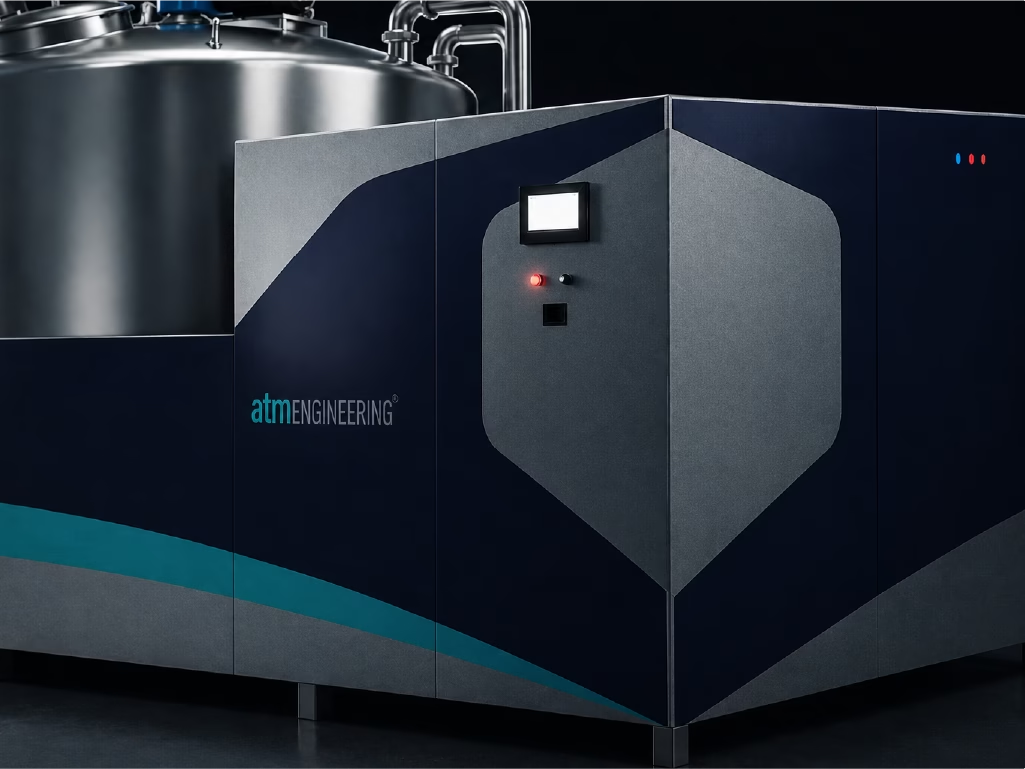
The connection between water quality and urea solution performance is direct. Urea dissolves into the water phase, and any impurity already present in the water becomes part of the final AdBlue product. Once contamination enters the solution, it may be difficult or impossible to remove without rejecting the batch. This is why prevention is much more effective than correction. Proper pretreatment, system sanitation, closed transfer lines, compatible materials, clean tanks, and routine monitoring all help protect the quality required by ISO 22241 Standards. In professional production, clean water is not only an ingredient; it is the foundation of product reliability.
Storage conditions for pure water are also important. Water that leaves the treatment system in excellent condition can still become contaminated if stored in unsuitable tanks or exposed to poor handling practices. Materials that release metals or chemicals into the water should be avoided. Open tanks, dirty hoses, unprotected vents, and uncontrolled maintenance activities can introduce impurities. A production plant that follows ISO 22241 Standards should manage pure water storage with the same seriousness as final AdBlue storage. This includes using compatible materials, closed systems, proper cleaning procedures, and regular quality checks before production begins.
Temperature and production environment can also influence quality management. While AdBlue is a stable solution when produced and stored correctly, exposure to unsuitable conditions may create handling problems or quality concerns. Clean production areas, controlled filling points, and trained operators help reduce the risk of contamination. The more a facility depends on manual handling, the greater the importance of operator discipline. Automation can support compliance with ISO 22241 Standards by reducing human error, controlling mixing ratios, monitoring process values, and creating production records. However, automation must be supported by a clean design philosophy and proper maintenance to be fully effective.
The Certification Process and Audit Preparation
The certification process related to AdBlue production is not only about passing an inspection; it is about proving that the production system can consistently meet the expectations of ISO 22241 Standards. Auditors, customers, and business partners want to see that quality is built into the process, not checked only at the end.
This means a company should be ready to demonstrate raw material control, production procedures, laboratory records, equipment suitability, personnel training, calibration documents, storage conditions, batch traceability, corrective actions, and customer complaint handling. When these elements are organized properly, certification becomes a natural result of disciplined production rather than a stressful last minute effort.
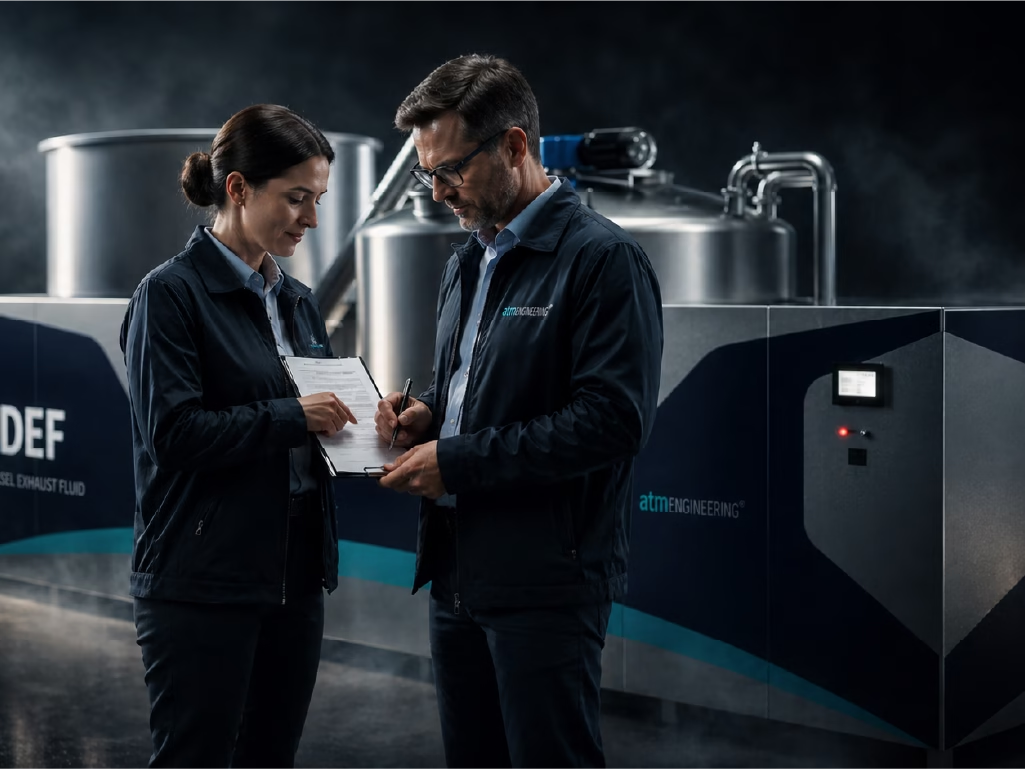
Audit preparation should begin with a gap analysis. The producer should compare current practices with the requirements and expectations of ISO 22241 Standards. This review may reveal missing procedures, incomplete records, insufficient laboratory controls, unsuitable materials, weak sampling routines, or unclear responsibilities. After the gaps are identified, the company can create an improvement plan. This plan should define actions, responsible people, deadlines, and verification methods. A structured approach is important because compliance is not achieved through isolated documents. It requires alignment between engineering, production, quality control, purchasing, maintenance, logistics, and management.
Documentation is one of the most visible parts of an audit. Even if a facility operates carefully, it may struggle to prove compliance if records are incomplete or inconsistent. Batch production reports, laboratory results, raw material certificates, cleaning logs, maintenance records, calibration certificates, nonconformity reports, and training files should be well organized and easy to access. ISO 22241 Standards create a quality framework where traceability plays a central role. If a batch is questioned, the producer should be able to show when it was produced, which raw materials were used, which tests were performed, who approved it, where it was stored, and where it was shipped.
Supplier control is another important audit topic. AdBlue quality begins before production starts, because raw materials directly influence the final solution. Urea must be suitable for AdBlue production, and water treatment chemicals, packaging materials, filters, hoses, seals, and tanks must be selected carefully. A company preparing for compliance with ISO 22241 Standards should evaluate suppliers, request relevant certificates, define acceptance criteria, and inspect incoming materials when necessary. Weak supplier control can lead to contamination or inconsistency even if the internal production process is well managed.
Personnel training should not be underestimated. Operators, laboratory technicians, warehouse staff, maintenance teams, and quality managers all affect product quality. Training should explain not only what employees must do, but also why these actions matter. When people understand the importance of ISO 22241 Standards, they are more likely to respect cleaning procedures, sampling rules, labeling instructions, and contamination prevention practices. In many production environments, quality problems occur not because people are careless, but because they have not been trained to recognize the consequences of small mistakes. A strong training culture helps prevent these issues.
Internal audits are also valuable before external certification or customer audits. They allow the company to test its own system, identify weaknesses, and correct problems before they become formal findings. Internal audits should be practical and evidence based. Instead of checking documents only, the auditor should observe production areas, review laboratory practices, inspect storage conditions, interview employees, and verify traceability through actual batch examples. This approach reflects the real purpose of ISO 22241 Standards, which is to ensure that quality is consistently achieved in daily operations.
For AdBlue producers, compliance also has a strong commercial dimension. Customers increasingly want reliable suppliers that can prove quality, support documentation, and maintain stable production. Fleet operators and distributors do not want uncertainty because poor AdBlue can create vehicle problems and operational costs.
When a producer can demonstrate compliance with ISO 22241 Standards, it communicates professionalism and reduces buyer hesitation. This is especially important for companies entering new markets, expanding export channels, or building long term distributor networks. A certified and well documented production process becomes a competitive advantage that supports both technical trust and business growth.
Engineering design plays an important role in making audit readiness easier. A poorly designed production line may require constant manual correction, complicated cleaning, and frequent troubleshooting. A well designed system, on the other hand, supports clean flow, accurate dosing, proper mixing, safe transfer, and reliable monitoring. Stainless steel components, compatible seals, closed piping, automation, clean filling stations, and integrated quality control points can all help a facility align with ISO 22241 Standards. For this reason, companies planning to invest in AdBlue production should consider compliance requirements from the beginning of the project, not after installation is complete.
In conclusion, ISO 22241 Standards are important in AdBlue production because they protect product quality, vehicle systems, environmental performance, customer confidence, and producer reputation. They define the difference between uncontrolled blending and professional manufacturing. Laboratory analysis ensures that each batch is verified with measurable evidence. Pure water quality protects the chemical integrity of the urea solution.
Certification and audit preparation create a disciplined management system that supports traceability and continuous improvement. For any company that wants to produce AdBlue seriously, compete in demanding markets, and build long term trust, compliance with ISO 22241 Standards should be seen as a strategic requirement rather than a simple technical obligation.
If you are planning to establish a reliable AdBlue or DEF production facility, choosing the right engineering partner is one of the most important decisions you will make. A professional plant should not only produce fast and efficiently, but also support consistent quality, clean process design, accurate mixing, pure water control, automation, documentation, and preparation for compliance with ISO 22241 Standards. Atmosfer Makina develops advanced production solutions for companies that want to manufacture with confidence, reduce operational risks, and build a stronger position in local and international markets.
With the right system design, you can improve energy efficiency, minimize manual errors, protect batch quality, and create a production structure that is easier to manage, audit, and scale. Whether your goal is compact production, turnkey plant investment, or a more controlled DEF manufacturing process, Atmosfer Makina can help you move forward with a technically reliable approach. To explore engineering solutions designed for cleaner roads and stronger production performance, visit atmosfermakina.com and discover how the right production infrastructure can support your long term growth.
