
Neither technology is automatically more accurate in every AdBlue® application. A correctly sized electromagnetic flow meter can deliver fast, repeatable volumetric dosing, especially on stable small-container lines and high-flow tanker loading. A load-cell system measures net mass directly and is often easier to verify across drums and IBCs, particularly when temperature or container geometry varies. In practice, AdBlue filling accuracy depends on the complete measuring system: sensor selection, valve response, pipework, nozzle shut-off, container handling, calibration method, operating temperature and control logic all influence the final result.
The right choice therefore begins with the package format, required output, legal-metrology obligations and the quantity that must be declared—volume or mass. For mixed-format plants, the best answer may be a hybrid design: flow-meter dosing for speed, gravimetric checking for verification, or separate technologies for retail packages and bulk loading.
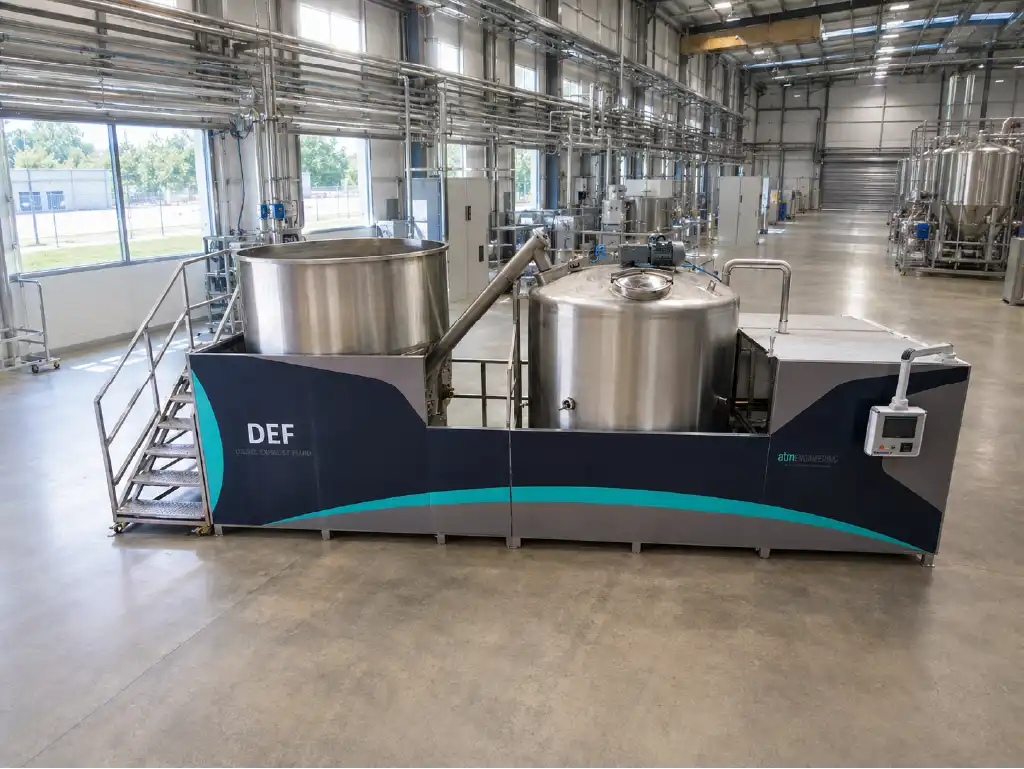
How Flow Meter and Load Cell Filling Systems Work
A flow-meter filling system controls the amount of liquid passing through a pipe, while a load-cell system controls the increase in container weight. Both can achieve consistent fills when engineered around the real process, but they respond differently to temperature, air in the line, tare variation, vibration and flow cut-off. Understanding what each instrument actually measures is the foundation of a defensible selection.
| Decision factor | Electromagnetic flow meter | Load cell | Practical implication |
|---|---|---|---|
| Primary measurement | Liquid volume passing through the meter | Net mass added to the container | Match the instrument to the declared quantity and verification method |
| Main strengths | Continuous, fast dosing with no moving parts in the measuring tube | Direct mass measurement and straightforward tare compensation | Flow meters suit high throughput; weighing is attractive for large or variable containers |
| Main sensitivities | Full-pipe condition, entrained air, grounding, flow profile and valve timing | Vibration, platform loading, hose forces, wind and settling time | Installation quality matters as much as sensor specifications |
| Typical use | Bottles, canisters and tanker loading | Drums, IBCs and verification stations | Actual formats and cycle targets should be tested before approval |
Volumetric measurement with electromagnetic flow meters
An electromagnetic flow meter creates a magnetic field across a conductive liquid and measures the voltage generated as that liquid moves through the field. The signal is proportional to flow velocity; combined with the known tube area, the transmitter calculates volumetric flow. Because AUS 32 is conductive, this principle can be suitable for a flow meter filling system when wetted materials, lining, electrodes and seals are compatible with the product.
During filling, the PLC compares the accumulated meter total with the recipe setpoint. A practical sequence normally uses a high-flow stage for most of the dose and a slower final stage before the valve closes. The controller must compensate for liquid already moving between the shut-off valve and nozzle, valve closing time and any post-close dripping. A highly accurate meter cannot correct a poorly designed nozzle or an unstable cutoff on its own.
Installation conditions determine whether laboratory performance can be reproduced on the line. The measuring tube should remain full, air pockets should be controlled, grounding should follow the manufacturer’s instructions, and pump pulsation should not overwhelm the signal. Straight-run requirements, valve position and pipe diameter must be reviewed for the selected meter. Recipe validation also needs the actual AdBlue®, operating flow range and expected temperature band rather than water at a single workshop condition.
Volumetric dosing is attractive when speed and clean integration are priorities. It can serve several nozzles, record batch totals and scale effectively for bulk transfer. Atmosfer Makina’s filling, capping and labeling line lists electromagnetic, volumetric and load-cell alternatives, allowing the measurement method to be configured with the wider packaging process. The published sensitivity is a product-page specification, not a universal guarantee for every liquid, container and site.
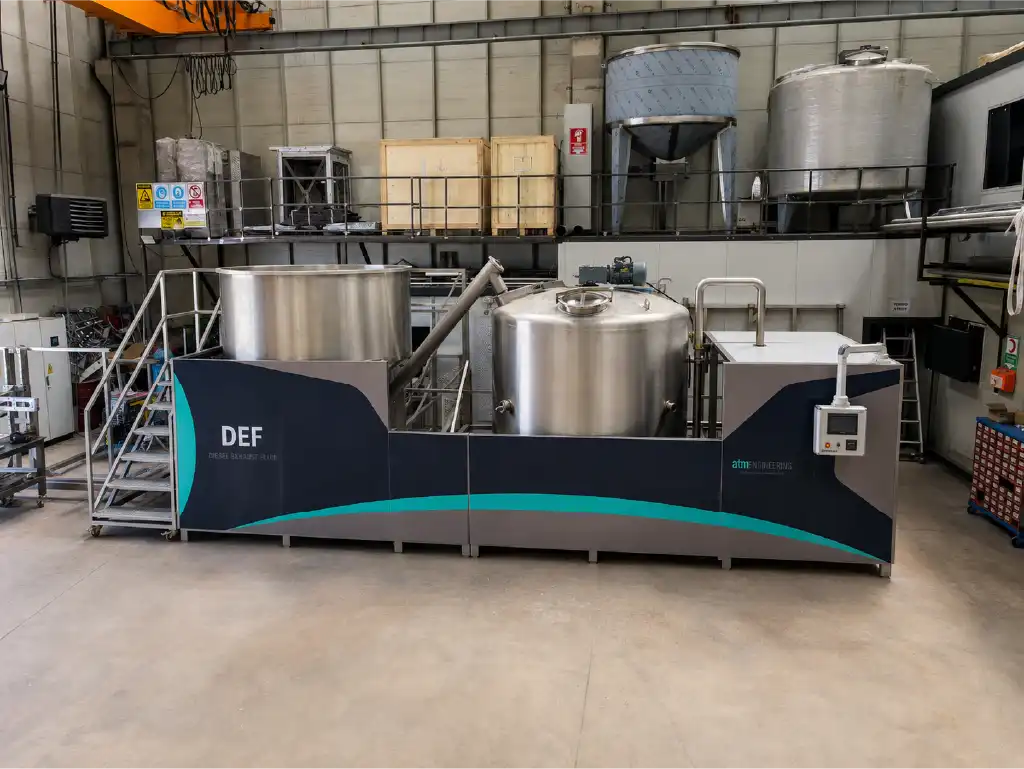
Gravimetric measurement with load cells
A load-cell filling machine converts force on a weighing platform into an electrical signal. The controller records the empty container’s tare, monitors the increasing gross weight and stops filling when the calculated net target is reached. The measured quantity is mass, so the result does not require a density correction simply because the product temperature changes. A volume declaration, however, still needs a defined and validated mass-to-volume relationship.
Gravimetric control is especially useful when container shape does not provide reliable level information or when drums and IBCs arrive with variable tare weights. Individual taring prevents packaging weight from being counted as product. Coarse and fine filling can limit overshoot, while a short settling period allows the reading to stabilize before acceptance. The system may also reject a fill outside the configured tolerance and retain the result for batch records.
The load cell must measure only the intended load. Rigid product hoses, a nozzle resting on the container, conveyor contact, off-center placement, vibration from nearby pumps and uneven floor support can all bias the reading. Large outdoor or semi-open stations may also be affected by wind. Mechanical isolation, flexible connections, stable support, suitable load-cell capacity and protection against overload are therefore part of the accuracy design—not secondary installation details.
Weight-based filling can be slower if every container must stop, tare, fill and settle. Multiple weighing heads or a separate bulk station can recover throughput, but the line layout becomes important. Atmosfer Makina’s AdBlue filling line selection guide addresses the broader packaging decision; the narrower engineering question here is whether the measurement chain can hold its result throughout the real production cycle.
Selecting the Right Technology for Each Package Format
The right technology is the one that meets the required net quantity, repeatability and throughput under actual operating conditions. Small containers often favor fast flow-meter dosing, while drums and IBCs frequently favor load-cell filling. Tanker loading commonly uses a high-capacity meter, although the commercial transaction, local regulations and available verification equipment may change that decision.
Accuracy, speed and calibration requirements
Accuracy should be specified at the container, not only at the sensor. A useful requirement states the target quantity, allowable error, production flow range, liquid temperature range, container types and verification procedure. Repeatability must be considered separately from bias: a machine can repeat the same result while consistently overfilling. Resolution, zero stability, dynamic overshoot, nozzle retention and recipe control all contribute to the final uncertainty.
Speed introduces a direct control trade-off. Faster flow shortens the cycle but increases the amount that can pass during valve response. A two-stage recipe, adaptive cutoff value and anti-drip nozzle can reduce this effect. Load-cell systems face a similar issue because liquid movement and structural vibration delay a stable reading. The optimum cycle is therefore the fastest sequence that still passes the agreed fill test—not the highest pump flow or shortest theoretical time.
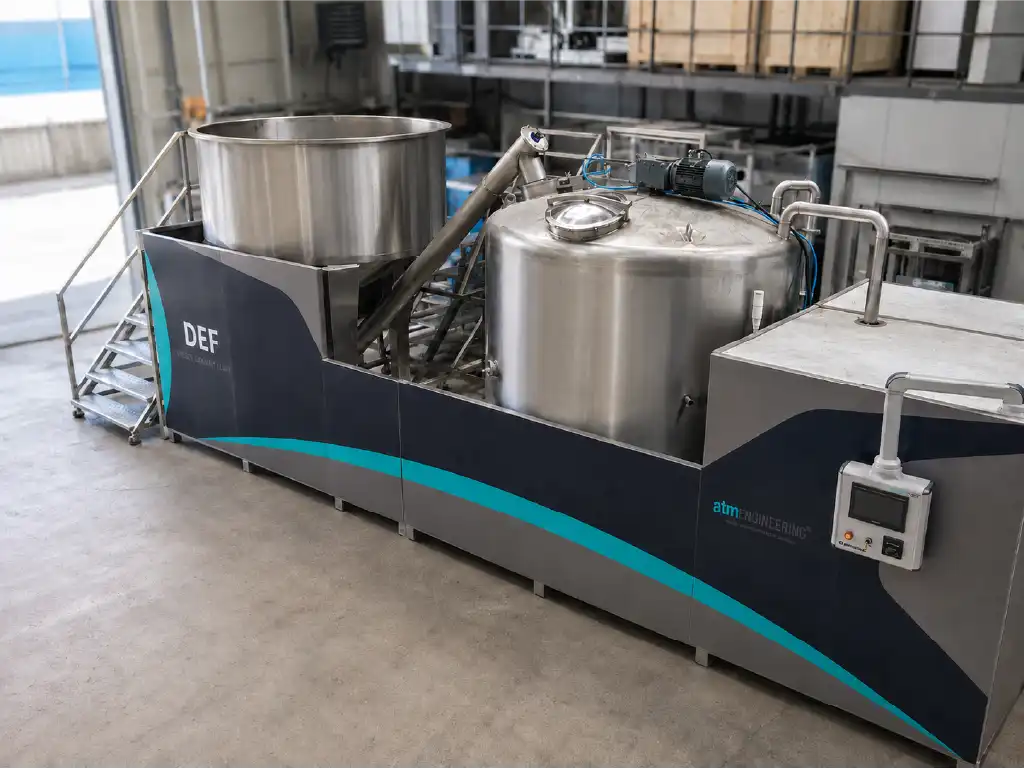
DEF filling calibration must verify the whole system. For a load-cell installation, certified test weights check the weighing chain, followed by filled-container tests that include hoses, nozzles and automation. A flow-meter installation may be checked against a suitable volume standard or by a traceable gravimetric reference, with temperature and density handled consistently. Calibration intervals should reflect legal requirements, instrument guidance, production volume, maintenance events and observed drift.
Where filling quantity forms part of a commercial transaction, the applicable national or regional legal-metrology rules must be confirmed before procurement. The 2026 edition of NIST Handbook 44, for example, separates requirements for automatic weighing systems, liquid-measuring devices and mass flow meters. Internationally, OIML identifies R 61:2017 for automatic gravimetric filling instruments and R 117:2019 for dynamic measuring systems for liquids other than water in its legal-metrology overview. These references guide instrument categories; the authority governing the installation determines what is legally required.
Uzman Notu: Compare suppliers using a witnessed fill trial with the actual container, nozzle, hose length, product temperature and target cycle time. A sensor data sheet alone cannot represent dynamic filling performance.
A practical acceptance plan should define the test before the machine is built:
- List every package size, tare range and required declared quantity.
- Set the normal, minimum and maximum production flow conditions.
- Define sample size, warm-up, zero checks and acceptance limits.
- Record calibration standards, traceability and re-verification triggers.
- Test start-up, format change, low-tank level and normal steady production.
Applications for bottles, drums, IBCs and tanker loading
Package format changes the error budget. On a 5- or 10-liter canister, a small fixed cutoff error represents a larger proportion of the fill and high line speed magnifies valve timing. On a 1,000-liter IBC, container placement, platform loading and long hose forces become more important. Bulk loading adds pressure changes, long pipe runs and custody-transfer considerations. The technology should follow these physical conditions rather than a simple “flow versus weight” preference.
| Package format | Common starting point | Why it may fit | Key validation point |
|---|---|---|---|
| Bottles and small canisters | Electromagnetic flow meter | Fast recipes and easy multi-nozzle integration | Cutoff compensation, nozzle drip and low-flow performance |
| Drums | Load cell or metered lance | Direct net-weight control or flexible semi-automatic filling | Tare variation, lance forces and coarse/fine transition |
| IBCs | Load-cell platform | Individual tare and direct mass verification | Stable positioning, floor support and hose decoupling |
| Tanker loading | High-capacity flow meter | Continuous transfer, totalization and rapid loading | Air elimination, flow range, pressure and legal-metrology scope |
For bottles and canisters, electromagnetic metering is often the first option because it integrates naturally with conveyors and multi-head filling. It should still be challenged at the lowest and highest recipe volumes, after planned speed changes and as the supply tank level falls. If giveaway cost or compliance risk justifies it, an in-line checkweigher can provide an independent verification layer without making weighing the primary dosing method.
For drums and IBCs, gravimetric filling offers a clear relationship between the displayed net mass and the product delivered. It is not automatically superior if the platform is poorly isolated or the hose pulls on the scale. A metered filling lance may be preferable when containers cannot be placed consistently on a platform, while a load-cell station can be stronger when variable tare and audit records dominate the requirement.
Tanker loading normally prioritizes high flow, totalization, controlled valve sequencing and overfill prevention. Atmosfer Makina’s AdBlue® production and packaging solutions describe bulk loading with precision flow meters and dedicated options for IBCs, drums and small containers. A weighbridge may provide an operational cross-check, but it does not replace the need to engineer the transfer meter, air handling and shut-off sequence correctly.
Accuracy must also protect product quality. The VDA states that AdBlue® quality requirements are covered by ISO 22241 parts 1–4 and apply to licensees. Accordingly, the VDA AdBlue® quality framework should be considered alongside compatible wetted materials, clean transfer paths and controlled storage. The best measuring technology is of limited value if the filling circuit introduces contamination or the verification procedure uses unsuitable equipment.
Frequently Asked Questions
Is a load cell always more accurate than a flow meter for AdBlue®?
No. A load cell measures mass directly, but vibration, hose forces and unstable taring can degrade the result. A properly installed electromagnetic meter can be highly repeatable. Final accuracy must be demonstrated through a complete system test at the intended operating conditions.
Does AdBlue® temperature affect filling accuracy?
Temperature changes density, so it matters when mass and volume are converted or compared. A volumetric system should be validated across the expected temperature range. Direct mass filling avoids density correction for a mass target, but not when the declared quantity is volume.
Which system is better for 1,000-liter IBC filling?
A load-cell platform is often a strong starting point because it can tare each IBC and measure net mass directly. A flow-meter station may still be appropriate where throughput, installation layout or the declared volume favors volumetric measurement. Site testing should decide.
How often should an AdBlue® filling machine be calibrated?
There is no single interval for every plant. Follow the instrument manufacturer, applicable legal-metrology rules and the site quality plan. Recheck after sensor replacement, valve or nozzle work, software changes, relocation, overload, abnormal drift or a failed routine verification.
Can one machine fill bottles, drums and IBCs accurately?
It can be engineered for multiple formats, but wide format ranges may reduce speed or complicate changeovers. Many plants benefit from a dedicated small-container line plus a drum/IBC station. The business case should compare production mix, floor space, labor and verification needs.
Define the Measurement System Before Requesting a Quote
A reliable filling project begins with measurable inputs: package samples, target quantities, hourly output, product temperature, storage arrangement, available utilities and the rules that apply in the destination market. Atmosfer Makina can evaluate these parameters together with the filling, capping, labeling and upstream AdBlue® production workflow. This project-based review helps determine whether electromagnetic metering, load-cell control or a hybrid arrangement offers the most practical route to the required AdBlue filling accuracy.
It also creates a clearer basis for factory acceptance testing, calibration planning, data logging and future format expansion. To request technical information, arrange an initial project assessment or obtain a configuration-based offer, contact the Atmosfer Makina engineering and quotation team with your container matrix and planned production capacity. The final selection should be confirmed through technical analysis and tests using the intended product and packaging.
Görseller temsilidir ve yapay zekâ kullanılarak oluşturulmuştur.
