
Water Treatment & Seawater Desalination for Data Center Cooling
Reverse osmosis, EDI polishing and seawater desalination skids engineered around your cooling circuits, so makeup water, facility loops and liquid-cooling systems get the water quality they need.
Every cooling circuit needs a different water
“Data center cooling water” covers several fluid streams. Each has its own chemistry limits, so treatment is designed per circuit, not per plant.
Cooling tower makeup
Lower-mineral makeup water can allow higher cycles of concentration while corrosion, scaling and biological risks stay controlled, reducing blowdown and freshwater demand.
Facility cooling loops
Chillers and heat exchangers circulate water with chemistry chosen for the installed materials. RO permeate gives a controlled starting point for filling and topping up.
Liquid cooling & CDUs
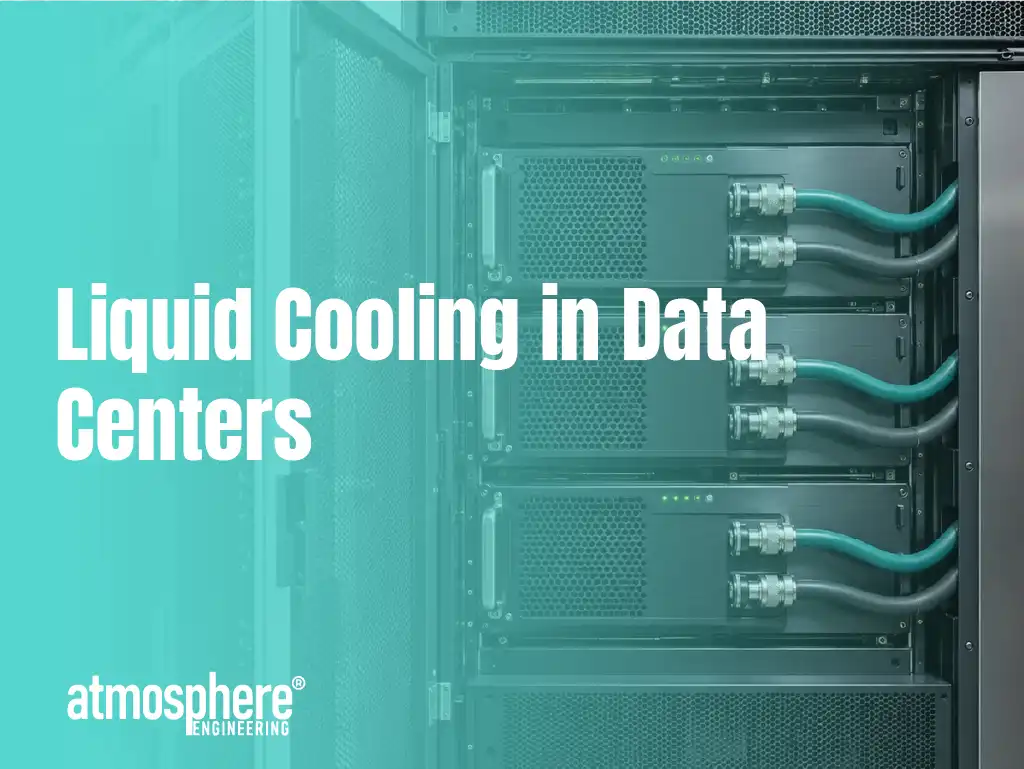
Direct-to-chip technology loops are separated from the facility circuit by a CDU and need fluid approved for the hardware. Second-pass RO or EDI prepares the makeup water.
From raw water to cooling-ready water
A typical coastal data center treatment train, adapted to your source-water analysis and cooling-equipment limits.
Intake & pretreatment
Screening, media or cartridge filtration and chemical dosing protect membranes from seasonal changes in feed quality.
Seawater RO
High-pressure membrane separation converts seawater into process water. Skid-mounted or containerized.
Polishing
Second-pass RO, EDI or ion exchange where the cooling architecture requires lower conductivity.
Storage & monitoring
Product tanks, distribution pumps, flow metering and PLC reporting to track usable water and plant losses.
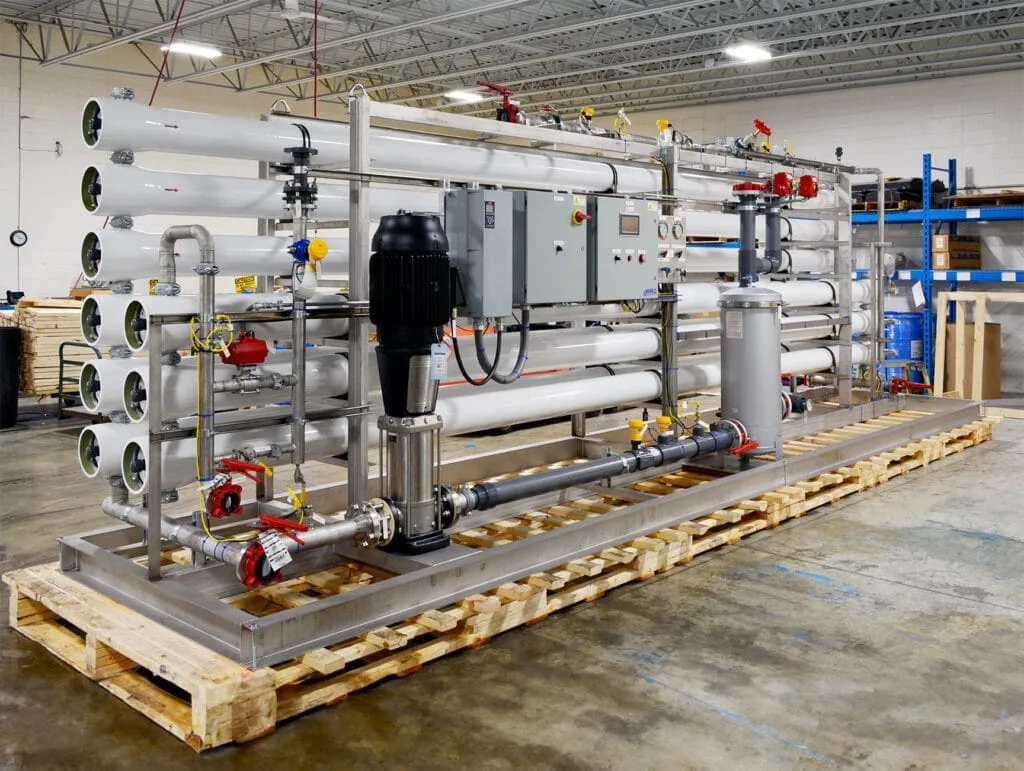
Ocean Series Sea Water Desalination
Compact reverse osmosis systems engineered for demanding marine and coastal applications, rated at 25 °C seawater with 36,000 ppm salinity.
- Skid-mounted duplex frame, containerized options
- PLC automation with starting cabinet and VFD controller
- Automatic freshwater flushing to protect membranes
- High-salinity protection with alarm
- Digital flow meters, remote access and real-time reporting
Products for data center water systems
Atmosfer Makina equipment you can combine into a complete treatment train.
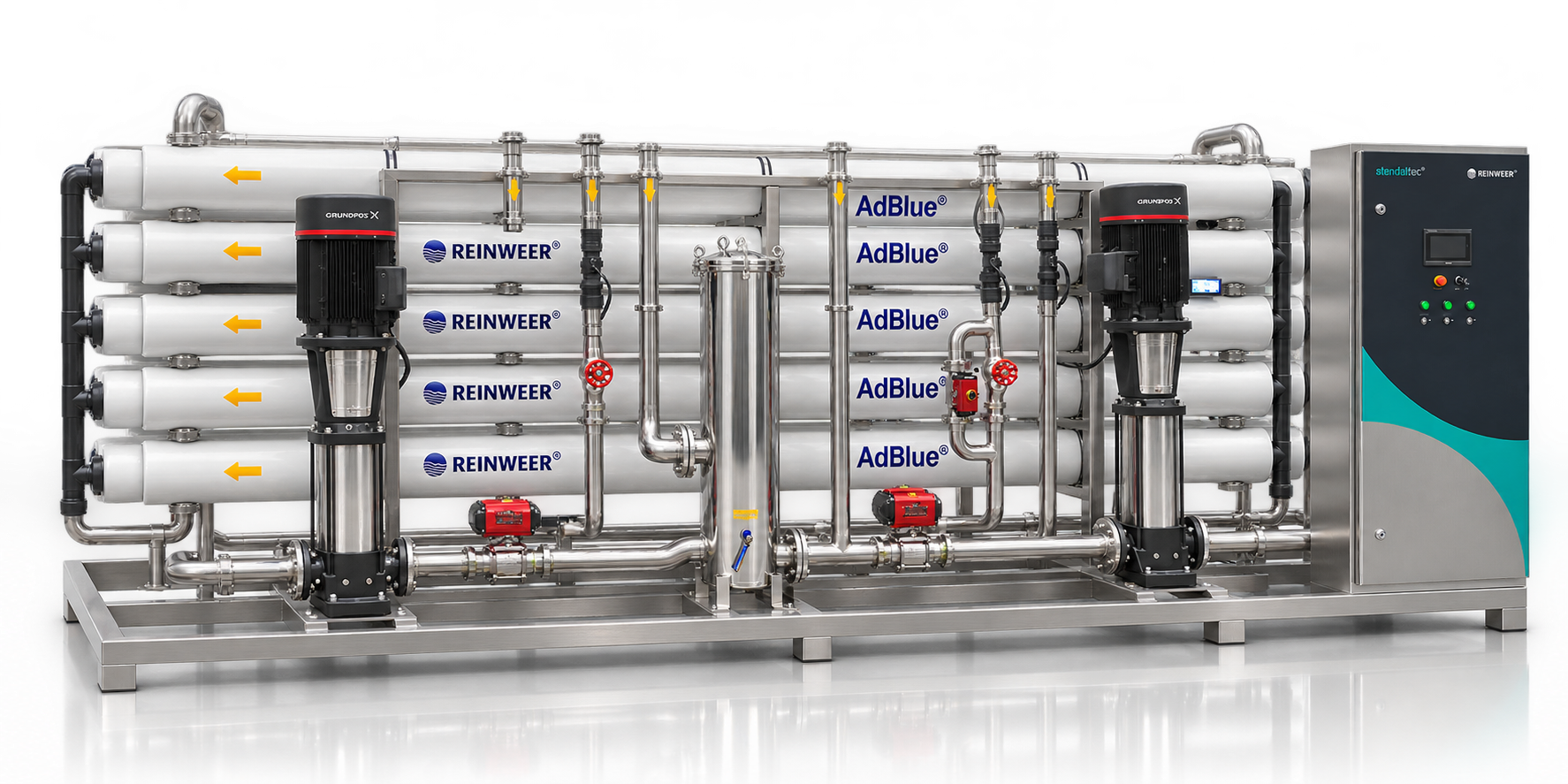
Industrial RO & EDI
25–200 GPM skid-mounted RO with two-pass, NF, UF and EDI options for custom duties.

Ocean Series
Seawater reverse osmosis from 5 to 200 m³/day for coastal facilities.
Prepared for direct-to-chip and immersion cooling
As AI racks push heat density up, liquid cooling moves more of the thermal load into water-based loops. Treatment must follow the fluid approved by your server and CDU suppliers.
- Makeup water for CDU secondary loops and facility water
- Second-pass RO and EDI for low-conductivity requirements
- Segregated concentrate, backwash and CIP waste streams
- Metering that supports WUE and energy reporting boundaries

What we define with you
Final suitability depends on project-specific water analyses and your cooling-equipment requirements.
| Topic | What to confirm |
|---|---|
| Feed water | Seawater or brackish analysis across seasons: salinity, temperature, turbidity, algal and biological activity. |
| Net output | Usable product water after flushing, pretreatment consumption and maintenance, at agreed feed conditions. |
| Water quality | Acceptance limits for conductivity, chlorides, hardness, silica, pH, particulates and microbiology per circuit. |
| Concentrate | Discharge location, dilution and permits; concentrate, backwash and CIP streams kept separately identifiable. |
| Energy | Specific energy in kWh/m³ for the complete train, inside the facility’s energy-reporting boundary. |
| Supplier approval | Cooling-equipment and fluid suppliers approve the final chemistry for wetted materials. |
Common questions
Can seawater be used directly for data center cooling?
Raw seawater is aggressive toward most materials and fouls heat exchangers. Most projects either use it in dedicated marine-grade heat rejection or treat it with desalination to produce process water for cooling towers and facility loops. The right choice depends on the cooling design.
Does RO water meet liquid cooling fluid requirements?
Not by itself. Direct-to-chip loops use fluid approved by the hardware supplier. RO permeate is typically the starting point, followed by second-pass RO, EDI or ion exchange and any approved additives.
How big a system do I need?
Sizing depends on makeup demand, cycles of concentration, feed salinity and temperature. Send us your estimates and we will propose a skid or containerized configuration, from 5 m³/day up to 200 m³/day per Ocean Series unit and larger industrial RO lines.
Can the system be delivered in a container?
Yes. Ocean Series models are available skid-mounted or containerized, pre-piped and pre-wired for quick installation and start-up.
What do you need to prepare a quote?
Water analysis (or the source location), required daily volume, target water quality per circuit, available power (e.g. 440 V) and site constraints such as footprint and discharge.
Planning a data center water system?
Tell us your site, source water and cooling architecture. Our engineers will recommend a treatment train and capacity.
Images: Unsplash (free license) and Atmosfer Makina.
