
Why Should Reverse Osmosis Systems Include a Pump?
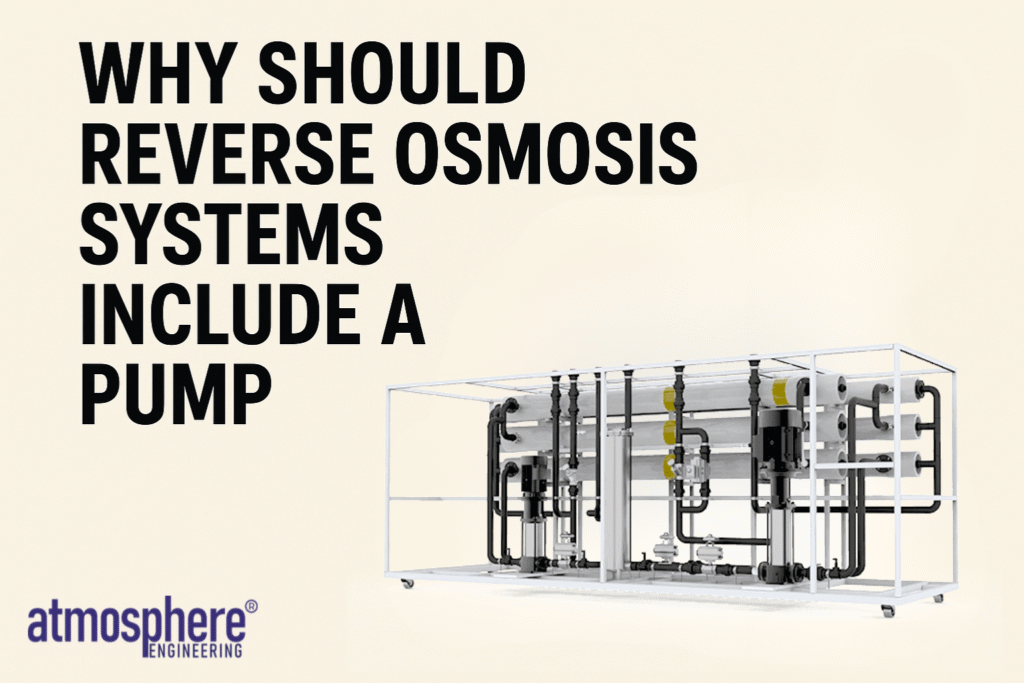
Why Should Reverse Osmosis Systems Include a Pump? At Atmosfer Makina, we know that achieving the highest water quality is fundamental for your operations. Whether it’s for critical industrial processes, clean drinking water production, or specialized applications like DEF and fertilizer manufacturing, the purity of your water directly influences your success. This is where Reverse Osmosis (RO) systems excel, and often, the quiet powerhouse behind their effectiveness is the pump. Many clients ask us about the core components of an RO system. While RO membranes are crucial, the role of a high-quality pump is equally, if not more, vital. It’s the engine driving the entire water purification process. Without adequate pressure, even the most advanced RO system cannot perform efficiently. In this guide, we’ll explain why a high-pressure pump is not just an add-on but a fundamental component for optimal reverse osmosis performance, discussing the science, practical applications, and how Atmosfer Makina’s custom-engineered solutions ensure you have the ideal pump for your water treatment setup. The Role of Pressure in RO Systems To truly grasp why a pump is essential in a Reverse Osmosis system, we must first understand osmosis and, subsequently, reverse osmosis. Osmosis is a natural phenomenon where water molecules move across a semi-permeable membrane from an area of lower solute concentration to an area of higher solute concentration. This movement equalizes concentration, generating “osmotic pressure.” It’s a passive process, crucial for biological systems. Reverse osmosis, as the name implies, reverses this process. Our goal in water treatment is to separate impurities from water. To do this, we must overcome the natural osmotic pressure. This is precisely where the RO system pump becomes indispensable. By applying external pressure, greater than the natural osmotic pressure, to the concentrated side of the membrane, we force water molecules to move in the reverse direction—from higher solute concentration to lower. The semi-permeable membrane then acts as a selective barrier, allowing only pure water molecules to pass through while rejecting dissolved salts, contaminants, bacteria, and other impurities. This results in high-purity water. Pumped RO vs. Gravity-Based RO Systems While most industrial and commercial reverse osmosis systems rely heavily on pumps, it’s worth briefly discussing gravity-based systems, primarily found in smaller, rudimentary contexts, to highlight the critical advantages of pumped RO systems. Gravity-based water filtration systems, often using basic ceramic or activated carbon filters, work by slowly trickling water through filter media. They are simple, require no electricity, and are low-cost. They can remove larger particles and some basic contaminants, but they are entirely unsuitable for true reverse osmosis. The minimal pressures generated by gravity are far too low to overcome the osmotic pressure needed to push water through a semi-permeable RO membrane. Therefore, a gravity-fed system claiming to perform reverse osmosis is fundamentally misleading; genuine RO water treatment requires forced pressure. In contrast, pumped RO systems are the industry standard for any application requiring high-purity water in significant volumes. The advantages of incorporating a high-pressure booster pump are numerous: Superior Contaminant Rejection: Applied pressure directly dictates contaminant rejection efficiency. Consistent pressure ensures the membrane effectively separates even minute dissolved solids, providing exceptional water purity for industrial water purification. • Increased Permeate Production: Pumps dramatically increase the rate of purified water (permeate) production. Without sufficient pressure, permeate flow would be negligible, making the system impractical. Pumped systems can produce thousands of gallons per day, meeting large-scale demands. • Wider Applicability: Only pumped systems can effectively treat challenging water sources like brackish water, seawater, or highly contaminated industrial wastewater. The ability to generate and sustain high pressures makes desalination and advanced water recycling possible. • Consistent Performance: Pumps provide steady, controlled pressure, leading to consistent performance and predictable water quality. • Energy Efficiency (with proper design): While pumps consume energy, modern, high-efficiency pumps, combined with energy recovery devices, make the RO process remarkably energy-efficient for the volume and quality of water produced. Investing in the right pump minimizes long-term operational costs. • System Longevity: Maintaining optimal operating pressure helps in proper membrane cleaning (flushing) and prevents fouling, extending the lifespan of expensive RO membranes. Atmosfer Makina’s Industrial Reverse Osmosis Systems, including our ELITE SERIES SEA WATER DESALINATION, DIAMOND SERIES WATER PURIFICATION SYSTEMS and PLATINUM SERIES WATER PURIFICATION SYSTEMS, are all built around robust pumping solutions. We engineer these systems to deliver unparalleled performance and reliability, understanding that the pump is the heart of consistent, high-volume pure water production and overall water treatment technology. Choosing the Right Pump for Your Water Treatment Setup Selecting the appropriate pump for your Reverse Osmosis system requires careful consideration and expert knowledge. It’s not a one-size-fits-all solution, as the ideal pump depends on many factors specific to your application. At Atmosfer Makina, we guide our clients through this critical selection process, ensuring every component is perfectly matched to their unique needs for optimal RO system efficiency. Key factors influencing RO pump selection include: Feed Water Quality: The higher the TDS of your feed water, the higher the osmotic pressure, and therefore the higher operating pressure the pump must provide. • Desired Permeate Flow Rate: The amount of purified water required per day or hour directly determines the required pump flow capacity. • System Recovery Rate: A higher recovery rate can improve efficiency but may require more robust pressure from the pump. • Energy Efficiency: Using high-efficiency pumps and VFDs reduces electricity consumption and operational costs. • Material Compatibility: The pump’s materials must withstand the specific water chemistry, such as using super duplex stainless steel for seawater. • Reliability and Durability: Continuous operation demands robust construction to minimize downtime and maintenance. Atmosfer Makina’s expertise extends beyond just supplying equipment; we provide comprehensive water treatment solutions. Custom Engineered Solutions by Atmosfer Makina Atmosfer Makina prides itself on offering custom-engineered solutions for all your water treatment needs. We understand that every client’s requirements are unique, whether it’s the specific impurities in their water, the desired permeate quality, the volume of water needed, or their operational environment. This “tailored approach” is particularly
Why Urea Quality Matters in AdBlue® Production
Why Urea Quality Matters in AdBlue® Production At Atmosfer Makina, we recognize that in the world of modern diesel engines, AdBlue® (Diesel Exhaust Fluid or DEF/AUS32) is far more than just another fluid — it is an essential element for meeting stringent environmental regulations and ensuring peak vehicle performance. At the core of every high-quality AdBlue® solution is the purity of urea. Upholding the highest standards of urea quality is not just our business; it is our pledge to sustainability and to the reliable operation of your SCR (Selective Catalytic Reduction) systems. As global emission standards continue to tighten, SCR technology has become the industry standard for diesel vehicles. AdBlue®, a precisely formulated 32.5% solution of ultra-pure urea in demineralized water, is injected into the exhaust stream, converting harmful nitrogen oxides (NOx) into harmless nitrogen and water vapor. This process is extremely sensitive, and even minor impurities in urea can compromise its effectiveness, causing system damage, increased emissions, and costly downtime. For this reason, Atmosfer Makina proudly supplies Prilled Urea Without UF, specifically produced for AdBlue® manufacturing. This grade of urea is manufactured under strict ISO 22241 standards, ensuring that every batch delivers maximum performance, protects your SCR system, and keeps you in compliance with environmental regulations. The Impact of Urea Purity on SCR System Performance The performance and longevity of your SCR system are directly tied to the purity of the AdBlue® it uses, and therefore to the quality of the urea it is made from. Even minimal contamination can lead to serious problems: Catalyst Poisoning: Trace metals (like calcium, iron, copper, zinc, chromium, nickel) and other impurities can poison the sensitive SCR catalyst, reducing its ability to convert NOx effectively. Clogging and Damage: Dust, insoluble particles, or excessive biuret — a common urea byproduct — can crystallize inside the dosing system, blocking injectors and causing uneven spray patterns or total failure. Lower Efficiency: Impure urea reduces the chemical reaction efficiency, leading to higher emissions and potential regulatory non-compliance. Higher Maintenance Costs: Poor-quality urea leads to more frequent repairs, replacement parts, and downtime, negatively affecting your operational bottom line. Atmosfer Makina’s Prilled Urea Without UF meets the most stringent purity criteria: minimum nitrogen content of 46.2%, maximum biuret of 0.9%, maximum aldehydes of 15 mg/kg, and maximum moisture of 0.5%. We also carefully limit heavy metals, phosphate, and insoluble matter to prevent system degradation. Our product’s highly uniform particle size (98% between 1–2.8 mm) ensures fast dissolution and optimal performance in AdBlue® production — unlike general-purpose agricultural urea, which is unsuitable due to its impurities and slow solubility. How to Ensure Compliance with ARLA 32 Standards Complying with international standards such as ARLA 32 (equivalent to ISO 22241) is not optional — it is essential for maintaining the integrity of your SCR systems and for meeting global emissions regulations. Non-compliance can result in: Legal Penalties: Regulatory fines, vehicle bans, or recalls. Voided Warranties: Manufacturers may refuse warranty claims if poor-quality AdBlue® was used. Reputational Harm: AdBlue® producers who supply substandard products risk losing customer trust and market credibility. Atmosfer Makina supports your compliance efforts by supplying Prilled Urea Without UF manufactured specifically to meet ISO 22241 specifications. We include complete technical documentation with each batch, providing full transparency and traceability. When you choose Atmosfer Makina, you ensure that your AdBlue® production begins with certified, reliable raw materials — every time. Essential Equipment for High-Quality Urea Processing Producing world-class AdBlue® requires more than just high-purity urea — it demands precision and control throughout the production process. At Atmosfer Makina, we help our customers achieve operational excellence by supplying not only the right raw material but also the right guidance and expertise to maintain quality and compliance. We emphasize the use of reverse osmosis (RO) water purification systems, as high-purity demineralized water is just as critical as high-purity urea. Standard or tap water contains minerals and impurities that can harm SCR systems. That is why we recommend pairing our Prilled Urea Without UF with RO-treated water for guaranteed ISO-compliant AdBlue®. Certified AdBlue® Production Systems by Atmosfer Makina Choosing Atmosfer Makina means more than just buying a product — it means partnering with a company committed to your success. Our urea is rigorously manufactured, tested, and certified to deliver consistent, ISO 22241-compliant results, ensuring the quality and reliability of your AdBlue® production. We are here to assist you at every step — from technical consultation to ongoing support — helping you produce AdBlue® efficiently, economically, and with confidence. By supplying the best Prilled Urea Without UF and providing expert advice on production processes, we empower our clients to meet their environmental commitments without compromising performance or profitability. Trust Atmosfer Makina to help you produce cleaner, better-performing AdBlue® — and join us in creating a greener future. Frequently Asked Questions About Urea Quality and AdBlue® Production Why is urea purity so critical for AdBlue®? Atmosfer Makina: Because impurities can damage SCR systems, reduce efficiency, and lead to costly repairs. Only high-purity urea ensures proper NOx reduction. What makes “Prilled Urea Without UF” different from agricultural urea? Atmosfer Makina: Our product is ultra-pure and specifically produced for DEF, while agricultural urea contains unacceptable impurities. How can I be sure your urea meets ISO 22241? Atmosfer Makina: Each batch comes with full technical documentation and is manufactured to strict ISO 22241 standards. Can I use regular water to mix AdBlue®? Atmosfer Makina: No. You must use demineralized water, ideally from RO systems, to avoid introducing contaminants. What particle size is recommended for urea in AdBlue®? Atmosfer Makina: Our urea is 98% within 1–2.8mm for optimal dissolution and performance. What happens if poor-quality urea is used? Atmosfer Makina: It can clog injectors, poison catalysts, void warranties, and cause higher emissions. Does your urea dissolve quickly in water? Atmosfer Makina: Yes. Its uniform prilled structure ensures fast, even dissolution — superior to granular urea. What support do you offer to AdBlue® producers? Atmosfer Makina: We provide consultation, technical
What Is Urea in AdBlue? The Key Component Behind Emission Reduction

What Is Urea in AdBlue? The Key Component Behind Emission Reduction At Atmosfer Engineering, we are proud to be a part of the technological transition toward cleaner and more sustainable transportation. A critical element in reducing emissions from diesel engines is AdBlue, a solution made primarily from urea. In this article, we will explore what urea is, how it functions in AdBlue, and why its purity and compliance with ARLA 32 standards are crucial for achieving real environmental benefits. Whether you’re a fleet manager, an industrial buyer, or simply someone curious about the mechanics behind emission control technologies, this comprehensive guide will clarify how urea in AdBlue plays a pivotal role in reducing harmful NOx emissions and how Atmosfer Engineering supports this process with high-purity supply systems. What Is Urea and How Is It Used in AdBlue? Urea (chemical formula: CO(NH₂)₂) is a nitrogen-based compound widely used in fertilizers, plastics, and—most importantly for this context—emission reduction fluids. In AdBlue, which is also known globally as Diesel Exhaust Fluid (DEF), urea is mixed with deionized water to form a 32.5% urea solution. This mixture is non-toxic, colorless, and safe to handle, yet it serves a powerful purpose in modern diesel vehicles. AdBlue is stored in a dedicated tank within the vehicle. When injected into the exhaust system, it undergoes a thermal reaction, releasing ammonia (NH₃). This ammonia then reacts with Nitrogen Oxide (NOx) gases within the Selective Catalytic Reduction (SCR) system, converting them into harmless nitrogen (N₂) and water vapor (H₂O). This is where urea comes into the picture: it’s the active compound that triggers the breakdown of toxic gases. How Urea Helps Reduce NOx Emissions in Diesel Engines Modern diesel engines are required to meet strict emission standards, such as Euro VI in Europe and EPA 2010 in the U.S. These regulations target the drastic reduction of NOx emissions, which are responsible for smog formation and respiratory problems. Here’s how urea works in AdBlue systems to meet those regulations: Injection Phase AdBlue is precisely injected into the hot exhaust stream after combustion. Hydrolysis Urea decomposes into ammonia (NH₃) and carbon dioxide (CO₂) under high heat. Selective Catalytic Reduction (SCR) Ammonia reacts with NOx in the SCR catalyst, producing nitrogen and water. This entire chemical process is incredibly efficient, capable of reducing NOx emissions by up to 90%. However, its effectiveness depends heavily on the purity of the urea used. Importance of ARLA 32 Compliance in Urea Production Not all urea is suitable for AdBlue production. The AdBlue solution must meet strict ISO 22241 standards for purity and composition. One key certification is ARLA 32 (Agente Redutor Líquido de Óxidos de Nitrogênio Automotivo), commonly used in Latin America and increasingly recognized in international supply chains. At Atmosfer Engineering, we ensure that our urea complies with ARLA 32 standards. Why is this important? High-purity urea prevents the buildup of residues in the SCR system. Impurities like biuret or calcium can damage injectors and catalysts. Deionized water must also meet conductivity thresholds to maintain the integrity of the solution. Failing to comply with ARLA 32 or ISO 22241 standards can lead to: Costly vehicle repairs Increased emissions Reduced fuel efficiency Warranty voidance Our focus on certified and laboratory-tested urea protects both your equipment and the environment. High-Purity Urea Supply with Atmosfer Makina Systems At Atmosfer Engineering, we don’t just sell a machine—we provide integrated emission control solutions. Our AdBlue production plants are designed to ensure consistent quality, safe storage, and optimal dosing. Why Choose Atmosfer Makina? Advanced Mixing Systems We offer fully automated AdBlue preparation units for commercial and industrial facilities. Bulk Storage Solutions Custom-designed tanks, pumps, and dispensers tailored for your fleet needs. Laboratory-Grade Testing In-house testing equipment ensures that every batch of urea meets ARLA 32 and ISO 22241 standards. Logistics and Distribution National delivery service with temperature-controlled packaging to preserve product integrity. We invite you to explore our full range of solutions at www.atmosfermakina.com. Whether you’re producing AdBlue in-house or sourcing it for your fleet, we’re here to support your mission for cleaner, greener transport. Frequently Asked Questions (FAQ) What is the role of urea in AdBlue? Urea serves as the active ingredient that converts NOx emissions into harmless nitrogen and water vapor through the SCR system. Is AdBlue harmful to humans or the environment? No, AdBlue is non-toxic and biodegradable when handled properly. What percentage of urea is in AdBlue? AdBlue contains 32.5% high-purity urea and 67.5% deionized water. Can I use fertilizer-grade urea for AdBlue production? Absolutely not. Only ARLA 32-certified or ISO 22241-compliant urea is safe and effective. What happens if I use contaminated urea? Impurities can clog injectors, damage the catalyst, and void your vehicle’s warranty. Does AdBlue improve fuel efficiency? Indirectly yes. A well-functioning SCR system reduces engine strain and can lead to better fuel economy. How should AdBlue be stored? In a cool, dry place away from direct sunlight and not below -11°C or above 30°C. Can I produce AdBlue on-site? Yes. Atmosfer Makina provides production units for on-site manufacturing under full compliance. What is ARLA 32 and how is it different from ISO 22241? ARLA 32 is the Brazilian regulation aligned with ISO 22241 but emphasized in Latin markets. Do all diesel vehicles require AdBlue? Only those equipped with SCR systems, typically Euro V and newer diesel engines. Can AdBlue freeze? Yes, it freezes at around -11°C but can be thawed without degradation. How long does AdBlue last in storage? Typically 12-36 months if stored properly. For more technical details, system configurations, or urea sourcing inquiries, please visit our website: 👉 https://atmosfermakina.com/ Or contact us directly via: 📞 0530 200 2435 📧 [email protected]
The Future of AdBlue Production: Automation, Smart Control, and Efficiency Trends
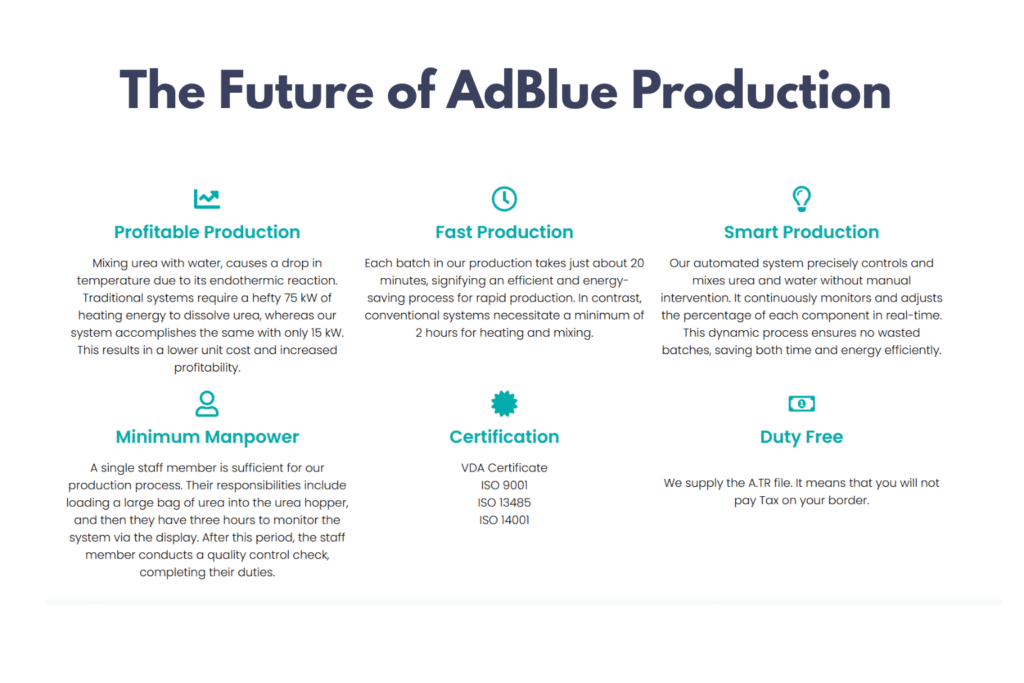
The Future of AdBlue Production: Automation, Smart Control, and Efficiency Trends As the demand for AdBlue continues to rise, manufacturers are compelled to look beyond the production floor and examine how artificial intelligence (AI), integrated logistics, and regulatory frameworks are shaping the industry’s future. These elements are crucial not only for maintaining product integrity but also for ensuring competitive advantage in a rapidly evolving global market. Artificial Intelligence: Predictive and Prescriptive Production Artificial intelligence is no longer a futuristic idea in industrial settings—it is becoming an operational necessity. In AdBlue production, AI is being used to analyze massive datasets from sensors and control systems to optimize process variables in real time. Predictive analytics can forecast equipment failures before they occur, allowing for timely maintenance and preventing costly downtimes. Moreover, prescriptive AI tools recommend optimal production settings based on historical trends, weather conditions, and raw material quality. This ensures consistent product quality and reduces energy consumption. As environmental compliance becomes stricter, AI-driven adjustments help facilities remain within legal limits for emissions, energy use, and waste generation. Some producers are even using machine learning algorithms to predict fluctuations in urea purity, allowing them to adjust mixing ratios automatically. This level of smart control transforms AdBlue manufacturing from a reactive task into a predictive science, significantly enhancing operational efficiency and sustainability. Logistics and Digital Integration While production optimization is crucial, so is efficient distribution. AdBlue is often transported to fuel stations, fleet depots, and industrial consumers, and maintaining quality during transit is just as important as during production. Therefore, many companies are integrating digital logistics solutions to track and monitor shipments in real time. Temperature-controlled tanks, GPS tracking, and remote quality monitoring are now becoming standard in logistics. These systems ensure that the AdBlue remains uncontaminated and within the required specification from the moment it leaves the plant to the moment it is delivered. Manufacturers like Atmosfer Makina, a forward-thinking player in the AdBlue equipment sector, emphasize the importance of full-cycle control—from production to delivery. To learn more about their innovative systems or get in touch with their experts, you can reach them via mobile/WhatsApp at +90 541 947 0414 or +90 539 549 05 12, or email them at [email protected] for general inquiries, [email protected] for business cooperation, and [email protected] for technical support. Regulatory Pressures and Future Compliance As global environmental regulations tighten, AdBlue producers must stay ahead of legislative changes. In Europe, the Euro VI standards are pushing diesel engines to emit nearly zero NOx emissions. Similar regulatory trends are taking shape in North America, South Korea, and increasingly, in developing markets. Future compliance will likely require continuous quality reporting, digital traceability of production batches, and stricter ISO certification adherence. This will push more manufacturers to invest in integrated software solutions that automatically generate compliance reports and store production data securely for audits. Facilities that cannot meet these demands may find themselves locked out of key export markets. Conversely, those that prepare now—by embracing automation, smart analytics, and rigorous quality control—will not only meet new standards but become industry leaders. Sustainability and Circular Production Models The next frontier in AdBlue production involves not only reducing the environmental impact of operations but also contributing positively to the circular economy. This includes utilizing waste heat from other industrial processes to power AdBlue production, reusing purified wastewater, and investing in carbon-neutral production models. Some advanced facilities are already integrating solar power and battery storage systems to operate partially or fully off-grid. These systems reduce operational carbon footprints and provide resilience against energy price volatility. The integration of lifecycle analysis (LCA) tools also helps companies calculate and reduce their environmental impact per liter of AdBlue produced. Looking Ahead: Digital-First, Data-Driven Production The AdBlue industry is undeniably moving toward a digital-first era. From sensor-based production control to blockchain-enabled supply chain transparency, the emphasis is on using data to drive every decision. Companies that prioritize these technologies are setting the stage for scalable, agile, and compliant operations. What makes the future especially promising is the increasing affordability and accessibility of these technologies. Cloud platforms, remote access systems, and mobile applications allow facility managers to monitor and adjust production parameters from anywhere in the world. For example, Atmosfer Makina supports remote system configurations and diagnostics for their clients, ensuring constant performance optimization and minimal downtime. For organizations seeking guidance or customized AdBlue solutions, Atmosfer Makina offers expert consultation. Feel free to reach out to their team via WhatsApp at +90 541 947 0414 / +90 539 549 05 12 or email at [email protected] for more information. Conclusion The transformation of AdBlue production is well underway, driven by automation, smart technologies, and sustainability goals. As manufacturers adapt to new challenges and opportunities, those who invest in intelligent systems, efficient logistics, and proactive compliance will thrive in a competitive global market. Whether you’re just entering the AdBlue industry or looking to upgrade your existing infrastructure, embracing these trends today will prepare your business for the demands of tomorrow. And when expert support is needed, experienced partners like Atmosfer Makina are ready to assist with cutting-edge solutions and personalized service. Frequently Asked Questions (FAQ) What is AdBlue and why is it important? AdBlue is a urea-based fluid used in Selective Catalytic Reduction (SCR) systems to reduce harmful nitrogen oxide (NOx) emissions in diesel engines. It is essential for meeting environmental standards like Euro VI and helps reduce air pollution caused by diesel vehicles. How is modern technology changing AdBlue production? Advancements such as automation, smart control systems, and AI-driven analytics are revolutionizing AdBlue production. These technologies ensure higher precision, consistent quality, energy efficiency, and predictive maintenance, reducing both cost and environmental impact. What role does Atmosfer Makina play in AdBlue production? Atmosfer Makina specializes in advanced AdBlue production and storage equipment. They provide innovative, reliable, and efficient systems tailored to the needs of modern production facilities. You can contact them via WhatsApp at +90 541 947 0414 or +90 539 549 05 12, or by email at [email protected]. Can AdBlue
DEF vs. AdBlue: What Are the Technical Requirements for Production Machinery?

DEF vs. AdBlue: What Are the Technical Requirements for Production Machinery? As global emission regulations tighten, Diesel Exhaust Fluid (DEF) and AdBlue have become essential components in reducing nitrogen oxide (NOx) emissions from diesel engines. While the terms are often used interchangeably, there are subtle differences between them, especially in terms of branding and compliance. However, when it comes to the technical requirements for production machinery, precision and standardization remain universally critical. Understanding the Difference Between DEF and AdBlue At their core, both DEF and AdBlue are composed of a 32.5% high-purity urea solution in 67.5% deionized water. The key distinction lies in regional branding and certification: AdBlue is a trademarked term owned by the German Association of the Automotive Industry (VDA) and must meet ISO 22241 standards. DEF is the general term used in North America, particularly the United States and Canada, and also conforms to ISO 22241 specifications. So, from a chemical and functional standpoint, there is no difference between AdBlue and DEF. However, only products certified under the AdBlue license can legally carry the AdBlue name. Technical Requirements for Production Machinery Whether producing AdBlue or DEF, machinery must be specifically designed to maintain the purity and composition required by ISO 22241. Below are the key technical requirements: Urea Quality and Storage Use only automotive-grade urea with very low biuret and heavy metal content. Urea should be stored in closed, climate-controlled tanks to prevent contamination and moisture absorption. Equipment should include urea feeding pumps made from non-reactive materials (e.g., stainless steel or high-density polyethylene). Water Purification System Water must be demineralized to remove any ions, salts, or metals. Recommended purification methods include: Reverse Osmosis (RO) Ion Exchange Resins UV Sterilization (optional) Conductivity of the purified water should be below 0.5 µS/cm to comply with ISO standards. Blending Unit Accurate mixing is critical. Machinery should maintain a 32.5% urea to 67.5% water ratio with less than ±0.2% deviation. Use flow meters, conductivity sensors, and temperature controllers to monitor and adjust the blending process in real time. Blending tanks must be non-corrosive, ideally made of polypropylene or stainless steel. Automation and Smart Controls Modern DEF/AdBlue production lines should feature PLC (Programmable Logic Controller) systems for automation. Integration with IoT sensors and remote monitoring enables predictive maintenance and real-time quality assurance. Software should support data logging, batch tracking, and compliance reporting for audits. Filling and Packaging Equipment Filling systems must prevent contamination and maintain sterility throughout the process. Bottling machines, IBC (Intermediate Bulk Container) fillers, and tanker loaders should use closed-loop systems. Accurate volume control is essential to reduce waste and meet customer specifications. Material Compatibility All piping, valves, pumps, and tanks must be constructed from AdBlue/DEF-compatible materials. Avoid copper, brass, aluminum, and mild steel as they may react with the fluid and compromise its purity. Trusted Equipment Providers: Atmosfer Makina For companies seeking robust, compliant, and automated production solutions, Atmosfer Makina offers state-of-the-art DEF/AdBlue manufacturing systems. Their machines are designed specifically to meet ISO 22241 requirements, support remote access, and minimize human error in blending and bottling processes. For detailed technical consultation or to request a quote, you can contact Atmosfer Makina via: Mobile / WhatsApp: +90 541 947 0414 +90 539 549 05 12 Email: General inquiries: [email protected] Marketing & partnerships: [email protected] Technical support: [email protected] Why Purity Matters: The Impact of Contaminants on SCR Systems In DEF/AdBlue production, even microscopic impurities can have serious consequences. Contaminated fluid can clog injectors, damage the catalyst in Selective Catalytic Reduction (SCR) systems, and trigger vehicle fault codes. As a result, maintaining ultra-high purity is not optional—it’s essential. Production machinery must be designed to minimize contact with air, metals, and non-compatible materials. Additionally, regular cleaning protocols, closed-loop piping, and sterile filling equipment are all part of maintaining product integrity. Investing in precision equipment saves costs in warranty claims and protects your brand reputation. Batch vs. Continuous Production: Which Method Is Better for You? Choosing between batch and continuous production setups depends largely on your output volume, budget, and operational flexibility. Batch Production: Ideal for small to medium-scale operations. Easier to manage and allows frequent formula checks. Less initial investment. Continuous Production: Suitable for high-demand environments. Offers greater efficiency, consistency, and automation potential, but requires more advanced infrastructure. Companies like Atmosfer Makina offer scalable systems that can accommodate both models, making it easier to grow as your business expands. Maintaining ISO 22241 Compliance: Equipment Checklist To legally sell AdBlue or DEF under recognized standards, producers must comply with ISO 22241. Here’s a simplified checklist your equipment should meet: ✅ Demineralized water purification unit (RO or ion exchange) ✅ Corrosion-resistant tanks and piping (HDPE, stainless steel) ✅ Precision dosing system to maintain 32.5% urea concentration ✅ Flow meters, conductivity sensors, and temperature controllers ✅ Cleanroom-grade filling and packaging systems ✅ Secure storage with temperature control and UV protection ✅ Digital batch tracking and compliance reporting tools Failing to meet these standards may result in product rejection or regulatory penalties. Common Mistakes in DEF/AdBlue Production and How to Avoid Them Using tap water or semi-purified water – This increases mineral content and conductivity, leading to ISO non-compliance. Inadequate blending control – Manual mixing often results in improper ratios and poor product quality. Incorrect material selection – Using aluminum or copper in piping systems leads to contamination. Poor sealing during packaging – Open systems allow air and particles to enter, ruining batch purity. No data logging or batch documentation – Failing to track quality can result in liability during audits or customer complaints. Avoiding these mistakes is easier with modern, automated machinery. Atmosfer Makina’s systems are designed to address each of these issues proactively. Cost Optimization: How Automation Lowers Operational Expenses Though automation may seem like a major upfront investment, it significantly reduces operational costs over time by: 🔧 Minimizing labor through smart control panels and remote monitoring 🕒 Reducing downtime thanks to predictive maintenance alerts 📉 Preventing overuse of raw materials via precision metering ✅ Ensuring consistent product quality, avoiding reworks or recalls
Why Global Manufacturers Choose Turkish-Made AdBlue Machinery
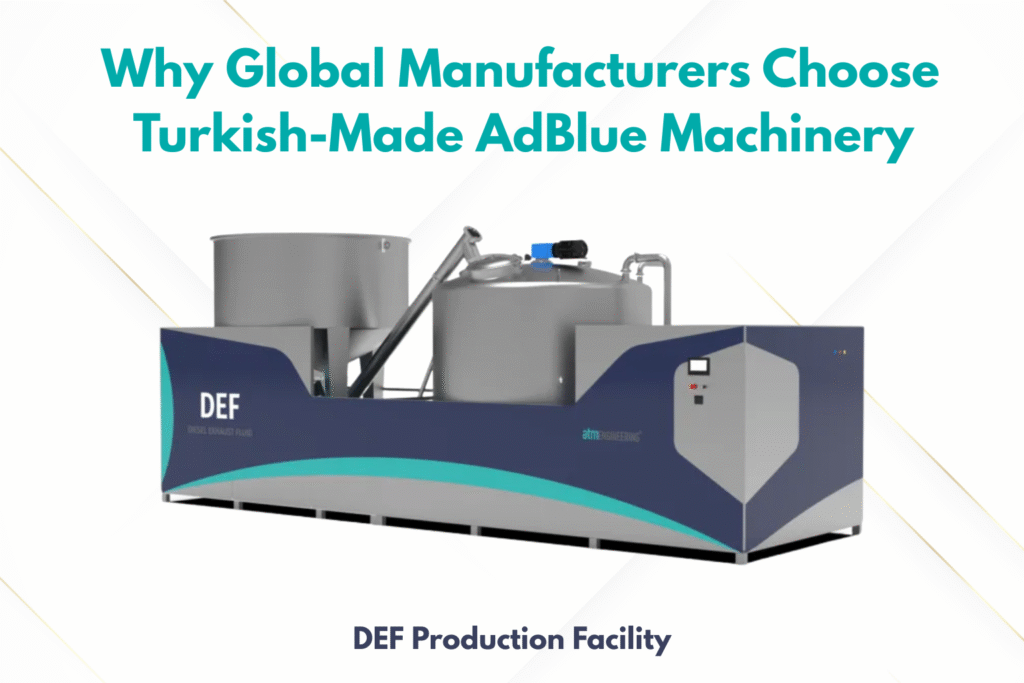
Why Global Manufacturers Choose Turkish-Made AdBlue Machinery In today’s competitive diesel exhaust fluid (DEF) and AdBlue market, manufacturers are under growing pressure to deliver consistent quality, maintain ISO 22241 compliance, reduce operational costs, and scale rapidly. With these challenges in mind, global producers are increasingly turning their attention to Turkish-made AdBlue machinery—and especially to trusted companies like Atmosfer Makina. So, what makes Turkey a rising hub for AdBlue production technology? And why is Atmosfer Makina becoming the go-to partner for manufacturers in Europe, the Middle East, Asia, and beyond? Let’s explore the key reasons behind this global shift. High-Quality Engineering with Competitive Pricing One of the biggest advantages of Turkish-made AdBlue machinery is its balance between European-grade engineering and cost-efficiency. Companies like Atmosfer Makina produce advanced systems that meet global quality standards, yet come at a fraction of the cost compared to Western manufacturers. Every unit manufactured by Atmosfer Makina is designed with: ISO 22241 compliance in mind Long-lasting, non-corrosive materials (HDPE, stainless steel) State-of-the-art sensors, PLC controls, and precision dosing technology Smart integration options such as IoT monitoring and remote access This combination of quality and affordability allows customers to achieve faster return on investment (ROI) while maintaining long-term operational reliability. Export-Focused Manufacturing and Global Support Unlike many local manufacturers that serve only domestic markets, Atmosfer Makina has built a strong reputation as an export-oriented producer, delivering machinery to clients in over 30 countries. Their systems are designed with international shipping, on-site setup, and remote technical support in mind. Clients benefit from: Multilingual documentation and manuals CE-certified systems for European markets Fast spare parts availability Online diagnostics and remote maintenance services This global mindset gives customers confidence that their Turkish-made AdBlue machinery isn’t just affordable—it’s truly world-class. Custom-Built Systems Tailored to Your Production Volume One size doesn’t fit all—especially in the AdBlue industry. Atmosfer Makina understands this and offers tailor-made production and filling lines that match your exact capacity and infrastructure needs. Whether you’re a small-scale distributor producing 2,000 liters per day, or a large fleet operator needing 50,000+ liters, Atmosfer Makina engineers scalable solutions, including: Batch or continuous production lines Fully automated filling stations (IBC, drum, bottle) Water purification systems (RO + deionization) Storage tanks with temperature and UV control Integrated labeling and packaging equipment Their flexible approach is one of the main reasons global manufacturers prefer Atmosfer Makina over larger, rigid European competitors. Strong After-Sales and Technical Support Many international companies hesitate to purchase industrial machinery from abroad due to concerns about technical support. Atmosfer Makina eliminates that fear by offering: Direct WhatsApp support: +90 541 947 0414 and +90 539 549 05 12 Dedicated technical email line: [email protected] Video call assistance and real-time diagnostics Preventive maintenance training for local teams Their responsive service ensures that downtime is minimized, and your production keeps running smoothly—no matter where you’re located. Continuous Innovation and R&D Investment While some suppliers rely on outdated designs, Atmosfer Makina continuously evolves its product range. The company invests in new technologies such as: AI-driven fault detection Solar-integrated AdBlue systems Modular production lines for easier expansion ERP and SCADA integration This forward-thinking approach has earned them the trust of OEMs, logistics firms, fuel station chains, and chemical producers worldwide. Proven Track Record and International References It’s not just about promises—Atmosfer Makina has a growing list of international success stories. From Europe to Africa, and from the Gulf countries to Central Asia, many clients have standardized their AdBlue operations with Atmosfer Makina’s machines. With hundreds of satisfied customers and repeat orders, the company has proven its value and reliability in global markets. Frequently Asked Questions (FAQ) Is Turkish-made AdBlue machinery really reliable for long-term use? Yes. Turkish manufacturers like Atmosfer Makina have proven their reliability through years of export experience and hundreds of satisfied clients worldwide. The company uses industrial-grade components, corrosion-resistant materials, and smart control systems that meet international standards. Their machinery is built not only to comply with ISO 22241 but also to withstand long-term, heavy-duty operation. Many customers have been using the same equipment for 5+ years with minimal maintenance thanks to robust engineering and continuous technical support. How does Atmosfer Makina support international clients after the sale? Atmosfer Makina offers one of the most comprehensive after-sales support services in the industry. Clients receive multilingual manuals, live video assistance for installation and troubleshooting, and can directly reach the technical team via WhatsApp or email. Preventive maintenance schedules, online diagnostic tools, and fast international shipping of spare parts ensure minimal downtime. The company takes pride in staying accessible long after the machinery is delivered—something many competitors overlook. 📱 WhatsApp Support: +90 541 947 0414 / +90 539 549 05 12 📧 Technical Contact: [email protected] Can Atmosfer Makina customize a machine based on our specific production needs? Absolutely. Unlike many large-scale equipment suppliers that only offer standardized models, Atmosfer Makina specializes in tailor-made solutions. Whether you require batch or continuous production, large-scale or small-scale output, IBC or bottle filling stations—every machine can be custom-built. The engineering team collaborates with you to analyze your space, budget, water source, and output goals to ensure the system fits your facility perfectly. They also offer modular designs, making it easy to scale up in the future. What certifications and standards do Atmosfer Makina machines comply with? All production units and auxiliary systems are manufactured in compliance with ISO 22241, the global standard for AdBlue quality and handling. In addition to this, Atmosfer Makina’s machines carry CE certification for safe use within the European Union and are built with materials like stainless steel, HDPE, and PP to prevent urea crystallization or contamination. The systems are also compliant with environmental and workplace safety standards, giving you peace of mind during audits or certifications. What are the advantages of buying AdBlue machinery from Turkey compared to Germany or China? Purchasing from Turkey, and specifically from Atmosfer Makina, offers a unique combination of advantages: European-quality engineering with a more affordable price tag Geographical proximity to both Europe and the Middle East,
What to Expect from Atmosfer Makina at Automechanika Istanbul 2025
What to Expect from Atmosfer Makina at Automechanika Istanbul 2025 The countdown has begun for one of the most anticipated automotive industry events of the year—Automechanika Istanbul 2025. As always, this prestigious international fair will bring together thousands of companies, industry leaders, innovators, and buyers under one roof. Among the key exhibitors to watch closely is Atmosfer Makina, a leading Turkish manufacturer of AdBlue and DEF production systems. If you’re planning to attend Automechanika this year, here’s why a visit to Atmosfer Makina’s booth should be high on your list. A Global Reputation in AdBlue Machinery Innovation With a proven track record of supplying high-quality, ISO 22241-compliant AdBlue machinery to over 30 countries, Atmosfer Makina has become synonymous with precision engineering, customer-oriented design, and reliable after-sales service. At Automechanika 2025, the company will be showcasing not just machines—but complete, smart, scalable production systems developed for the future of DEF and AdBlue manufacturing. Whether you’re a fleet owner, fuel distributor, chemical producer, or investor, this is your opportunity to see why Atmosfer Makina continues to be the preferred choice of global manufacturers. Live Demonstrations of Cutting-Edge Equipment One of the highlights of Atmosfer Makina’s booth will be live demonstrations of their best-selling systems, including: Compact AdBlue production units for small-to-medium scale businesses Fully automated filling and capping systems for bottles, IBCs, and drums Smart PLC and touchscreen control panels with IoT integration Water purification modules using RO and deionization technologies Filling line innovations designed to reduce product loss and boost speed These live demos will give attendees a hands-on feel of the precision, user-friendliness, and build quality that define Atmosfer Makina’s product range. New Launches and Technology Reveal Automechanika 2025 will also be the platform where Atmosfer Makina unveils its latest developments in the AdBlue production sector. Expect to see: Modular systems for easier expansion and relocation Solar-integrated production units for off-grid operations AI-powered system diagnostics for predictive maintenance Multi-format filling solutions for enhanced flexibility These innovations are designed with one goal in mind: future-proofing AdBlue production for businesses operating in diverse environments and regulatory landscapes. Meet the Experts Behind the Machines Visitors to the Atmosfer Makina stand will have the opportunity to meet with the company’s engineers, project managers, and international sales team. These experts will be available for one-on-one consultations, helping you: Analyze your current production needs Design a custom DEF/AdBlue plant layout Discuss shipping, installation, and training processes Explore pricing, ROI, and after-sales options Whether you’re just starting or looking to upgrade, Atmosfer Makina will guide you through every step of the process. Free Resources and Giveaways for Visitors To make the experience even more rewarding, Atmosfer Makina will offer exclusive materials and gifts at their booth, including: A printed technical catalog of their full machine range Case studies and project samples from around the world Branded giveaways such as USB drives, notebooks, and accessories A chance to schedule a free remote demo after the event Early visitors might also secure a special show-only discount on machinery packages. Frequently Asked Questions (FAQ) What products will Atmosfer Makina showcase at Automechanika Istanbul 2025? Atmosfer Makina will exhibit AdBlue mixing, filling, and packaging systems, smart control units, and modular production lines. Where will Atmosfer Makina be located at the event? The company will be at Hall 14, in the AdBlue and environmental technologies section. Is it necessary to book an appointment to meet with a representative at the fair? Yes, it is recommended to schedule an appointment in advance for one-on-one meetings. Visit Atmosfer Makina’s official website for more details. What innovative technologies will Atmosfer Makina introduce at the event? They will present IoT-based monitoring panels, energy efficiency reporting, and remote access-enabled systems. Are there any special offers available at Atmosfer Makina’s stand? Visitors can expect exclusive price offers, previews of new models, and opportunities for direct consultation with engineering experts. Need More Info Before the Show? Reach out to Atmosfer Makina directly with your questions, meeting requests, or technical needs: 📞 WhatsApp / Mobile: +90 541 947 0414 or +90 539 549 05 12 📧 General: [email protected] 📧 Marketing Inquiries: [email protected] 📧 Technical Support: [email protected]
What to Look for When Choosing AdBlue Production Equipment in 2025
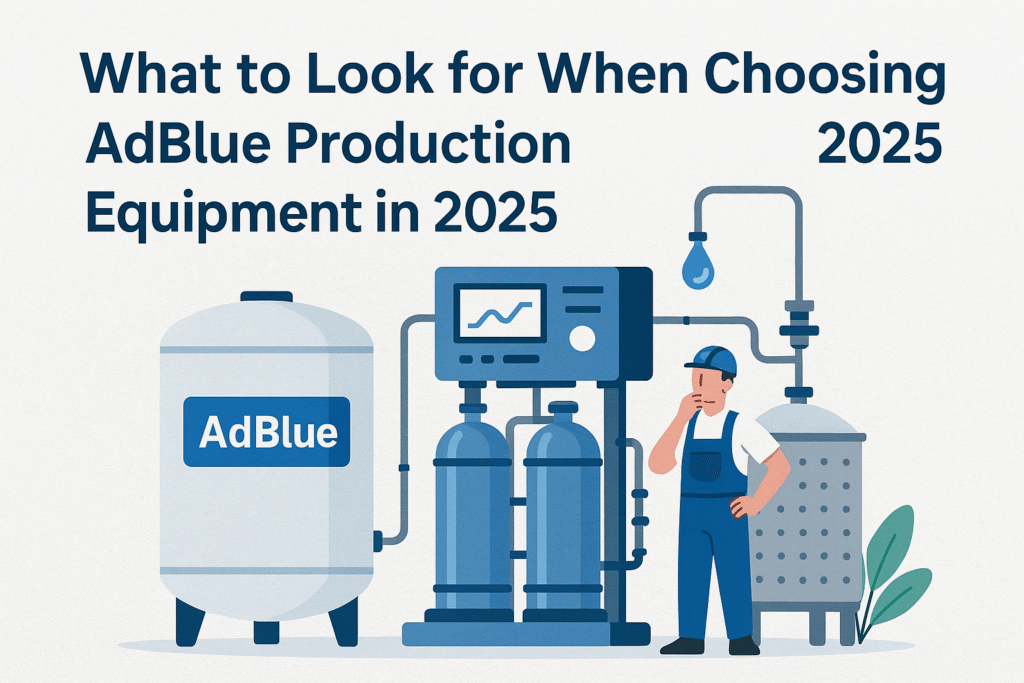
In an era where environmental regulations are becoming increasingly stringent, the importance of efficient and reliable AdBlue production cannot be overstated. With the rise of diesel vehicles that rely on SCR (Selective Catalytic Reduction) systems to meet emission standards, the demand for high-quality AdBlue is higher than ever. Whether you’re starting a new AdBlue manufacturing facility or upgrading an existing one, choosing the best AdBlue equipment is critical for ensuring long-term success. In this AdBlue machinery buyer guide, we will break down the essential factors to consider when investing in AdBlue production technology in 2025 — including why partnering with a trusted supplier like Atmosfer Makina can make all the difference. Why AdBlue Production Equipment Matters More Than Ever The AdBlue production process is not as simple as mixing chemicals. It requires precision dosing, temperature control, contamination prevention, and strict adherence to ISO 22241 standards. Subpar equipment can lead to low-quality output, system failures, or worse — legal and environmental consequences. Choosing the right AdBlue production machinery ensures: Consistent product quality Compliance with international standards Operational efficiency and scalability Long-term cost savings Let’s explore the most important criteria to evaluate when shopping for AdBlue equipment in 2025. 1. Compliance with ISO 22241 Standards Your top priority should be ensuring the equipment complies with ISO 22241, the international standard for AdBlue (also known as AUS 32) production and handling. This includes: Proper material selection (e.g., stainless steel tanks, Teflon-coated components) Accurate urea concentration control Protection from contamination (dust, oils, etc.) Temperature and storage guidelines Companies like Atmosfer Makina specialize in turnkey AdBlue plant solutions that are built entirely around ISO 22241 compliance, ensuring your product will meet the requirements for diesel vehicle engines worldwide. 2. Modular vs. Fully Integrated Systems In 2025, you’ll find a variety of AdBlue production system configurations, including: Modular systems: Scalable and customizable, ideal for businesses expecting growth or those with limited space. Fully integrated systems: All-in-one setups with mixing, filtration, and packaging in one compact unit. Each option has its own advantages. Modular systems allow for phased investment, while integrated systems can streamline operations. Atmosfer Makina offers both options and provides professional consultation to help determine the best fit for your specific needs. 3. Production Capacity and Scalability Think ahead. Will your production volume remain static, or will you scale operations in the next 3–5 years? Many manufacturers make the mistake of buying smaller, less expensive machinery only to replace it within a year. Look for: Adjustable flow rate Automated dosing systems Options to upgrade tank size or add filling lines For example, Atmosfer Makina’s AdBlue production lines can be tailored for capacities ranging from 1,000 to 20,000 liters per day, and their modular designs allow for seamless expansion as your business grows. 4. Automation and User Interface In 2025, the best AdBlue equipment comes equipped with user-friendly interfaces, real-time monitoring, and remote diagnostics. Smart technology is no longer optional; it’s a necessity for operational efficiency. Features to consider: PLC control panels with touchscreen interfaces Automated alarms for pH imbalance, temperature changes, or contamination Cloud-based monitoring dashboards Atmosfer Makina integrates modern automation into all its systems, allowing operators to monitor and adjust parameters with minimal training and maximum reliability. 5. Filtration Systems and Contamination Control One of the most critical steps in AdBlue production technology is the filtration phase. Even microscopic impurities such as dust particles, lubricants, or metal residues can render the final product unusable — or worse, damage a vehicle’s SCR system. A robust filtration system should include: Multi-stage filtration (typically 5μm, 1μm, and 0.5μm filters) Closed-loop systems to prevent airborne contamination UV sterilization (optional but highly recommended for extended shelf life) Atmosfer Makina ensures every production line is equipped with industrial-grade filtration systems that meet ISO 22241-3 requirements, significantly reducing the risk of product recalls or quality complaints. 6. After-Sales Support and Spare Parts Availability Even the most advanced machinery needs regular maintenance and occasional part replacements. A key factor in your purchasing decision should be the level of after-sales support provided by the manufacturer. Look for: Availability of local technical service teams Quick shipment of spare parts Remote troubleshooting and diagnostics Detailed operation and maintenance manuals Atmosfer Makina stands out by offering dedicated customer support in both English and Turkish, ensuring your production doesn’t face unnecessary downtime. Their global spare parts distribution ensures fast delivery to Europe, the Middle East, Africa, and Asia. 7. Energy Efficiency and Environmental Considerations As sustainability becomes a top business priority, selecting energy-efficient AdBlue machinery helps reduce operating costs and your carbon footprint. Features that contribute to a greener production line: Low-energy mixers and pumps Smart sensors that minimize energy consumption Wastewater recycling and reduction technologies Atmosfer Makina places sustainability at the heart of its designs. Their systems are optimized for low power usage and can be integrated with solar panels or other renewable energy sources. 8. Why Choose Atmosfer Makina? With over a decade of experience in fluid production technologies, Atmosfer Makina is a reliable partner for businesses seeking turnkey AdBlue plant solutions in 2025. Here’s what sets them apart: ✅ Custom-built systems tailored to your production needs ✅ Full ISO 22241 compliance from raw material handling to packaging ✅ High-end automation with real-time control features ✅ Fast delivery and on-site installation worldwide ✅ Long-term technical support and spare parts availability Whether you’re a first-time investor or a large-scale producer, Atmosfer Makina offers scalable and efficient AdBlue production equipment that grows with your business. Frequently Asked Questions (FAQ) Q1: How long does it take to install a complete AdBlue production line? A: Installation timelines vary depending on the system size, but Atmosfer Makina typically completes delivery and setup within 6–8 weeks. Q2: Can I start with a smaller capacity and upgrade later? A: Yes. Modular systems from Atmosfer Makina are designed for easy scalability. You can expand your capacity as demand increases. Q3: What kind of training is provided for staff? A: Hands-on training is included with every installation, along with multilingual manuals and remote
Why ISO 22241 Compliance Matters for AdBlue Production Machinery
As global emission regulations become increasingly stringent, AdBlue—also known as Diesel Exhaust Fluid (DEF)—has emerged as a critical component in reducing nitrogen oxide (NOx) emissions from diesel engines. Used across a wide range of vehicles, from passenger cars to heavy-duty trucks, AdBlue plays a central role in the Selective Catalytic Reduction (SCR) process. However, not all AdBlue is created equal. To ensure the effectiveness of SCR systems and to avoid damage to vehicle components, the production, handling, and storage of AdBlue must meet strict quality criteria. That’s where ISO 22241 comes in—a set of internationally recognized standards designed to guarantee the safety, purity, and compatibility of AdBlue. For manufacturers of AdBlue production machinery, ensuring compliance with ISO 22241 is not just a technical requirement—it’s a business necessity. This blog explores why ISO 22241 compliance is vital for equipment design, plant operations, and long-term business sustainability. What is ISO 22241? ISO 22241 is a multi-part international standard developed to ensure the quality and handling of AdBlue (or AUS 32 – Aqueous Urea Solution). It governs every aspect of the DEF lifecycle—from chemical composition to production machinery and storage containers. ISO 22241 Includes: Part 1: Quality requirements for AdBlue fluid itself Part 2: Test methods to verify composition and purity Part 3: Handling, transport, and storage guidelines Part 4: Requirements for refilling interfaces (like nozzles and ports) Part 5 (Draft in some regions): Quality assurance in manufacturing systems The goal of ISO 22241 is to maintain the chemical integrity of AdBlue and prevent contamination that can impair SCR systems in diesel vehicles. Why Compliance Matters for Machinery Manufacturers 1. Purity Assurance AdBlue must be free of metals, minerals, and organic substances that can damage SCR systems. Machinery that doesn’t meet ISO 22241 may introduce contaminants during blending, filling, or packaging. Non-compliant risks include: Crystallization in the vehicle’s exhaust system Reduced NOx reduction efficiency Costly engine repairs 2. System Compatibility Machinery used in AdBlue production must be constructed from approved materials that do not react with the urea solution. ISO 22241 outlines materials such as: High-grade stainless steel (e.g., AISI 316L) Specific plastics (e.g., PE-HD, PP, or PTFE) 3. Global Market Access Clients and distributors in Europe, the Middle East, Asia, and North America often require ISO 22241 certification as a baseline. Manufacturers who fail to comply may be locked out of regulated markets or lose tenders to compliant competitors. Atmosfer Makina’s Commitment to ISO 22241 Standards As a leading manufacturer of AdBlue production lines and turnkey plants, Atmosfer Makina ensures that all machinery complies with ISO 22241 standards from design through delivery. Their systems are tailored to protect the chemical purity and meet the structural requirements needed for international distribution. Features of ISO 22241-Compliant Machinery by Atmosfer Makina: Blending Units with Sealed Stainless-Steel Tanks Prevent contamination and maintain temperature control Automated Filling Lines with Closed-Loop Sensors Detect impurities and ensure batch consistency CIP (Clean-in-Place) Systems Allow internal cleaning without dismantling, reducing downtime and human error Material Certificates for Contact Components Each part in contact with AdBlue is certified for compliance Atmosfer Makina’s team continuously trains its engineers and project managers on evolving standards to ensure clients remain ahead of environmental and technical regulations. Designing and Building ISO 22241-Compliant AdBlue Machinery Designing AdBlue production machinery that meets ISO 22241 requirements is more than selecting a few compliant materials. It involves a detailed understanding of the standard, proactive design strategies, and strict quality assurance at every step. In this part, we’ll break down the key engineering and operational practices necessary to ensure your AdBlue production facility is fully ISO-compliant. 1. Material Selection: Start with Compatibility The materials used in any machinery that comes into contact with AdBlue must resist chemical degradation, prevent contamination, and not leach harmful substances into the fluid. According to ISO 22241, materials must be non-reactive with aqueous urea solutions. Approved Materials Include: Stainless Steel AISI 304L / 316L: Used in tanks, mixers, and piping. High-Density Polyethylene (PE-HD): Often used for pipework and fittings. Polypropylene (PP) and PTFE (Teflon): Common in valves, seals, and flexible hoses. Pro Tip: Avoid using materials like copper, brass, and zinc—they can catalyze urea degradation and introduce heavy metals into the fluid. 2. Sanitary Design: Preventing Contamination at Every Stage Contamination control is at the heart of ISO 22241. That’s why Atmosfer Makina implements sanitary design principles into every machinery component. Key Design Features: Smooth interior surfaces: Minimize urea crystallization and biofilm buildup. Closed-loop mixing systems: Eliminate air exposure and reduce impurity risks. Hygienic pumps and valves: Use self-draining designs with no dead zones. 3. Blending and Dosing Systems: Precision and Consistency Accurate dosing of pharmaceutical-grade urea and demineralized water is essential for maintaining the AdBlue 32.5% concentration ratio. Deviations can result in non-compliance and malfunctioning SCR systems. Atmosfer Makina’s Blending Technologies: Flow meters and sensors calibrated for urea density and temperature. Real-time feedback systems to adjust water/urea ratio on the fly. Batch recording and traceability for each production cycle. 4. Filling, Packaging, and Labelling: Compliant Down to the Details Packaging processes must also conform to ISO 22241 standards. Even if the fluid is compliant, poor packaging can lead to contamination or mislabeling. Compliance Essentials: Filling heads with no-drip, contactless designs. Anti-static, UV-resistant containers for long-term stability. Labels must include correct terminology (e.g., “AdBlue®”, “AUS 32”), production date, batch number, and storage instructions. Atmosfer Makina integrates automated filling lines with tamper-evident caps and programmable label applicators, ensuring accuracy and traceability in every unit. 5. Quality Control & Testing: The Final Line of Defense ISO 22241 Part 2 outlines testing methods to confirm the chemical composition and purity of AdBlue. Production machinery must support easy sampling, lab integration, and contamination checks. QC Tools Integrated by Atmosfer Makina: On-site conductivity and refractive index meters Microbiological testing stations Automated data logging systems for QA audits and export reports Conclusion: Build Smarter, Safer, and Compliant with Atmosfer Makina ISO 22241 is not just a standard—it’s a gateway to product reliability, customer
How to Set Up an AdBlue Production Line: Step-by-Step Guide for 2025
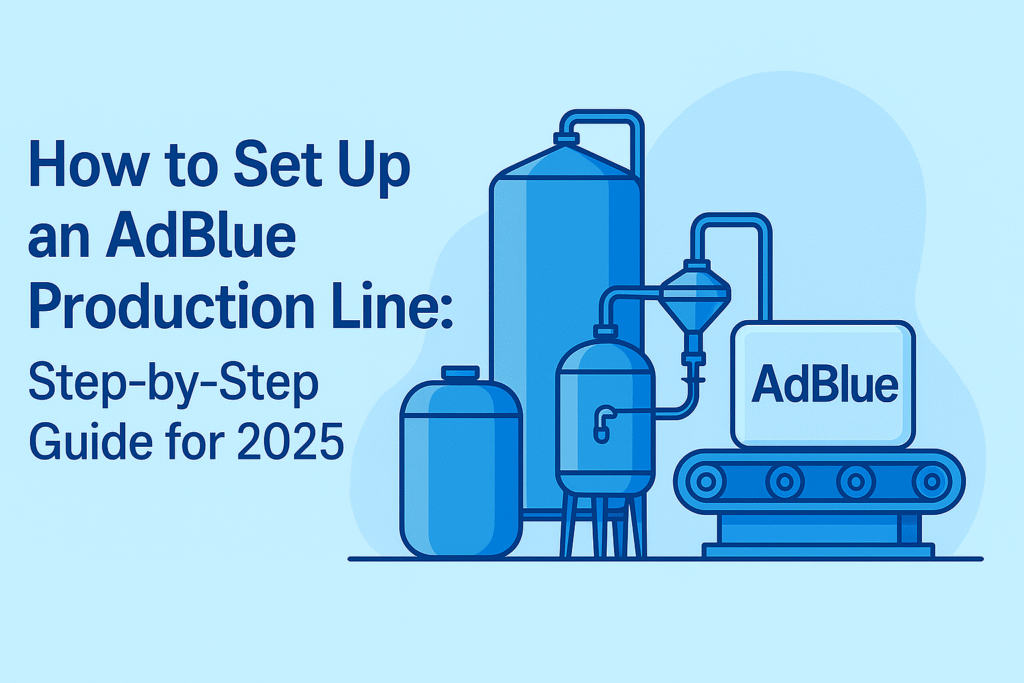
Why AdBlue Production Is a Smart Investment in 2025 How to Set Up an AdBlue Production Line As environmental regulations become increasingly stringent across the globe, diesel vehicle manufacturers and fleet operators face growing pressure to reduce harmful emissions. AdBlue—a high-purity urea solution used in Selective Catalytic Reduction (SCR) systems—is central to this transition. For entrepreneurs, industrial firms, and distributors aiming to enter the clean fuel sector, establishing an AdBlue production line is not only an environmentally responsible move but also a highly lucrative one. Whether you’re planning to serve a local market or scale internationally, setting up a reliable and compliant AdBlue plant is now more accessible than ever thanks to innovations in machinery and automation. This comprehensive, step-by-step guide—brought to you by Atmosfer Makina, a leading provider of turnkey AdBlue plants—walks you through everything from planning and equipment selection to production optimization and quality assurance. Step 1: Understanding What AdBlue Is Before diving into the technical setup, let’s clarify what AdBlue is and why it’s critical. What is AdBlue? AdBlue is a 32.5% aqueous urea solution that reduces harmful NOx (nitrogen oxide) emissions in diesel engines via the SCR process. It is also known as Diesel Exhaust Fluid (DEF) and is used in both commercial and passenger vehicles. Why is it important in 2025? Due to Euro 6 standards in Europe and similar emission laws across North America, Asia, and the Middle East, AdBlue demand is surging. Manufacturers, transport companies, and logistics providers are rapidly transitioning to SCR systems—meaning the global need for high-quality AdBlue is accelerating. Step 2: Market Research & Feasibility Before investing in equipment, facilities, or staff, a solid understanding of the AdBlue market landscape is essential. Key Questions to Answer: What is the current and projected demand for AdBlue in your region? Who are your target customers? (e.g., fleet operators, fuel stations, wholesalers) Will you operate as a local supplier or aim for export? What are the regulatory and certification requirements in your market? Industry Insight: According to market research, the global demand for Diesel Exhaust Fluid (DEF) is projected to grow significantly in the coming years. Countries such as Turkey, Germany, India, and the UAE are witnessing a rapid increase in AdBlue consumption. Step 3: Location and Infrastructure Planning The success of your AdBlue production plant also depends on strategic decisions related to physical infrastructure. Site Selection Criteria: Access to raw materials: Ensure easy supply of technical-grade urea and deionized water. Transport logistics: Consider proximity to distribution channels (highways, ports, etc.). Utility availability: Stable electricity, clean water, and drainage are critical. Zoning and compliance: Make sure the property complies with industrial regulations. You’ll also need space for: Blending and mixing area Storage tanks for raw materials and finished AdBlue Filling and packaging lines Laboratory or testing room Loading/unloading zones Office/admin space Step 4: Choosing the Right Production Technology The heart of your plant is the AdBlue production line—and selecting the right technology will affect your efficiency, cost, and product quality. Main Components of an AdBlue Production Line: Blending Unit Mixes urea and deionized water precisely (ISO 22241-compliant) Typically features conductivity sensors, heating jackets, and automated control Storage Tanks Made of stainless steel or HDPE (High-Density Polyethylene) Must be non-reactive and UV-resistant Filling Machines Available for various volumes: 5L, 10L, 20L cans, 200L drums, and 1000L IBC tanks Can be manual, semi-automatic, or fully automatic Labeling and Capping Important for compliance, branding, and traceability Quality Control Equipment Inline monitoring systems for density, pH, and conductivity Laboratory kits for batch testing Production Capacity Options: Small scale: 500–1000 liters/hour (ideal for startups) Medium scale: 1000–5000 liters/hour Large scale: 5000+ liters/hour (for exporters and big distributors) Atmosfer Makina specializes in all capacity levels, offering scalable systems tailored to client needs. Step 5: Partnering with a Turnkey AdBlue Plant Provider Instead of sourcing each component individually, working with a single solution provider like Atmosfer Makina simplifies your setup. With expertise in machinery design, automation, and international standards, they offer: Complete AdBlue production line setup Custom plant layout and engineering design Installation and commissioning Operator training Remote monitoring and support Step 6: Legal & Environmental Compliance AdBlue is a chemically sensitive product regulated under ISO 22241 standards. To ensure compliance: Source technical-grade urea (ISO 22241-1 compliant) Use demineralized or deionized water Equip your facility with spill containment systems Perform batch testing and maintain quality control logs Label packaging correctly (include batch number, expiry date, usage instructions) Environmental licenses and safety audits may also be required depending on your location. Step 7: Setting Up Utilities and Support Systems A production facility doesn’t just run on machines—it needs a range of supporting infrastructure. Essential Utility Systems: Water Treatment Unit: RO systems to ensure deionized water Air Compressor: For pneumatic controls and valves Electrical Panel: To manage automation and power distribution CIP System (Clean-In-Place): For sanitary cleaning of mixing tanks and pipes Temperature Control System: Heating and insulation for optimal production Step 8: Staff Recruitment & Training Even with a fully automated line, human expertise is vital. Key Personnel: Production Supervisor Maintenance Technician Quality Control Analyst Warehouse/Logistics Staff Admin/Compliance Manager Atmosfer Makina provides hands-on training for your operators, including: Machine operation Troubleshooting Routine maintenance Emergency protocols Step 9: Launch and Operational Scaling Once your plant is installed and certified, it’s time to launch operations. But that’s just the beginning. First Production Run: Test small batches Validate lab results Package and label for internal evaluation Collect feedback and make adjustments Scaling Up: Gradually increase production hours Invest in additional storage or filling units Expand distribution networks Marketing your AdBlue brand and ensuring reliable logistics will become your next major focus. Ready to Build Your AdBlue Production Line? Cost Breakdown Maintenance & Optimization Tips Marketing & Distribution Strategy ❓ Frequently Asked Questions (FAQ) What are the basic requirements to set up an AdBlue production line? You will need access to high-purity urea, deionized water, adequate space for equipment installation, and a reliable power


